
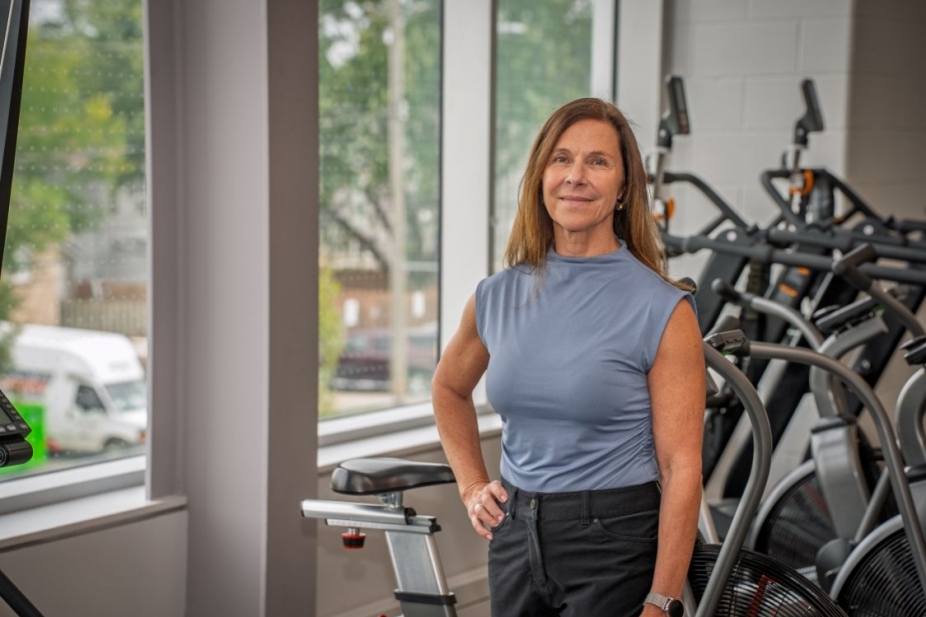
 Sandra Ondracka is the campus recreation coordinator (KYLE ARCHIBALD/University of Windsor)
As part of the launch of the Turtle Island — Indigenous Student Services Centre's Indigenous Allyship Guide, we are asking allies across campus to reflect on their allyship journeys.
Sandra Ondracka is the Campus Recreation Coordinator.
Q: How would you describe what Indigenous allyship means to you?
Sandra Ondracka (SO): On both a personal and professional level, Indigenous allyship means listening, learning and taking action. As a privileged white female, it starts with recognizing the history and ongoing impacts of colonization, respecting Indigenous voices and perspectives and using my role as campus recreation coordinator to help create a welcoming and inclusive environment for Indigenous students and community members at the Toldo Lancer Centre (TLC).
Q: What actions have you taken within your role to support Indigenous students, communities or reconciliation initiatives?
SO: As a graduate of the Faculty of Human Kinetics (1985) and as the campus recreation coordinator for the past three decades, I have had the opportunity to understand the vital role that equity, diversity and inclusivity play on campus and more importantly within sport and recreation. My many years of involvement on the Faculty of Human Kinetics committee provided direction, mentorship and support in my role to strive to ensure our recreation spaces and programs are welcoming, accessible and inclusive for all students.
During my time on campus, I have had the opportunity to support Indigenous-focused campus initiatives, participate in learning opportunities related to reconciliation and look for ways to incorporate Indigenous perspectives and awareness into recreation programming and staff development. As a co-recipient of the Nanadagikenim Seek to Know Grant (2020) we offered a multi-pronged approach to the Indigenization of Kinesiology curriculum and Lancer Recreation sport and physical activity. We arranged for Master Facilitator Greg Henhawk (Six Nations) to facilitate the Aboriginal coaching modules in three first-year Kinesiology classes (Principles of Mental Skills Training, Ethics in Sport and Physical Activity, Health and Wellness), thereby ensuring all first-year HK students were certified and knowledgeable in the application of this material to their coaching and leadership experiences. We were also able to train a local Indigenous individual from our area to enable this course to be offered in the future. Athletics and Recreation similarly offered the Aboriginal Coaching Module workshop to Lancer Varsity coaches, Lancer Recreation employees and other interested participants.
To further increase awareness of Indigenous history and cultural practices within the faculty, we hosted a workshop on Traditional Indigenous Medicine and Indigenous Concepts of Well-being for students. An Indigenous Navigator for Windsor Regional Hospital spoke to the group about equity in the health care system, equal access, ceremony and Indigenous medicine practices that occur at the hospital and how health professionals can better support Indigenous patients.
From a recreational perspective, we hosted a campus-wide film night at the Faculty of Human Kinetics and showed the movie The Grizzlies. Following the movie was an opportunity for a panel discussion to talk about the movie and lessons learned. We also hosted a Lacrosse is Medicine workshop, which was facilitated by Rain Whited who demonstrated how to play the sport as well as discussed its cultural significance and the importance of ethics in their sport profession. Lancer Recreation also purchased lacrosse equipment from the grant, and it has been made available to Turtle Island camps, community groups and Lancer Recreation sport programming.
Lancer Recreation continues to support the work of the Indigenous Student Success Office through collaboration and partnership. This year, we will have the leadership of a third-year Kinesiology student who in the role as our Indigenous Student EDI Ambassador will support the further Indigenization of our recreation programs, services and education.
Q: What are some of the most important lessons you have learned on your allyship journey?
SO: One of the most important lessons I have learned is that allyship is an ongoing process, not a destination. It requires humility, a willingness to listen and an openness to learning from Indigenous communities. I have also learned that meaningful reconciliation comes from building relationships and turning knowledge into action. But it also takes commitment! Every conversation, action and step taken — big or small — makes a difference. We ALL can make a difference!
Q: What impact do you hope your efforts will have on Indigenous students and the broader campus community?
SO: I hope Indigenous students feel welcomed, respected and represented within the TLC, in all our recreation spaces and within our Lancer Rec programs. More broadly, I hope our efforts encourage greater understanding, respect and appreciation of Indigenous cultures and perspectives across the campus community. As we respectfully recite with every land acknowledgment, the TLC sits on the traditional territory of First Nations, comprised of the Ojibwa, the Odawa and the Potowatomi — but what does that truly mean and how can we better respect the history and importance of that? To me and I hope to users of the facility, it means coming into the TLC with respect, care for one another and willingness to learn about the lands and the people upon which are building is so beautifully positioned.
Q: What does meaningful reconciliation look like to you within a university setting?
SO: Meaningful reconciliation means moving beyond acknowledgement to action. It involves creating opportunities for Indigenous voices to be heard, removing barriers to participation, fostering culturally safe environments and embedding Indigenous knowledge and perspectives throughout campus life. It is a shared responsibility that requires ongoing commitment from all members of the university community and that includes Lancer Recreation as well. The Truth and Reconciliation Commission (TRC) calls to action include sport, recreation, leadership and community action — these are all things that happen at the TLC every day — but we need to do them in a manner that removes barriers, allows for inclusion and supports the Indigenous staff and students on campus.
Q: What is one commitment you are making to continue supporting reconciliation efforts?
SO: My first commitment is to my Indigenous colleagues, friends and students. I am committed to continuing my own learning and seeking opportunities to incorporate Indigenous perspectives into recreation programs, staff training and facility operations. By doing so, I hope to contribute to Lancer Recreation’s ongoing commitment to Indigenization and reconciliation in meaningful and practical ways. My second commitment is to continue to be an ally wherever I go. There are so many ways we can all make a difference! If we each find a way, this can only lead us to a better tomorrow!
To access the Allyship Guide, visit the Turtle Island website.