
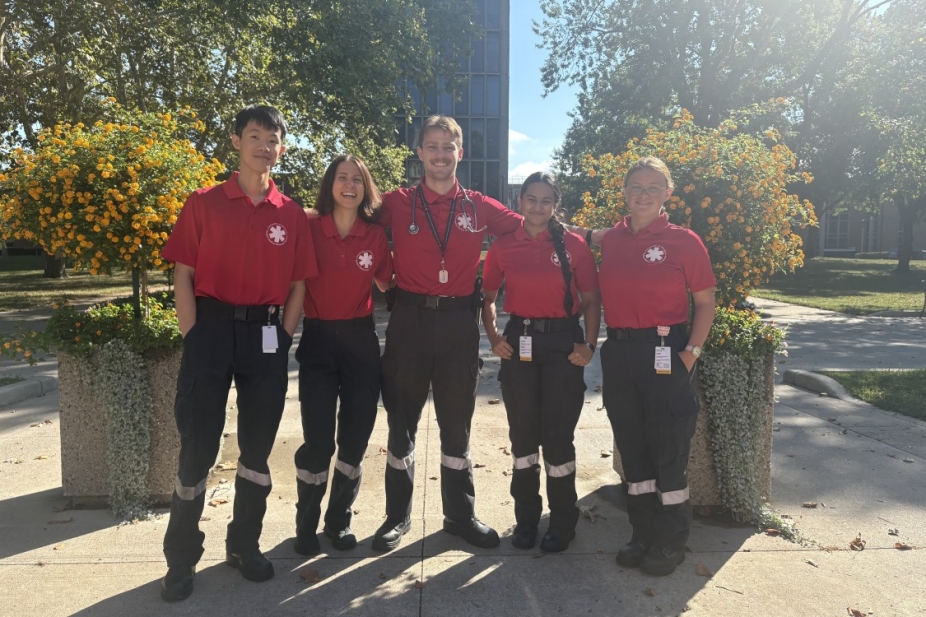
 Members of the UWSMRS executive team on campus, supporting 24/7 emergency care for the campus community. (SUBMITTED BY ASHVEEN DHILLON/University of Windsor)
By Sara Meikle
At any hour of the day or night, while most of campus studies, works or sleeps, a dedicated group of student volunteers is ready to respond.
The University of Windsor Student Medical Response Service (UWSMRS) operates 24/7, providing immediate, often critical care to the campus community. Behind the radios and emergency kits is a student experience defined by responsibility, resilience and purpose.
The team of nearly 30 student volunteers operates with a structured system designed to ensure continuity. Field Training Officers (FTO) lead shifts supported by senior and junior medics, while a student executive team oversees operations, training and outreach.
Ashveen Dhillon, a third-year integrated health studies student and UWSMRS public relations representative, is an FTO. Like every member of the team, she balances shifts with classes and daily routines. A radio is always within reach, and a quick response is always expected.
“We’re always on call,” she said. “Whether someone is dealing with a minor injury or a serious medical emergency, they can call us.”
It’s a level of responsibility that most students don’t experience during their undergraduate years, but for Dhillon and her peers, it’s the most meaningful work they do.
UWSMRS functions as a frontline response unit with a direct line to Windsor’s emergency services. Their scope of care extends far beyond basic first aid, operating in close coordination with Campus Special Constable Services and Windsor-Essex EMS.
“Our role extends beyond basic first aid,” Dhillon said. “We are responsible for making real-time clinical decisions that can change patient outcomes.”
UWSMRS volunteers are trained to respond to a wide range of medical situations, from cuts and burns to more critical emergencies such as cardiac events, overdoses, and severe trauma. They are equipped to administer oxygen and assist with certain medications and are trained in advanced procedures such as airway management and cardiopulmonary resuscitation (CPR).
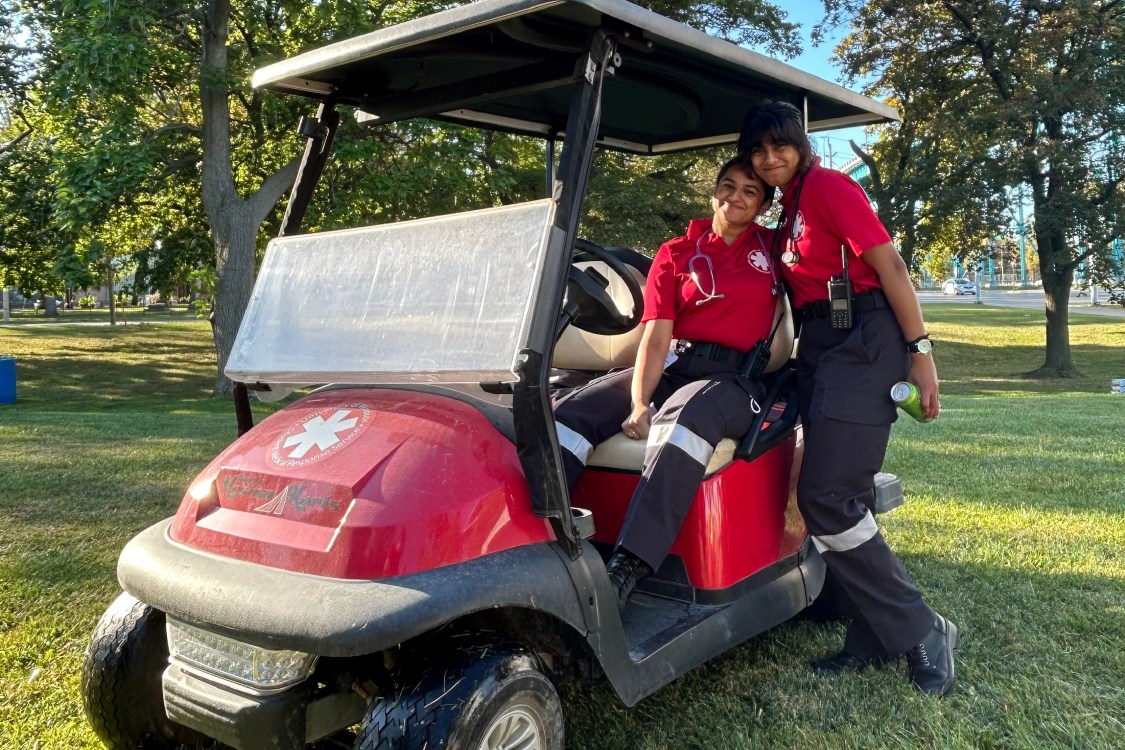
Team members come from a wide range of academic backgrounds, from nursing and biomedical sciences to math and history, bringing diverse expertise to the team. Many are certified CPR instructors, volunteer with external event ambulance services, or are actively pursuing a career in healthcare.
“What matters most is your willingness to learn,” said Elliott Mao, training manager, FTO and a third-year biochemistry and biomedical sciences student.
Becoming a medic is rigorous. Applicants must hold Standard First Aid, CPR and Basic Life Support certifications before undergoing a competitive process that includes testing, interviews and simulations. Those accepted complete more than 70 hours of Emergency First Responder training in a single week, followed by continuous education led by an experienced paramedic advisor.
“Training is the backbone of the team,” Mao said. “Every patient deserves the highest level of care possible.”
Mao joined UWSMRS early in his studies, unsure of his career path. The experience quickly provided clarity.
“This was one of the best decisions I’ve made,” he said. “You’re working with real patients, and you have to think in that moment what you can do to help this person.”
Despite the intensity, team members are, first and foremost, students. They attend lectures, participate in other clubs and activities and find time to study and sleep.
Dhillon, for example, also works as a phlebotomist, conducts research and has a concentration in medical humanities — shaping her approach to care.
“It’s not just about interventions, though they are critical,” she said. “It’s also about how we communicate with patients, understand their needs and support the overall patient care experience.”
That mindset carries through the team’s work, particularly in situations involving vulnerable and distressed individuals, where empathy is as critical as clinical skill.
Mao recalls an incident on campus with an individual experiencing severe chest pain during exam season. He assessed the situation, ruled out immediate cardiac danger, and helped them through what was determined to be anxiety.
“In that moment, you’re there for someone at their lowest,” he said. “That connection stays with you.”
Detailed documentation from each call is reviewed through a quality assurance process involving the executive team, alumni and a paramedic advisor. The goal is continuous improvement — identifying strengths, addressing gaps and maintaining standards.
“There are real consequences for what we do,” Mao said. “Every patient matters. Every call matters.”
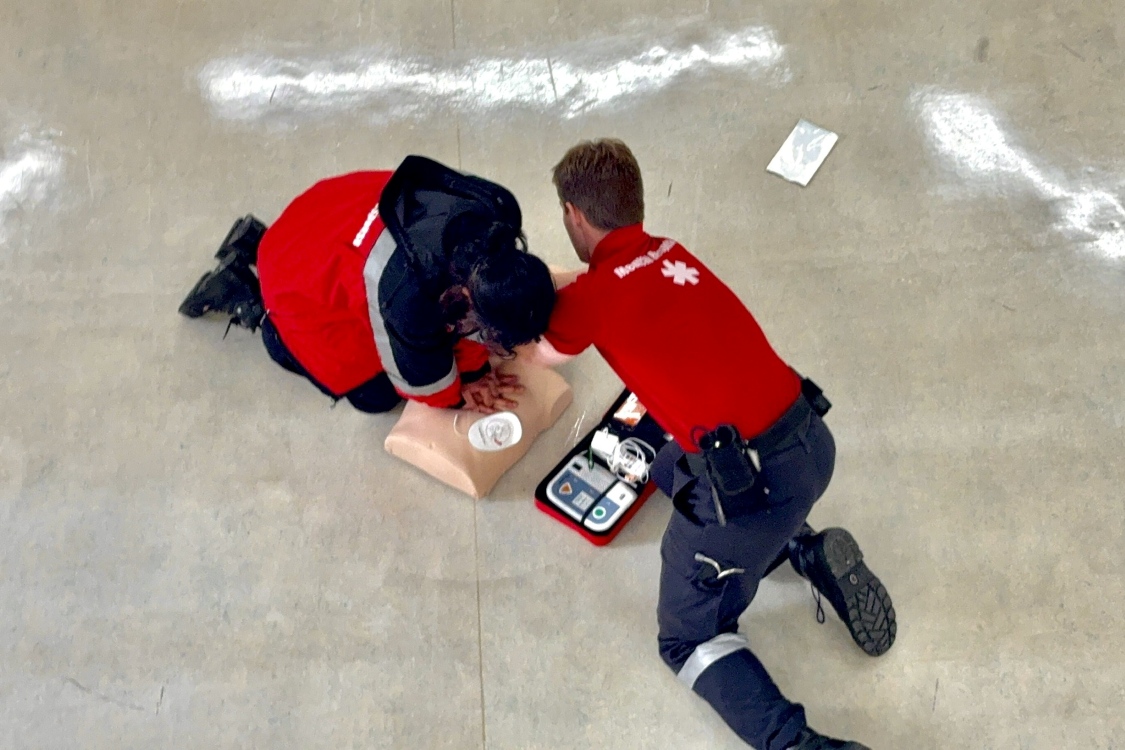
The team’s impact has grown significantly in recent years. After rebuilding from a small team after the pandemic, UWSMRS has nearly tripled in size and responds to more than 120 calls per semester.
"Students and faculty now know there is someone always on campus 24/7, trained to respond to emergencies. That’s who they turn to when they need help,” said Dhillon.
“We’ve been providing a consistent quality of care to our patients, and they trust us. I think that is a big milestone.”
While many UWSMRS volunteers pursue careers in healthcare, the experience offers broader value, from leadership and communication skills to resilience under pressure.
For Mao, serving as training manager has provided insight into maintaining standards and leading a team in high-stakes situations, skills he hopes to carry into a future career in medicine.
Dhillon sees the experience gained from UWSMRS as a foundation to a range of potential paths within healthcare and frontline response.
“This experience gives you options,” she said. “It shows you what you’re capable of.”
As the team continues to grow, both leaders encourage new students to consider applying.
“We’re looking for people who are willing to learn and who can handle responsibility,” Mao said. “If that’s you, just apply.”
At the University of Windsor, opportunities like SMRS allow students to go beyond the classroom — applying their knowledge in high-stakes, real-world situations that shape not only their careers, but who they become.