
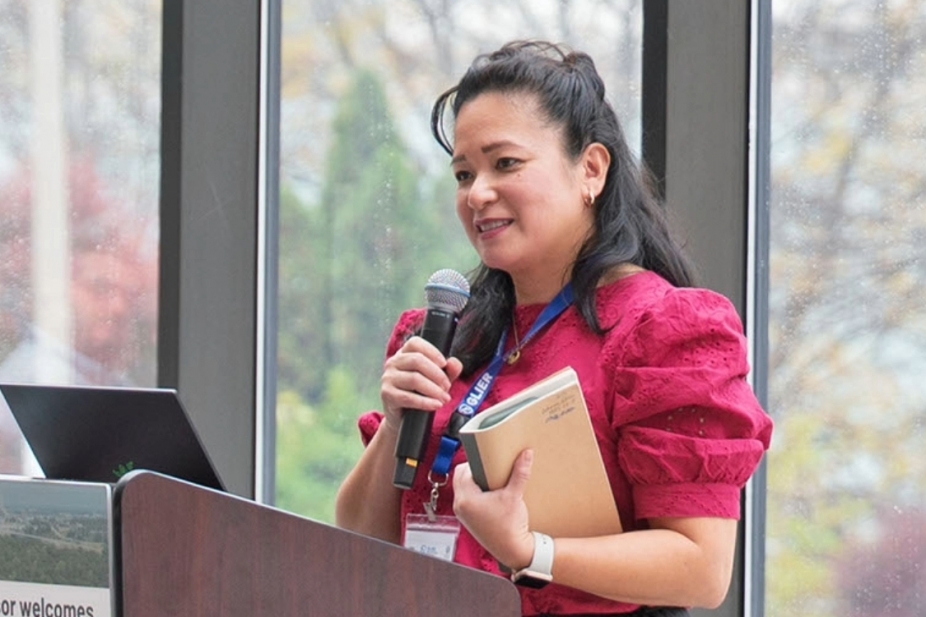
 Febria has been elected to the Royal Society of Canada’s College of New Scholars, Artists and Scientists. (PETER MARVAL/University of Windsor)
By Sara Elliott
Catherine Febria’s research begins in the smallest streams, where land, water and people meet. Its impact is now being recognized nationally.
From microbes and mushrooms to watersheds across the Great Lakes Basin, the University of Windsor ecologist uses science to understand and restore freshwater ecosystems while building relationships with the communities that depend on them.
That work has earned Dr. Febria recognition from the Royal Society of Canada (RSC), the recognized pre-eminent body of independent scholars, researchers and creative people in Canada who provide intellectual leadership for the betterment of Canadian society and the world.
Febria has been elected to the RSC’s College of New Scholars, Artists and Scientists, recognizing her as an exceptional emerging scientist having demonstrated a high level of achievement early in their careers.
For Febria, the recognition validates work that reaches from local watersheds to national and global conversations. She describes the national recognition as “incredibly humbling,” particularly because her lab’s mission is rooted in local watersheds and community-centred research approaches.
At UWindsor, Febria established the Healthy Headwaters Lab, which works to keep waterways healthy, from small streams to large bodies of water.
She is a Tier 2 Canada Research Chair in Freshwater Restoration Ecology and a researcher at the Great Lakes Institute for Environmental Research.
Her research often starts in headwater streams but also engages with the United Nations including the intergovernmental platform on biodiversity, The Intergovernmental Science-Policy Platform on Biodiversity and Ecosystem Services (IPBES). Researchers can assess local ecosystems by measuring water quality or invertebrates, Febria says, but the work also creates opportunities for conversations about how people care for land and water through local actions and global policies.
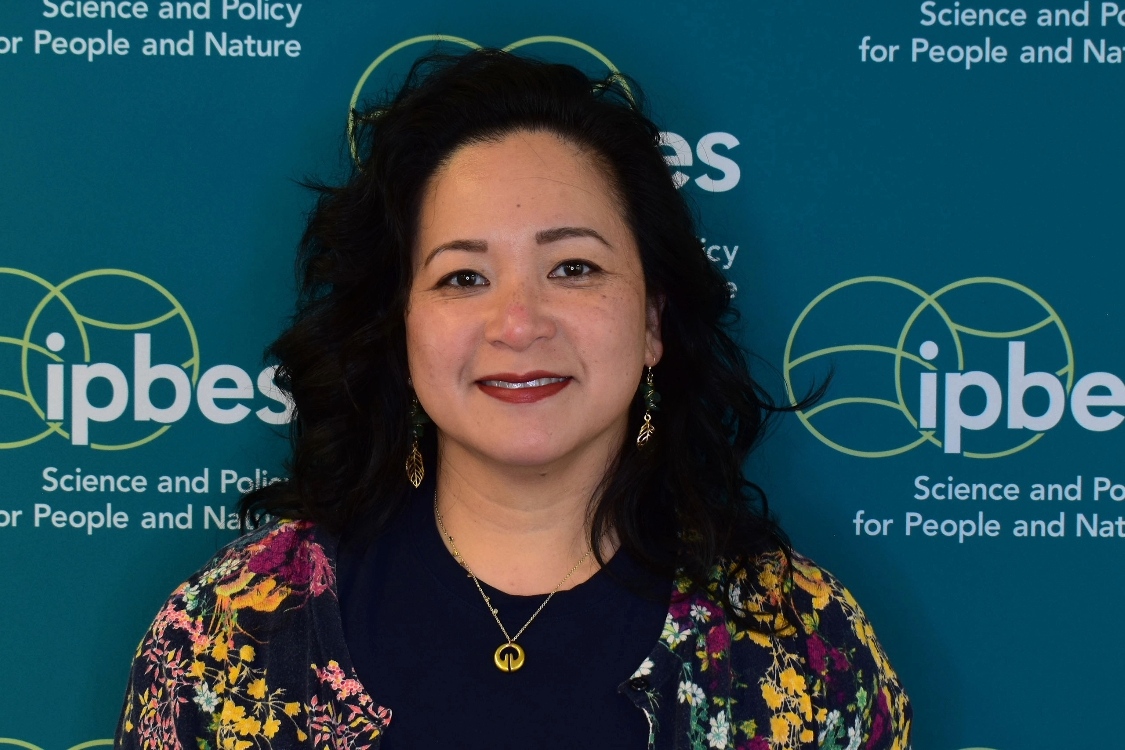
Catherine Febria engages with the United Nations including the intergovernmental platform on biodiversity, The Intergovernmental Science-Policy Platform on Biodiversity and Ecosystem Services (IPBES). (Courtesy of IPBES/University of Windsor)
“We can have conversations with people about land and water stewardship, ecosystem restoration, reconciliation with Indigenous Peoples, Lands and Waters through the science — it’s meant to be practical, but also impactful,” she says.
Febria’s RSC college membership will give her an opportunity to contribute to national conversations on issues of public interest and connect with researchers and communities across Canada.
She says that national reach depends on credibility built through local work.
“If we’re not doing research well locally, it won’t be meaningful nationally or globally,” Febria says.
Shanthi Johnson, vice-president, research and innovation at the University of Windsor, says Febria’s work demonstrates the broader impact of research grounded in community.
“Dr. Febria’s research demonstrates how science rooted in our local communities can have a broader impact, while bringing communities together to solve complex and important freshwater ecosystems priorities,” Johnson says.
“Her election to the College of New Scholars, Artists and Scientists is a wonderful national recognition of the significance of her work.”
For Febria, scientific research should help address the questions communities are asking and grappling with. That includes re-imagining what excellence in science looks like.
In the Healthy Headwaters Lab, she emphasizes inclusive, diverse and equitable research processes while advancing reconciliation efforts with Indigenous Peoples, Lands and Waters.
She hopes her RSC college membership will connect the lab with other scholars, communities of practice and organizations working toward similar goals while shining a national light on the ecosystems, biodiversity and communities across and southwestern Ontario.
When it comes to improving water quality in the Great Lakes, Febria says science also points to the importance of individual relationships and shared responsibility in protecting swimmable, fishable and drinkable water for future generations.
“It comes down to individual people living in cities and alongside farm fields — all of us doing our part,” she says.
“I think we all share a vision for restored freshwater ecosystems and healthy and resilient communities in the future.”
The RSC recognition, she says, reinforces that science done well can encourage collective and transformative actions that move society forward towards freshwater and planetary sustainability.
She says she is glad to be part of a community with “a collective spirit and responsibility,” one where university scholars can be part of the solution.