
 Master's student Isabella Nardone placed second at the 2026 Canadian Greenhouse Conference research poster competition. (Courtesy of Isabella Nardone/University of Windsor).
By Sara Elliott
Two University of Windsor graduate students are investigating ways to help greenhouse growers protect their crops from pests while reducing reliance on chemical pesticides.
Working at Agriculture and Agri-Food Canada's Harrow Research and Development Centre, Isabella Nardone (BSc ‘24) and Azimove Sulthana are exploring different approaches to sustainable pest management, from using native predatory insects to protecting beneficial species when insecticides are needed.
Their research recently earned national recognition at the 2026 Canadian Greenhouse Conference, where Nardone placed second and Sulthana third in the research poster competition.
Nardone, a master's student, is studying three omnivorous insect species in the mirid family, exploring their potential role in managing pests in tomato greenhouses.
Two of the species, Dicyphus hesperus and Dicyphus famelicus, are native to North America. Dicyphus hesperus is already used commercially as a biological control agent, while Dicyphus famelicus is under evaluation for its potential to help control greenhouse pests.
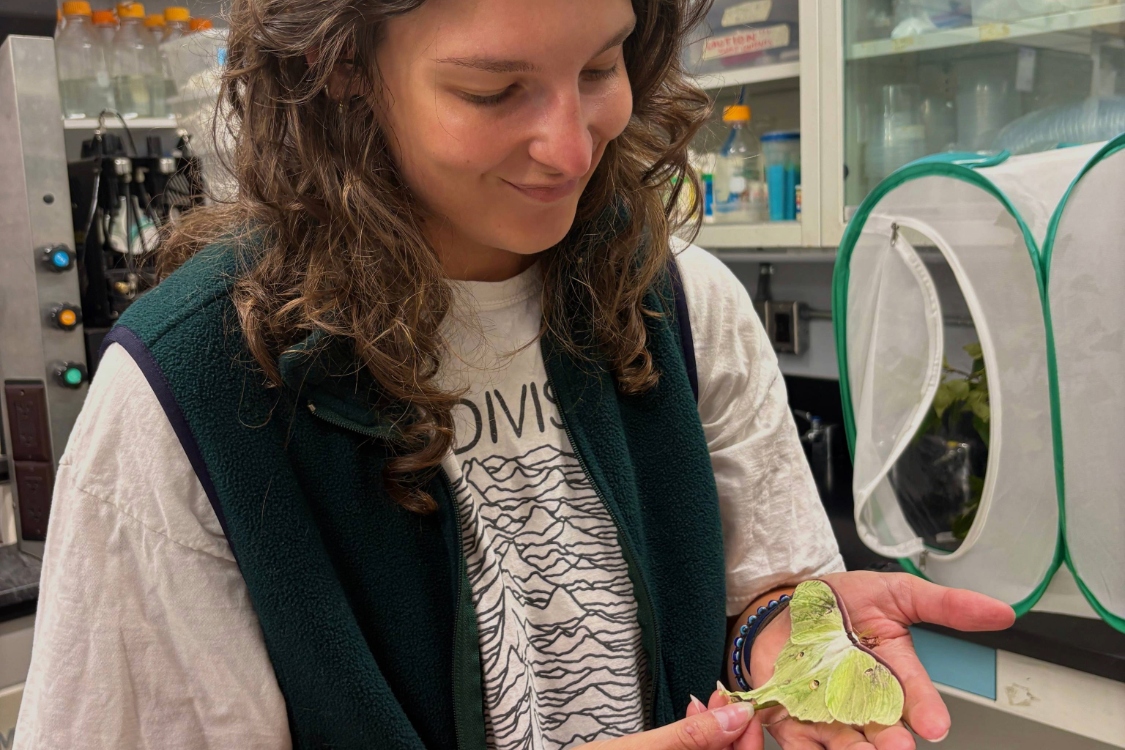
Biological control involves using beneficial insects to manage pest populations, offering growers an alternative to chemical pesticides.
“Essentially, using biological control agents reduces the dependency on pesticides, providing holistic and economical pest management,” Nardone says.
She is also studying the invasive pest Nesidiocoris tenuis, commonly known as Nesi or greenbug, which has recently been found in tomato greenhouses in southwestern Ontario where it is considered invasive.
Unlike the two native predatory species, Nesi can cause significant economic losses by feeding on tomato plants.
By investigating how the native and invasive species interact, Nardone hopes to help growers limit damage from Nesi while improving the use of native insects for pest control.
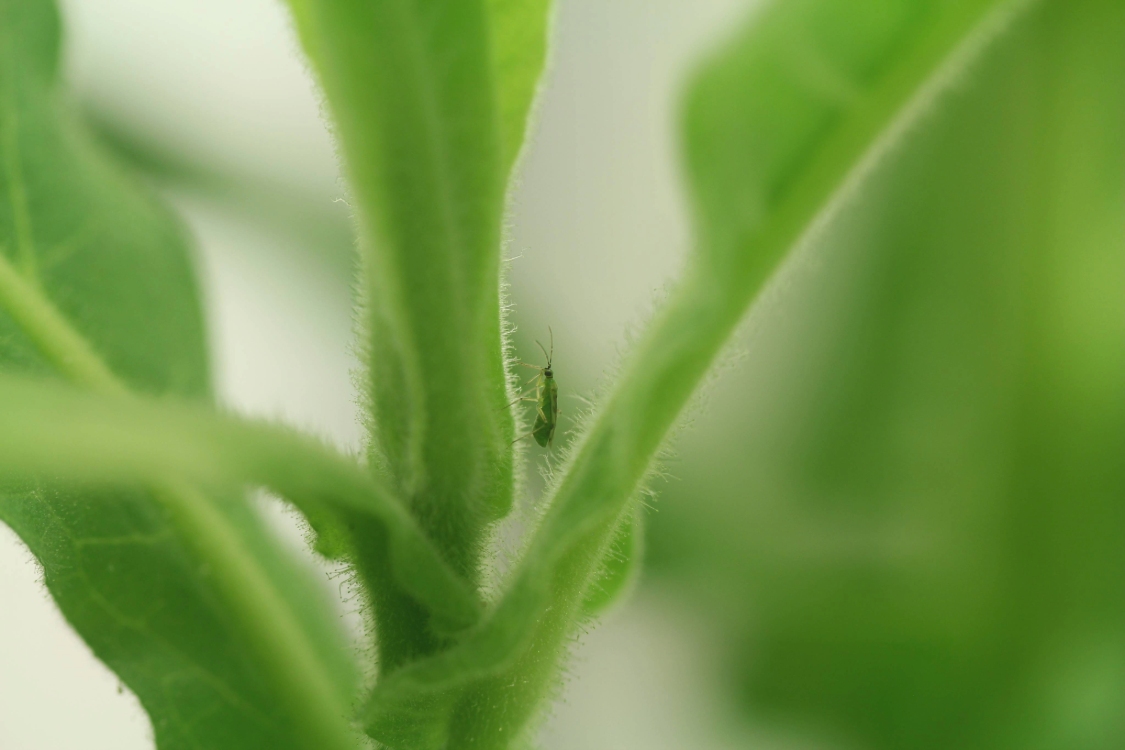
She is also investigating whether the species prey on one another and how they use chemical cues to locate areas of pest activity within greenhouses.
“My movement behaviour studies provide insight into the ability of each species to locate pest hot spots using chemical cues in greenhouses,” she says.
Nardone is co-supervised by Dr. Sherah VanLaerhoven at the University of Windsor and Dr. Rose Labbe at Agriculture and Agri-Food Canada.
Sulthana, a PhD candidate, is investigating how greenhouse growers can control aphids while protecting the beneficial insects that naturally help manage pest populations.
Aphids are small, sap-feeding insects that can multiply quickly and cause significant greenhouse crop damage.
Her research examines the effectiveness of different insecticides against aphids and their impact on beneficial species, including parasitoid wasps and predatory insects.
“I am investigating the effectiveness of different insecticides against aphids and their compatibility with biological control agents, such as parasitoid wasps and predatory insects,” says Sulthana.
“These beneficial insects help control aphids naturally, but some insecticides can also harm them.”
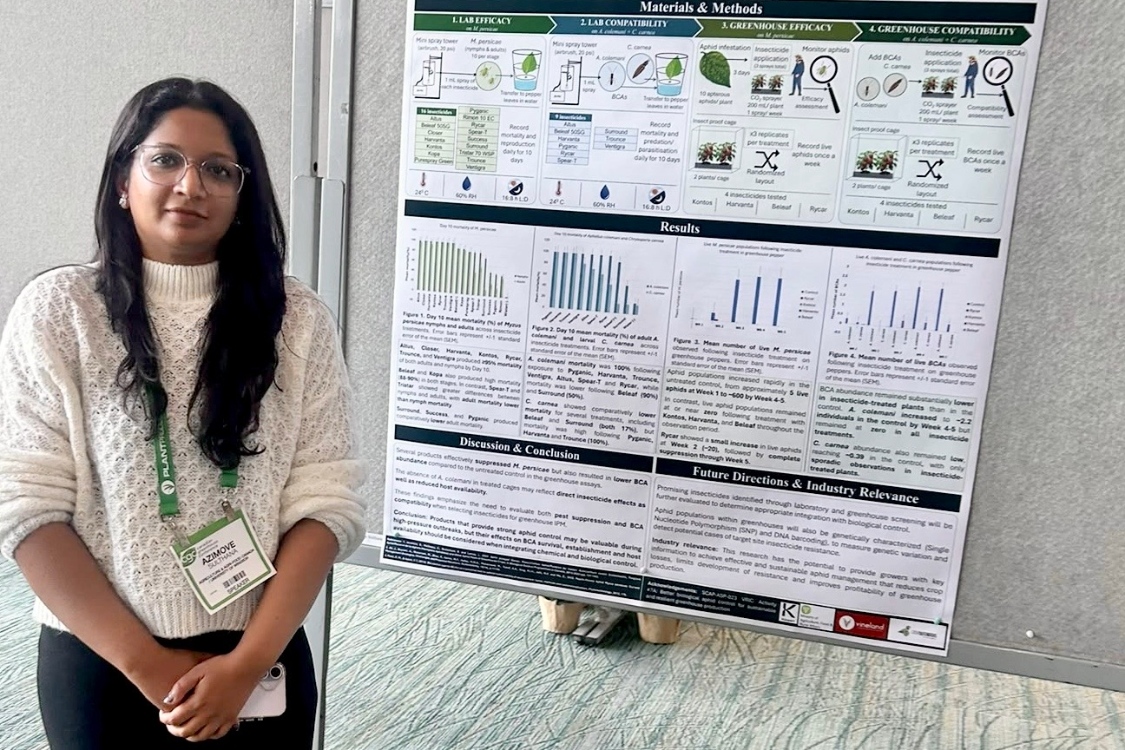
Although beneficial insects play an important role in greenhouse pest management, Sulthana says insecticides may still be necessary when aphid populations grow rapidly.
“When insecticides are necessary, choosing products that control aphids without unnecessarily harming beneficial insects is essential,” she says.
Sulthana is also investigating the genetic basis of insecticide resistance, which could help explain why some aphid populations become increasingly difficult to manage over time.
Sulthana conducts her research through Agriculture and Agri-Food Canada's Research Affiliate Program. She is supervised by VanLaerhoven at the University of Windsor and co-supervised by Labbe at the Harrow Research and Development Centre.
Agriculture UWindsor, an initiative that brings together more than 30 faculty research teams each working on specialized technology projects in agriculture, attends the Canadian Greenhouse Conference annually in early October.
The event brings together greenhouse growers and specialized technology experts who work with industry partners toward solutions that will result in a more sustainable and resilient greenhouse industry.