
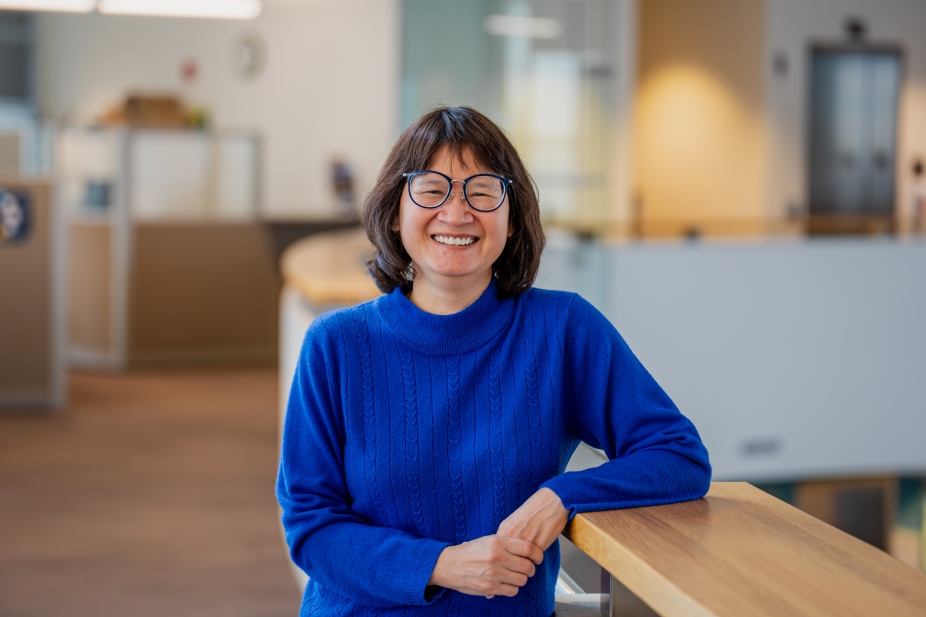
 Dr. Jane Ku is co-editor of a new collection from University of Alberta Press (FILE/University of Windsor)
By Kate Hargreaves
A new book on South Asian Feminisms in Diaspora had its genesis over several years of conversations and community.
Co-editor and University of Windsor professor of Interdisciplinary and Critical Studies and Sociology Dr. Jane Ku explains its roots in a roundtable as part of the Canadian Sociological Association annual meeting.
Ku explains that the turnout was enthusiastic.
“It encouraged us to say, ‘okay, what do we do next?’”
This momentum spun into a two-day retreat on the topic, which involved many eventual contributors to the collection, now out with the University of Alberta Press.
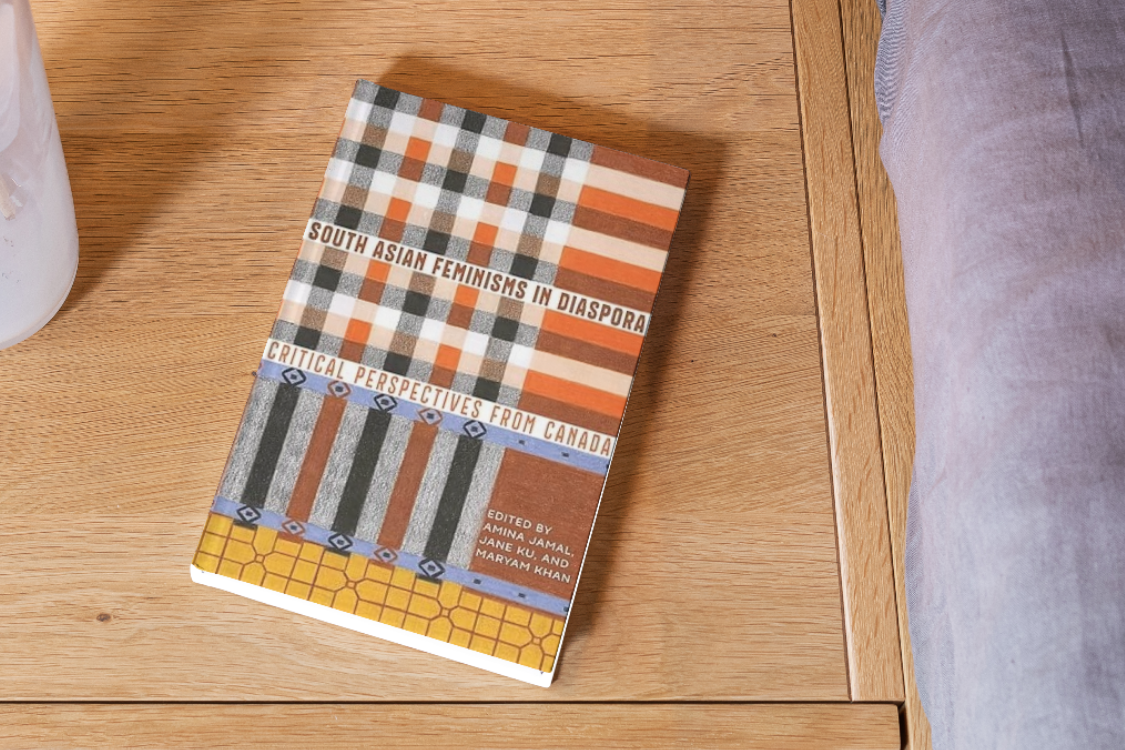
Ku's co-edited collection is available now via University of Alberta Press (MOCK-UP CREATED IN CANVA/University of Windsor)
It was crucial for Ku and co-editors Amina Jamal and Maryam Khan that these contributions represent a diversity of lived experiences and perspectives on what it means to be South Asian.
“We don’t want to think of it as an identity but more of a common experience as well as a political community that we can use to challenge people who want to say that South Asia is a particular way,” Ku explains.
“It’s not an identity as much a tool to critique some of the hegemonic constructions around who is a proper Indian, who is a proper Bengali, who is a proper woman.”
Ku speaks to the way in which patriarchy, caste discrimination and other oppressive systems intersect in their silencing of outsider voices, a reality that the book actively challenges.
“We’re trying to represent the diversity of our connections in South Asia, so there are people from Nepal, from India, from Pakistan, there are queer women, trans scholars and of course from different religions as well,” Ku says.
“People kind of reduce South Asia to one idea, so we’re trying to go against a lot of these stereotypes, a lot of these essentialist notions of what people are.”
Also important to the editors was ensuring that the book was accessible not only to academics but to young scholars and activists.
To this end, some contributors such as UWindsor alumna Ayesha Mian Akram (PhD ’23) contributed while still a graduate student, along with other contributors who are either emerging scholars or working outside academia.
While the book is focused on a Canadian diasporic context, Ku says that the goal is to not only build solidarity between South Asian feminists in Canada but in different parts of the world as well.
“All of those things are important right now, especially because the world is militarized, there are all kinds of tension, all kinds of violence, both at a state level and at the local level in homes,” Ku says.
“This book is hopefully a political tool to interrupt some of that.”
The collection also speaks to the importance of interrogating what it means to be South Asian.
“We know that women are dismissed from speaking because they’re not authentically South Asian enough, because they do not follow the cultural rules,” Ku explains.
“When feminists are dismissed as not South Asian because they are feminist, you need to speak back to that exclusiveness.”
At the same time as calling into question the construct of South Asianness, Ku also emphasizes the importance of community and connection.
“We need to put forward that notion of diversity amongst ourselves,” Ku says.
“We have some commonality that we can appeal to, we can build community based on that commonality, but also respect or leverage our diversities, the differences amongst us, to interrupt that exclusive construction of South Asia.”
This disruption may seem like a Sisyphean task, but Ku frames it as part of a number of intersecting struggles for equity.
“This is why we thought it was an important project,” she says of the book.
“To speak to the patriarchal elements, the global neoliberal elements, the caste, all those oppressive systems that are at play.”
South Asian Feminisms in Diaspora: Critical Perspectives from Canada is available via University of Alberta Press.