 Steve Simpson Sr., Senior Water Guardian from Caldwell First Nation gathers a water sample during a 2025 Harmful Algae Bloom Grab in Lake St. Clair. (PHOTO COURTESY OF GLIER/University of Windsor)
By John-Paul Bonadonna
Could harmful algal blooms pose greater risks to human health than current testing methods can detect?
A University of Windsor research team is using human cells and miniature laboratory-grown models of organs to investigate whether existing approaches to measuring algal toxins capture their potential health effects.
The findings could eventually inform how drinking water and recreational water safety are assessed, with implications for communities across Canada.
— Published on Oct 28th, 2026
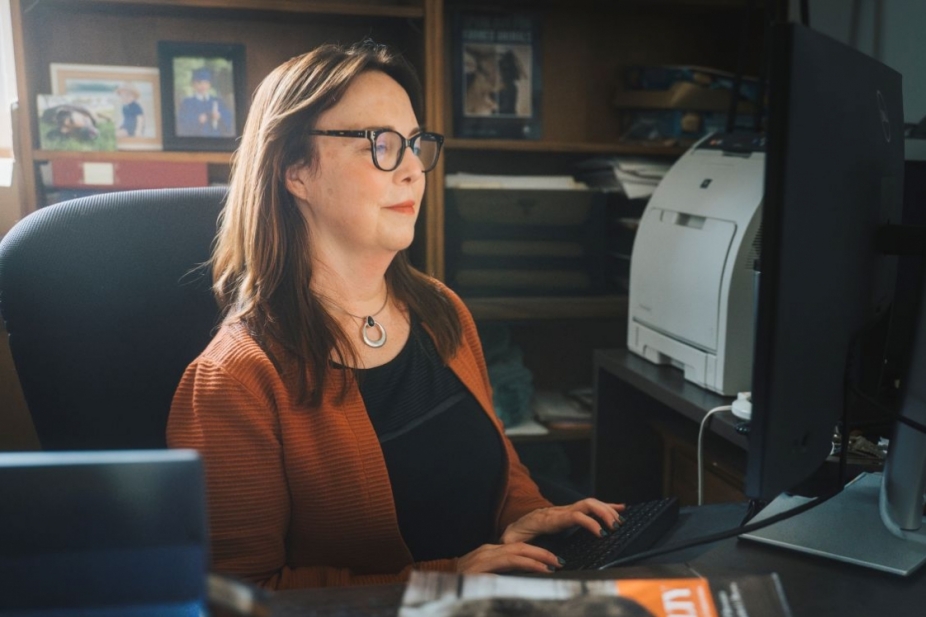 Dr. Amy Fitzgerald is a co-investigator on a WE-SPARK funded project examining extreme weather and intimate partner violence (MICHAEL WILKINS/University of Windsor)
By Kate Hargreaves
Extreme heat, flooding and poor air quality can threaten more than physical health.
For people experiencing intimate partner violence (IPV), these conditions may also increase risks and make it harder to seek help.
A team of researchers that includes UWindsor faculty and alumni is investigating how extreme weather may affect IPV in Windsor-Essex, an area they say has received limited attention in local research.
— Published on Oct 27th, 2026
 Sarah Julius is the winner of the Faculty of Education's Most Valuable Student award for 2026 (FILE/University of Windsor)
By Kate Hargreaves
Sarah Julius is used to balancing a lot.
A recent graduate of the University of Windsor’s concurrent education program in psychology and early childhood education, Julius (BEd, BA, ECE ’26) crossed the stage in June to receive two degrees and a college diploma.
— Published on Oct 16th, 2026
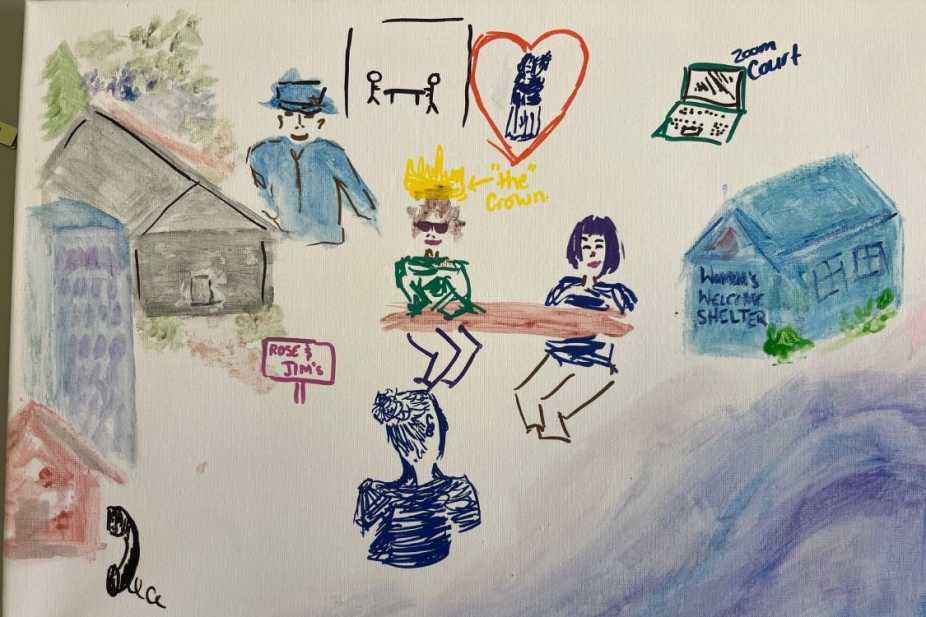 A participant-created artwork from the study visually maps the complex help-seeking journey women often navigate after leaving a violent intimate partner. (SUBMITTED BY RACHEL ELLIOTT/University of Windsor)
By Sara Meikle
For many women leaving a violent intimate partner, the journey to safety continues long after the relationship ends.
Rebuilding health, stability and quality of life often means navigating healthcare, housing, social services and community supports — a complex process researchers at the University of Windsor are exploring through an innovative arts-based study.
As May marks Domestic and Family Violence Prevention Month, the project examines the help-seeking journeys of women who have physically separated from violent intimate partners.
— Published on May 26th, 2026
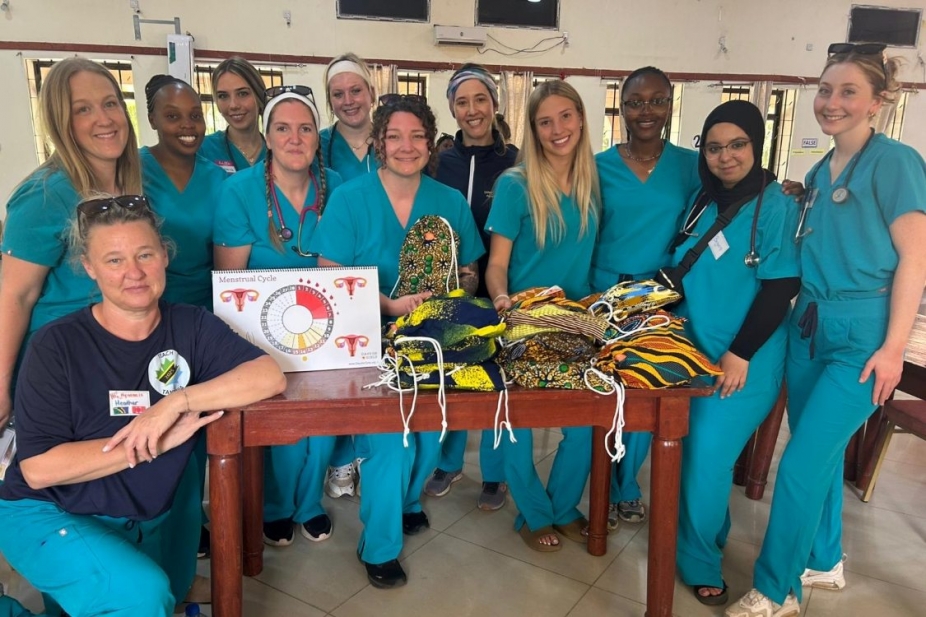 University of Windsor nursing students and faculty sourced sustainable menstrual kits prepared for girls attending a leadership and health education program in Tanzania as part of a global health experiential learning initiative. (SUBMITTED BY RACHEL ELLIOTT/University of Windsor)
By Sara Meikle
A group of University of Windsor nursing students have turned a transformative global experience into research, reflection and recognition.
Their manuscript, based on a three-week experiential learning trip to Tanzania last year, has been published in the Global Qualitative Nursing Research journal — marking a significant milestone for both the students and faculty involved.
— Published on May 20th, 2026
 Terry Fox and his Marathon of Hope brought Canadians together to help find a cure for cancer. His legacy continues through partnerships spurred on by the Marathon of Hope Cancer Centres Network, which includes WE-SPARK Health Institute. (Graphic courtesy of Marathon of Hope Cancer Centres Network)
By John-Paul Bonadonna
In cancer research labs and hospitals, a powerful transformation is reshaping how the disease is understood, studied and ultimately, treated.
At the centre of this shift is precision oncology, an approach that moves beyond one-size-fits-all care to deliver treatments tailored to each individual patient. It represents one of the most promising advances in cancer care today.
— Published on Apr 22nd, 2026
 Jane Simanovski (left) and her team of colleagues and students stand with their research poster at the WE-SPARK conference in March, highlighting a cross-border study on caregivers supporting lung transplant patients. (SUBMITTED BY EDWARD CRUZ/University of Windsor)
By Sara Meikle
It takes more than medical expertise to support a patient after a lung transplant.
As April marks Organ and Tissue Donation Awareness Month, a new cross-border study examines an often-overlooked part of the transplant journey — the family members and friends who provide care after surgery.
— Published on Apr 21st, 2026
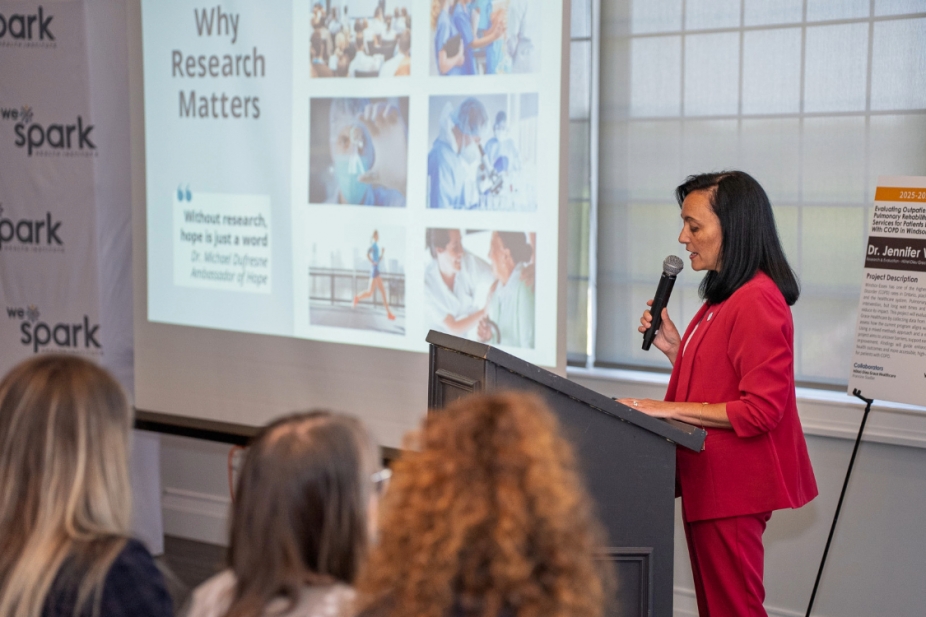 Dr. Dora Cavallo-Medved is the interim director of WE-SPARK Health Institute. (KYLE ARCHIBALD/University of Windsor)
By Sara Elliott
WE-SPARK Health Institute is ready to support innovative health research and education projects with the launch of its 2026 grant competition.
The competition provides seed funding to stimulate research development in Windsor-Essex.
— Published on Mar 18th, 2026
 PhD candidate Mahsa Rahimi explains her biomedical science research at the 2025 Health Research conference. (Photo courtesy of WE-SPARK Health Institute)
It is time for health researchers to shine.
WE-SPARK Health Institute is issuing a call for abstracts in preparation of their annual 2026 Health Research Conference.
— Published on Jan 7th, 2026
 Researchers perform lab study in the Essex Centre of Research (CORe). (FILES/University of Windsor)
In a significant boost to the well-being, mental health and professional development of individuals in the research community, WE-SPARK has announced the launch of Program LEAD: How Can a Program Focused on Professional and Lifelong Learning Support the Mental Well-Being of Highly Qualified Personnel Engaged in Health Science Research?
— Published on Sep 22nd, 2025

 Steve Simpson Sr., Senior Water Guardian from Caldwell First Nation gathers a water sample during a 2025 Harmful Algae Bloom Grab in Lake St. Clair. (PHOTO COURTESY OF GLIER/University of Windsor)


