
 Brittany Bellemore is an HK and Lancer track alumna now coaching a winter marathon clinic (PROVIDED BY B. BELLEMORE/University of Windsor)
By Kate Hargreaves
With snow-covered sidewalks and plummeting temperatures, lacing up a pair of running shoes and hitting the pavement may seem daunting.
However, with tips from UWindsor alum Brittany Bellemore (BHK ’21, MHK ’23), runners can feel more confident taking on wintry conditions.
Bellemore, a former sprinter with the Lancers track and field team, is one of the coaches for local sports store the Running Factory’s winter half- and full-marathon clinic, which helps local runners — from first timers to veterans — learn to safely build up their mileage toward goal races in the spring.
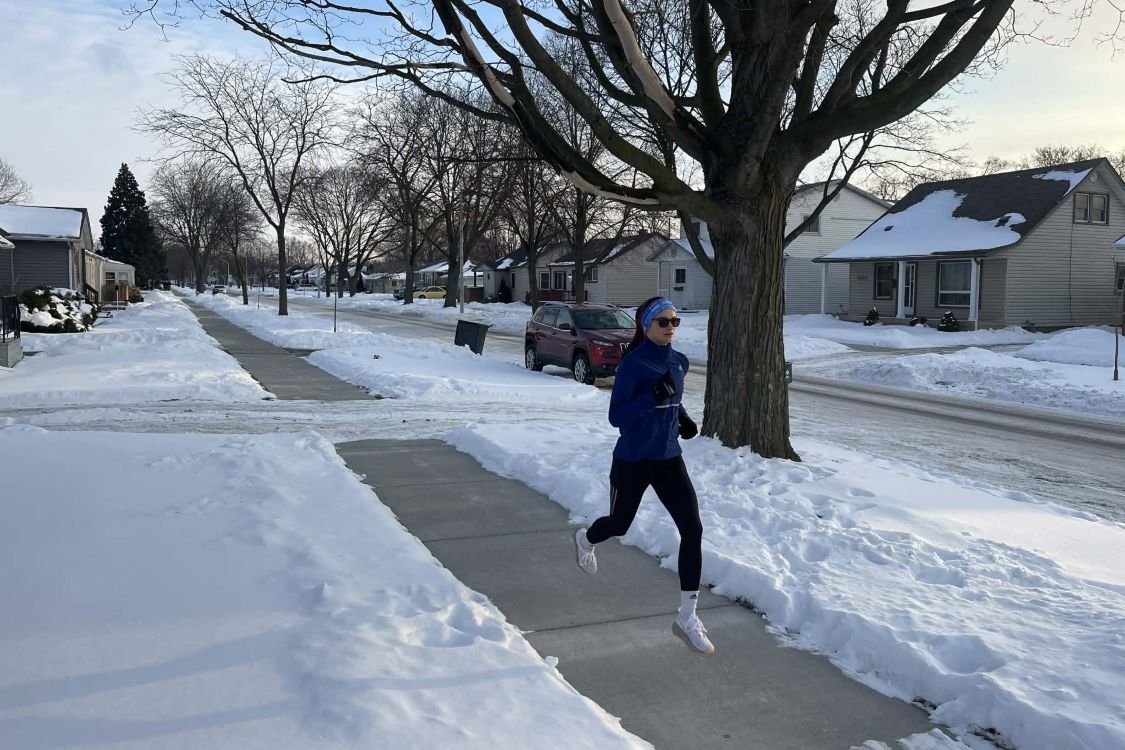
Having trained for multiple half- and full-marathons in all weather conditions, Bellemore acknowledges that winter running can be a particular challenge, with cold unpredictable conditions, short daylight hours, snow, ice and windchill all creating barriers.
“Bundling up and getting out the door is the first major obstacle to overcome, especially if the temperature is -20°C with a windchill,” she says.
While would-be winter runners can’t change the weather, they can prepare themselves for difficult conditions thanks to Bellemore’s 10 tips for winter running:
- Dress for the weather – layer appropriately (thermal gear) but dress as though it’s at least 10° warmer than the actual temperature as you will heat up quickly once you start running.
- Cover your hands, face and head – hands, face and head will get cold quickly, and keeping these parts warm will help your body regulate its core temperature. Remember to bring gloves, a hat or headband and a face covering as needed to stay warm.
- Warm-up your muscles before you run – cold muscles mean higher risk for injury, so don’t skip your warm-up drills.
- Adjust your pace and expectations – black ice and uneven snow can be hazards and high winds can drastically affect your pace, so go easy on yourself and adjust pacing as needed.
- Visibility/reflective gear is important – with it being dark later into the morning and earlier in the evening, it’s important for safety that you are visible to vehicles and other pedestrians. Try reflective gear and/or lights.
- Choose the right shoes – cold temperatures can make the foam in running shoes harder and the shoes feel stiffer with less traction; shoes with waterproof uppers will be a warmer and dryer choice, especially in snow and slush. Trail shoes with more grip or clip-on ice traction cleats on your regular shoes can help reduce the risk of slipping.
- Watch your step – winter running brings multiple hazards such as black ice, uneven snow and poor curb/sidewalk visibility, so tread carefully.
- Hydration is just as important as it is in the summertime – you might not feel as thirsty when it’s cold, but you are still sweating so replenishing your body is a top priority.
- Change out of your running gear ASAP post-run – your core temperature will drop quickly after you stop running, and cold and wet clothes can accelerate this process. Have warm dry layers on hand to change into after your run.
- Hold yourself accountable – join a local run group to keep you motivated or help set goals for yourself.
While following these tips can make winter running more accessible, Bellemore reminds runners that it’s also important to allow themselves some grace.
“Drastic changes in weather conditions can take time to adapt, meaning paces may feel slower as your body tries to regulate its temperature and your lungs try to adjust to the cold,” she says.
“Although it’s important to be consistent and hold yourself accountable, your safety should always be your number one priority and opting for the treadmill is totally okay too!”