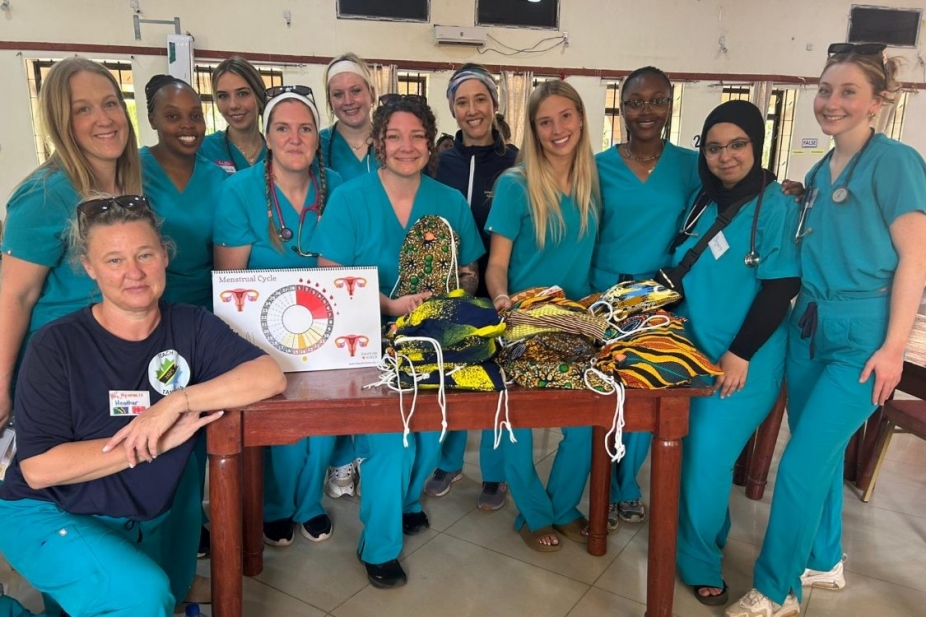
 University of Windsor nursing students and faculty sourced sustainable menstrual kits prepared for girls attending a leadership and health education program in Tanzania as part of a global health experiential learning initiative. (SUBMITTED BY RACHEL ELLIOTT/University of Windsor)
By Sara Meikle
A group of University of Windsor nursing students have turned a transformative global experience into research, reflection and recognition.
Their manuscript, based on a three-week experiential learning trip to Tanzania last year, has been published in the Global Qualitative Nursing Research journal — marking a significant milestone for both the students and faculty involved.
— Published on May 20th, 2026
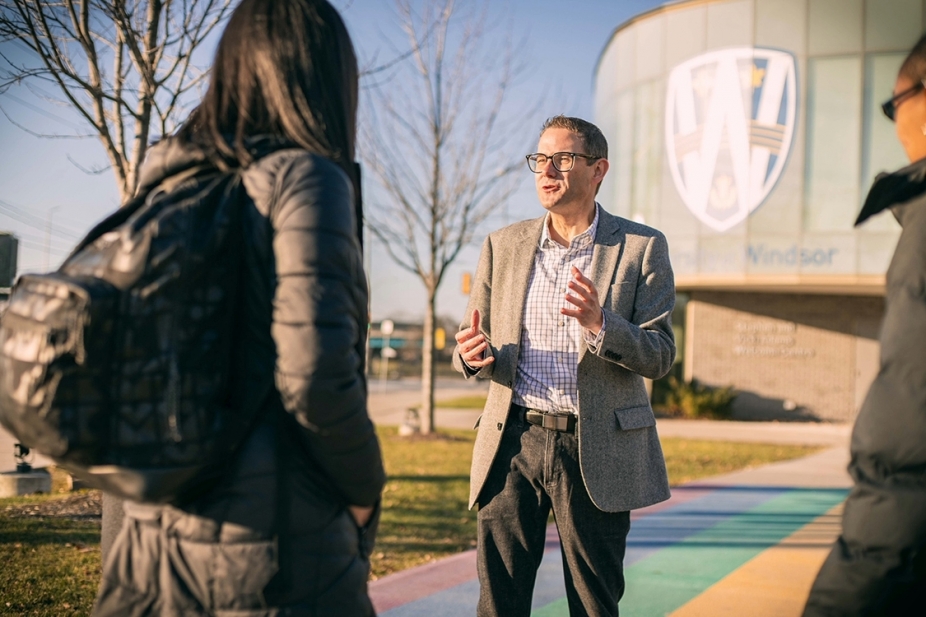 UWindsor’s Department of Communication, Media and Film (CMF) is hosting the Canadian Communication Association’s 2026 conference. Department head Dr. Kyle Asquith is co-organizer of the event, which will bring more than 200 scholars and students to the campus June 2-4. (University of Windsor)
By Lindsay Charlton
The Canadian Communication Association was born from conversations held at the University of Windsor.
Nearly four decades later, it's coming back.
The return will bring more than 200 scholars, industry professionals and students working across communication and media from Canada and the United States to campus June 2 to 4 for its annual conference hosted by UWindsor’s Department of Communication, Media and Film (CMF).
— Published on May 27th, 2026
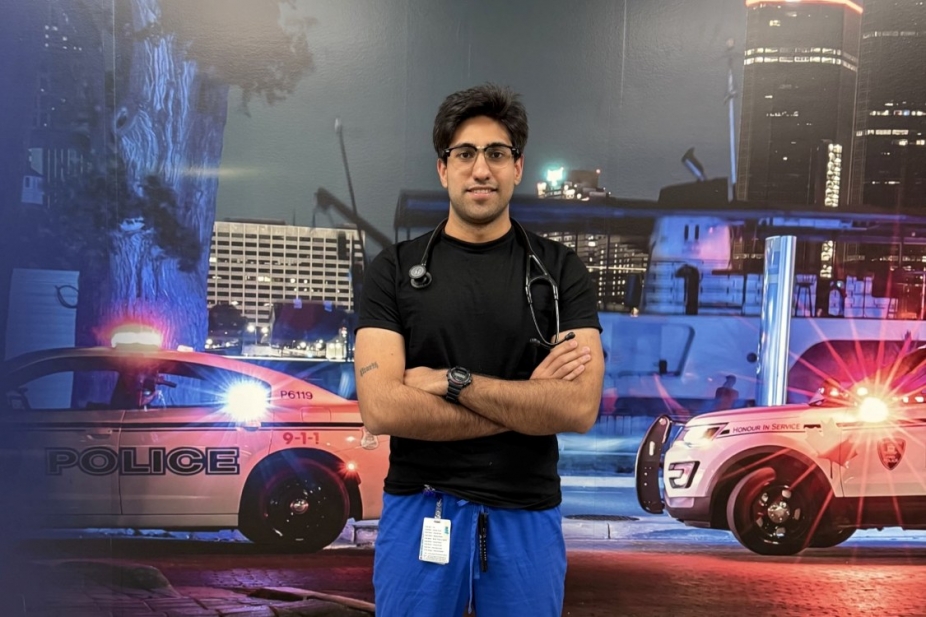 Ali Mozafari during medical first responder training at a Canadian Armed Forces base in Windsor through St. John Ambulance, one of many experiences he pursued beyond the classroom to deepen his understanding of patient care and strengthen his path toward a career in healthcare. (SUBMITTED BY ALI MOZAFARI/University of Windsor)
By Sara Meikle
Ali Mozafari’s path through the University of Windsor has been anything but linear.
A fourth-year nursing student with research experience spanning health sciences and engineering, his story is defined by resilience, curiosity and determination.
“Honestly, it’s been a chaotic journey,” he said. “But I’m proud of how I turned it around and everything I’ve been able to do since.”
— Published on May 13th, 2026
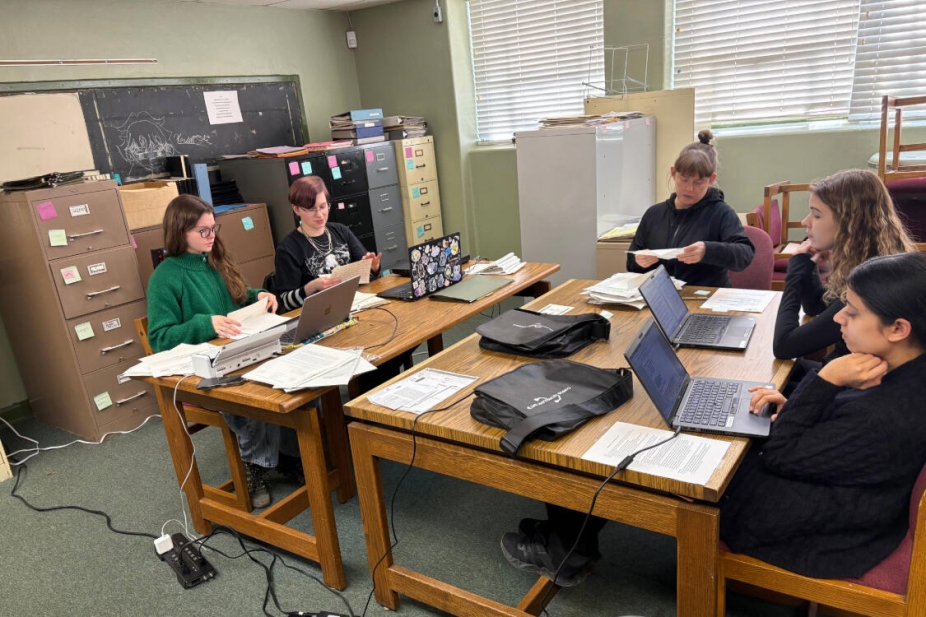 University of Windsor students and professor Dr. Ashley Glassburn travelled to Peru, Ind., to spend a week digitizing archives for the Miami Nation of Indiana. (Courtesy Ashley Glassburn/ University of Windsor)
By Lindsay Charlton
For decades, the Miami Nation of Indiana has been fighting for its sovereignty to be acknowledged by the United States government, an effort a group of UWindsor students recently supported by helping preserve historical records.
Led by Dr. Ashley Glassburn, a professor in the Department of Interdisciplinary and Critical Studies, the students travelled to Peru, Ind., to spend a week digitizing the tribe’s archives, preserving records that serve as evidence of community continuity and political authority.
— Published on May 12th, 2026
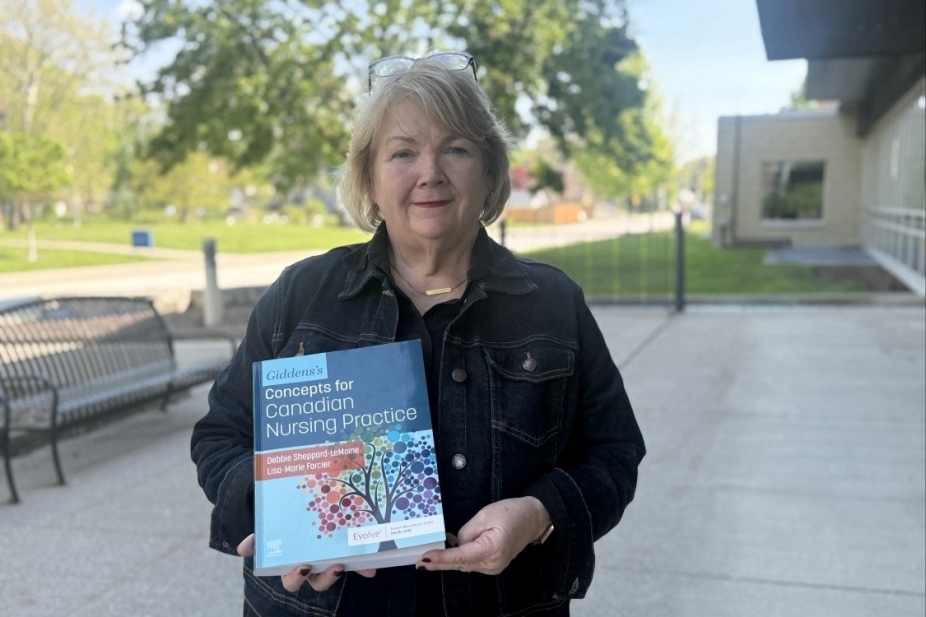 Dean Debbie Sheppard-LeMoine co-edited Giddens’s Concepts for Canadian Nursing Practice, a new national textbook featuring contributions from experts across the country, including several UWindsor nursing faculty. (RONAK DOOWD/University of Windsor)
By Sara Meikle
At the University of Windsor Faculty of Nursing, classroom concepts have moved into print.
A new national publication featuring several faculty contributors is doing more than filling a gap in academic literature — it’s helping define how future nurses across Canada will learn, think and practise.
— Published on May 11th, 2026
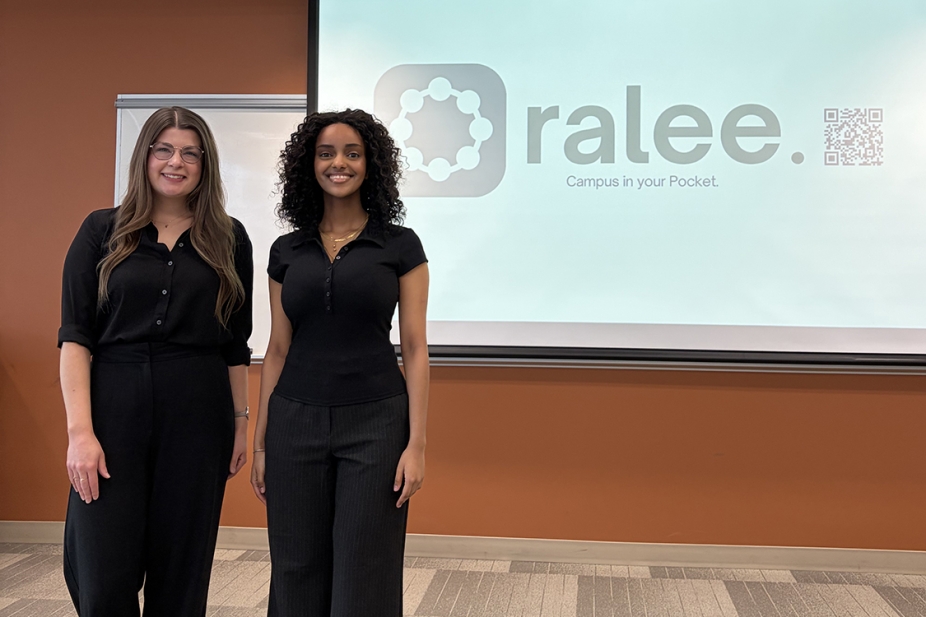 Sydney Thompson (left), program co-ordinator with the Office of Innovation, Partnerships and Entrepreneurship, stands with Kalkidan Wubshet, the first student to take part in the University of Windsor’s Entrepreneurship Co-op program. (MAHNOZ AKTARI/University of Windsor)
By Victor Romao
Instead of stepping into a traditional co-op role, University of Windsor computer science student Kalkidan Wubshet spent the work term building a startup — an experience that began with a simple realization.
“When it comes to communicating on campus, most students rely on word of mouth, Instagram, Discord, bulletin boards, etc.,” said Wubshet. “Everything is scattered.”
— Published on May 13th, 2026
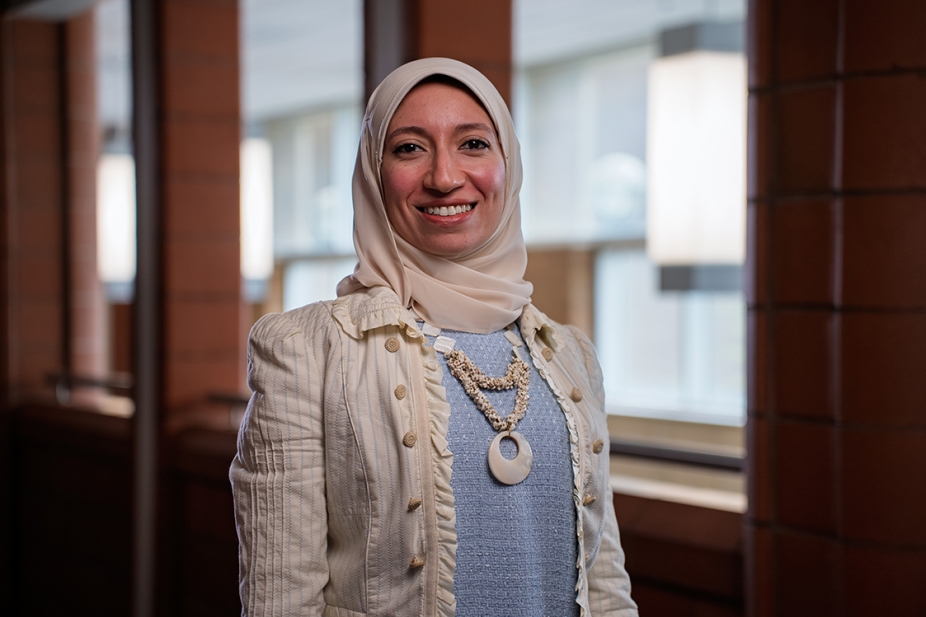 Odette School of Business professor Dr. Esraa Abdelhalim has received a Social Sciences and Humanities Research Council Insight Development Grant to study how generative artificial intelligence can be used to enhance workplace performance without undermining motivation or personal agency. (DAVE GAUTHIER/University of Windsor)
For most workers, the appeal of generative AI is obvious: faster drafts, quicker analysis, less time on the routine parts of the job.
— Published on May 5th, 2026
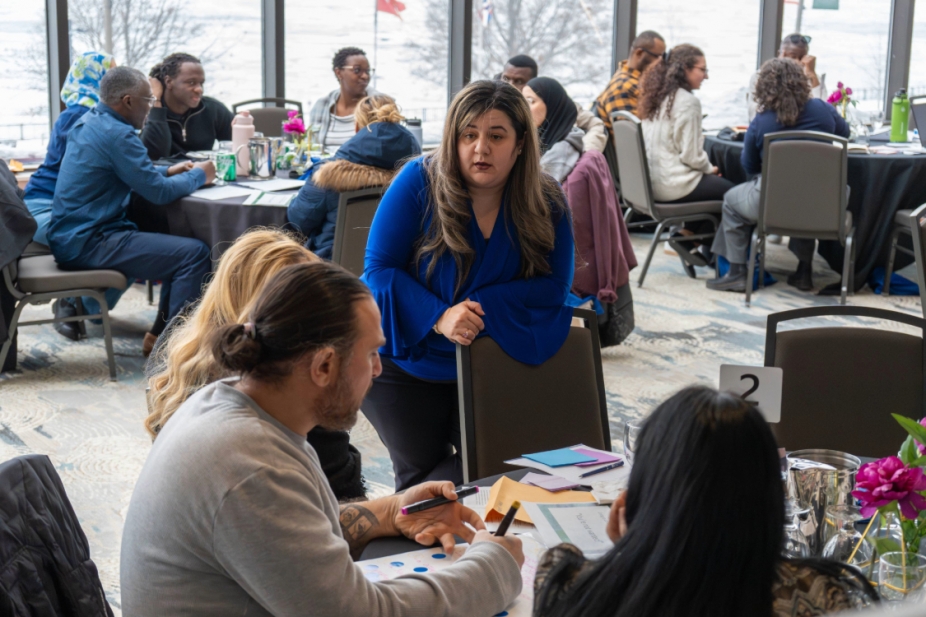 School of Social Work professor Dr. Riham Al-Saadi hosted the forum, Approaches to Integrating Immigrants & Refugees 2.0, bringing together community organizations, service providers and practitioners for a day of learning about inclusive approaches to newcomer integration in Windsor-Essex. (Photo courtesy of Riham Al-Saadi/ University of Windsor)
By Lindsay Charlton
What began as an icebreaker — picking up a marble for each statement that applied and weighing how light or heavy a bag felt — opened a frank discussion about power and privilege.
“The best assumption is usually that if you are coming from a dominant background, your bag is lighter,” School of Social Work professor Dr. Riham Al-Saadi shared. “This led to emotional reflections from those with lighter bags and conversations about what they can do to support.”
— Published on May 4th, 2026
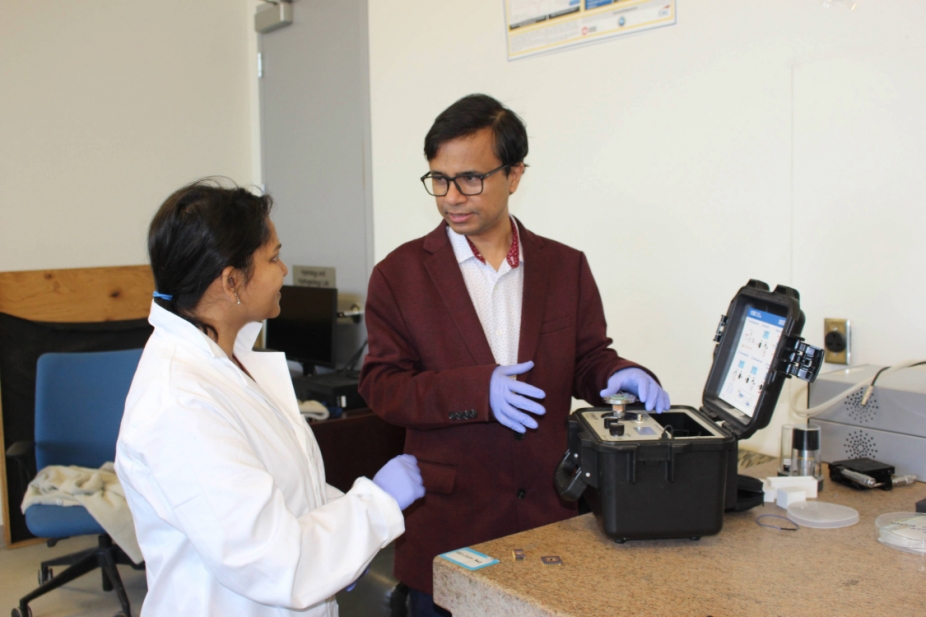 Dr. Jalal Ahamed, mechanical, automotive and materials engineering professor, and lab manager Bhawya in the MicroNano Mechatronics Lab at the University of Windsor. (ANGELA KHARBOUTLI/ University of Windsor)
By Lindsay Charlton
Every time a car deploys an airbag, a smartphone tilts its screen or a satellite adjusts its position in space, tiny motion sensors are at work — quietly measuring movement with remarkable precision.
At the University of Windsor, researchers are working to push that technology further, developing next-generation sensors that are smaller, more accurate and better suited for large-scale manufacturing.
— Published on May 4th, 2026
 PhD student and secondary English teacher Samita Sarkar is researching high school teachers' navigation of a changing AI landscape (PROVIDED BY S. SARKAR/University of Windsor)
By Kate Hargreaves
When Samita Sarkar was a new teacher, a lot was happening in the world. ChatGPT was going viral online — and so was a global pandemic.
As a secondary school English teacher, she found herself confronted with issues around artificial intelligence (AI) and student writing assessment with little to no policy guidance.
“We had to make high-stakes decisions around academic integrity, assessment and what counts as ‘student writing’ with no institutional guidance or administrative support,” she says.
— Published on May 5th, 2026

 University of Windsor nursing students and faculty sourced sustainable menstrual kits prepared for girls attending a leadership and health education program in Tanzania as part of a global health experiential learning initiative. (SUBMITTED BY RACHEL ELLIOTT/University of Windsor)
