 Anold Mulaisho, Dr. Carlo Handy Charles, drag performers Valentina Rosé and Baddie Brooks and Dr. Camisha Sibblis, Director of the Black Scholars Institute, participated in the Black Queer and Trans Migrants and Racism Conference at the University of Windsor’s Black Scholars Institute in March 2026 (DAVE GAUTHIER/University of Windsor)
By Kate Hargreaves
Being legally protected on the basis of gender identity, gender expression and sexual orientation is not the same thing as belonging.
That is the message of a new report by UWindsor sociology professor Dr. Carlo Handy Charles examining the experiences of Black queer and trans migrants in Windsor-Essex.
— Published on Aug 20th, 2026
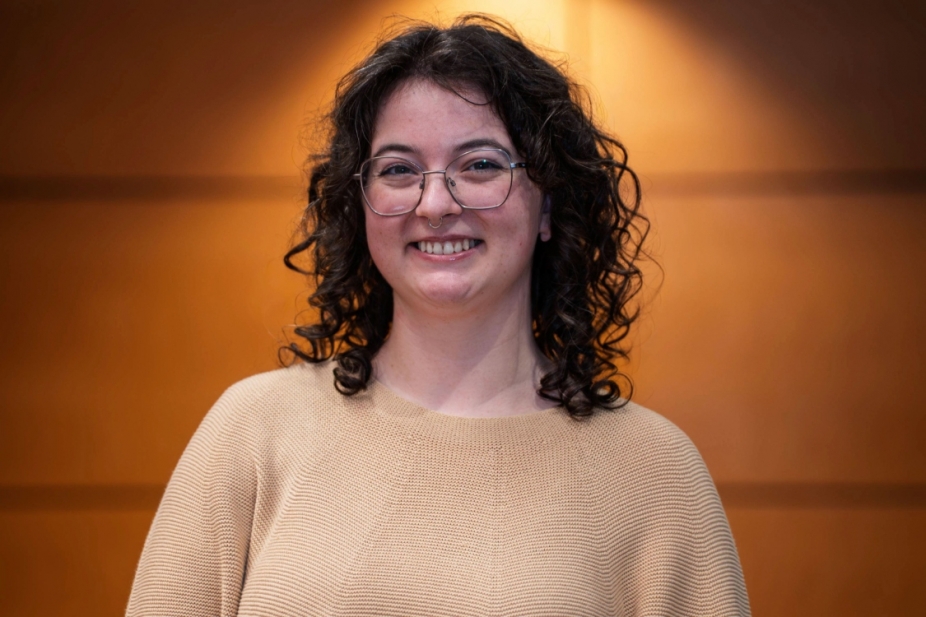 Isabelle Hinch beat 16 other graduate students to win the 2026 University of Windsor 3MT® competition. (DAVE GAUTHIER/University of Windsor)
By Sara Elliott
Isabelle Hinch’s ability to explain her research on how childbirth affects breast cancer risk in three minutes has earned her a spot in a national pitch competition.
Her talk, Breastfeeding helps reduce the risk of breast cancer…but, explores the complicated truths surrounding breast cancer risk after childbirth.
— Published on Aug 19th, 2026
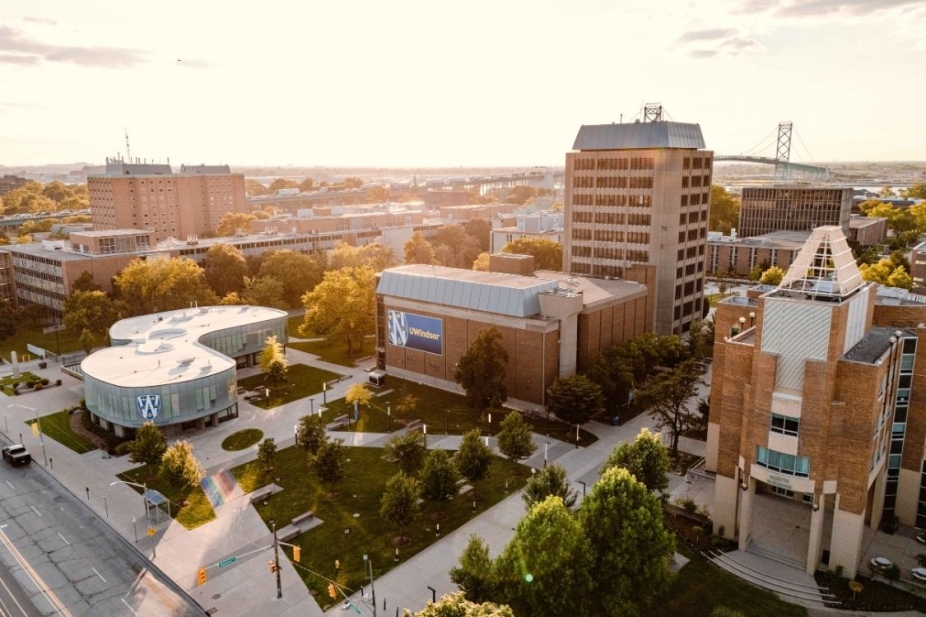 A new Anxiety Canada Speaker series will launch at the University of Windsor on Thursday, Sept. 24, 2026.
By Lindsay Charlton
Studies suggest nearly one in three people will experience an anxiety disorder in their lifetime, sometimes beginning early in life and affecting quality of life for years.
— Published on Aug 19th, 2026
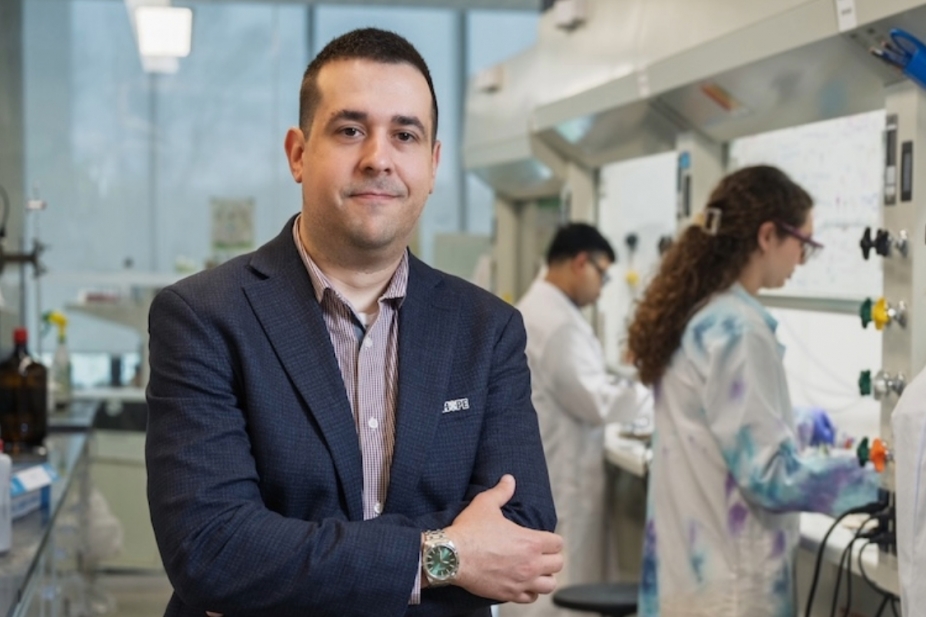 Dr. Simon Rondeau-Gagné will receive $400,000 from the Natural Sciences and Engineering Research Council of Canada (NSERC) as part of a larger $2 million National Science Foundation (NSF) grant through the Designing Materials to Revolutionize and Engineer our Future program. (PETER MARVAL/University of Windsor)
By Sara Elliott
Simon Rondeau-Gagné is developing a new generation of smart, flexible polymer materials that could transform how technology interacts with the human body.
In the not-so-distant future, those materials could contribute to medical breakthroughs ranging from wearable biosensors that detect disease earlier to implantable devices that help restore vision.
— Published on Aug 17th, 2026
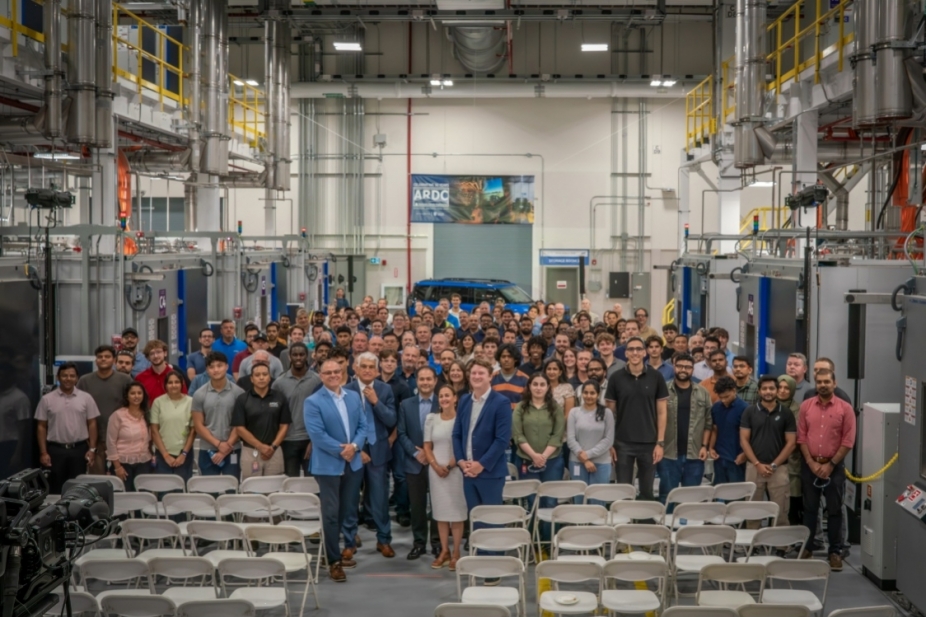 Celebrating 30 years of partnership, the Stellantis Canada-University of Windsor Automotive Research and Development Centre (ARDC) welcomed visitors on Tuesday, Aug. 4, 2026, inside the facilities. (KYLE ARCHIBALD/ University of Windsor)
Marking 30 years of collaboration, the Stellantis Canada-University of Windsor Automotive Research and Development Centre (ARDC) welcomed visitors Tuesday for a rare look inside the facilities and technology driving the future of vehicle development.
A first-of-its-kind Canadian partnership between industry, academia and government, the ARDC conducts research, testing and engineering work to advance the technology, quality and safety of tomorrow’s vehicles.
— Published on Aug 6th, 2026
 Joint PhD in Educational Studies students are spending July 2026 on UWindsor's campus (FILE/University of Windsor)
By Kate Hargreaves
On an extremely hot day in early July, 42 doctoral students arrived on the University of Windsor campus for the Joint PhD in Educational Studies 2026 summer institute.
Over the whirr of handheld fans, first-year students introduced themselves to one another while second years exchanged hugs and life updates after a year apart.
— Published on Jul 20th, 2026
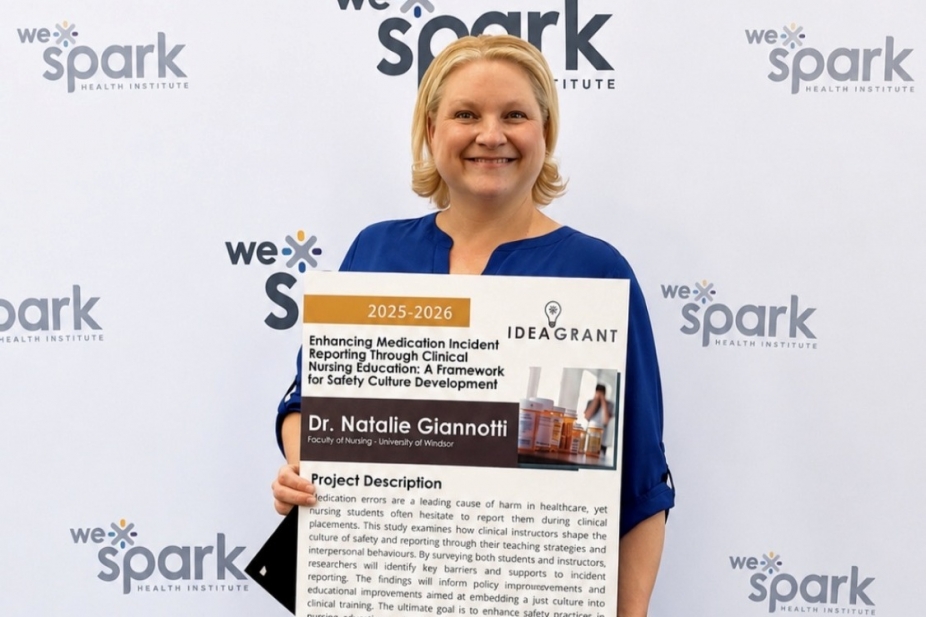 Faculty of Nursing professor Natalie Giannotti led a study examining perceptions of medication incident reporting, helping advance a culture of patient safety, learning, and transparency. (SUBMITTED BY NATALIE GIANNOTTI/University of Windsor)
By Sara Meikle
Administering medication may appear straightforward, but behind every dose is a complex series of steps where errors can still occur despite the best intentions of health-care professionals.
Nearly two decades after introducing a medication incident reporting system for nursing students, the University of Windsor is seeing evidence that its efforts to build a culture of safety are taking hold.
— Published on Jul 14th, 2026
 UWindsor nursing graduate Aaron Aine now works as a registered nurse in labour and delivery after overcoming the challenges of immigrating to Canada, starting university during the pandemic and earning his Canadian citizenship while completing his degree. (SUBMITTED BY AARON AINE/University of Windsor)
By Sara Meikle
Just a few years ago, Aaron Aine imagined a very different future.
Growing up in Uganda, he studied history, economics and literature with plans to become a lawyer. Nursing was never part of the plan.
Everything changed after immigrating to Canada in 2019. Aine completed his final year of high school in Scarborough before enrolling in the University of Windsor's nursing program at the height of the COVID-19 pandemic.
He was adapting to a new country, a new education system and a new way of learning all at once.
— Published on Jul 14th, 2026
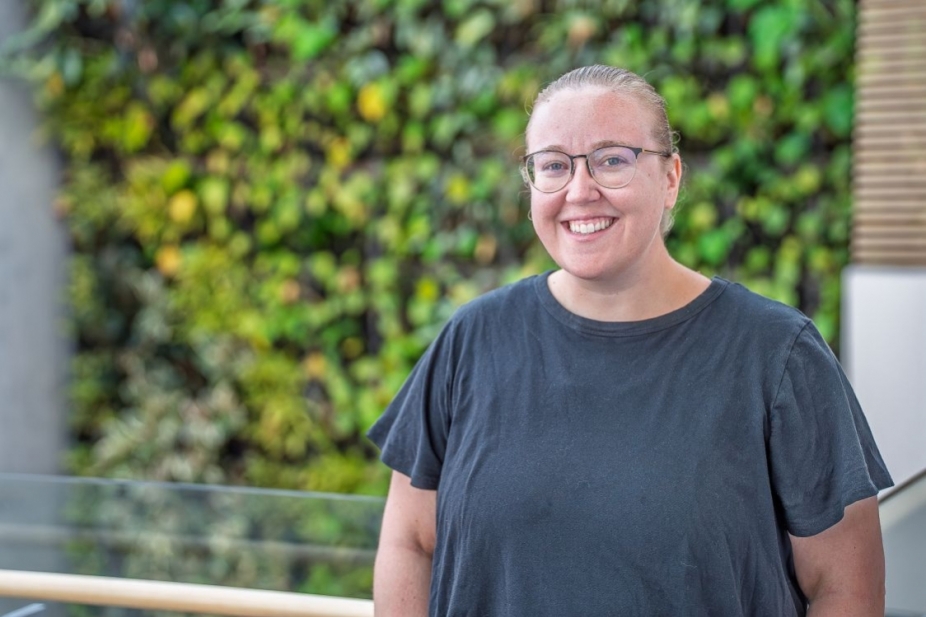 Dr. Maddie Brockbank is one of the first cohort of Innovation Fellows in a new program at the University of Windsor (KYLE ARCHIBALD/University of Windsor)
By Kate Hargreaves
When social work professor Maddie Brockbank first saw the call for applications to UWindsor’s Innovation Fellowship, she wasn’t sure her work would be a good fit.
“I remember thinking, this is not for me,” she recalls.
— Published on Jul 13th, 2026
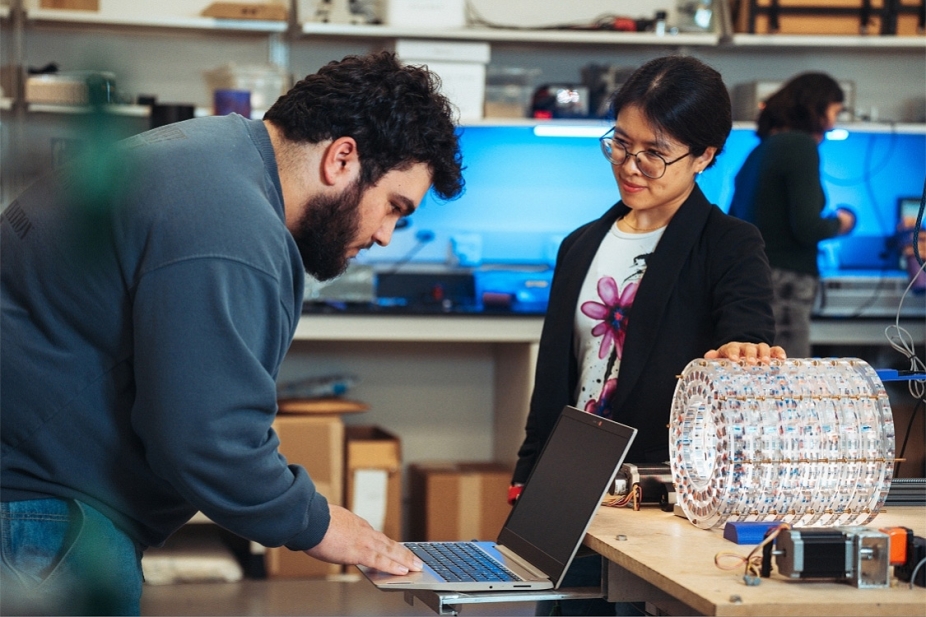 Dr. Dan Xiao (right) is designing a low-cost magnetic resonance imaging device. (University of Windsor)
By Sara Elliott
Ten University of Windsor researchers are turning their work into ventures as members of the inaugural Innovation Fellowship cohort.
The fellows aim to bring research-based business ideas to market, from a cybersecurity training program to a low-cost magnetic resonance imaging (MRI) device.
— Published on Jul 21st, 2026

 Anold Mulaisho, Dr. Carlo Handy Charles, drag performers Valentina Rosé and Baddie Brooks and Dr. Camisha Sibblis, Director of the Black Scholars Institute, participated in the Black Queer and Trans Migrants and Racism Conference at the University of Windsor’s Black Scholars Institute in March 2026 (DAVE GAUTHIER/University of Windsor)
