
All Stories

hand holding smart phone displaying UWindsor Alert

Campus Police and Information Technology Services will conduct a test of the UWindsor Alert mass notification system at 10:15 a.m. Tuesday, Dec. 3.

Faculty, staff, and students may register or update their contact information at http://www.uwindsor.ca/campuspolice/335/uwindsor-alert.

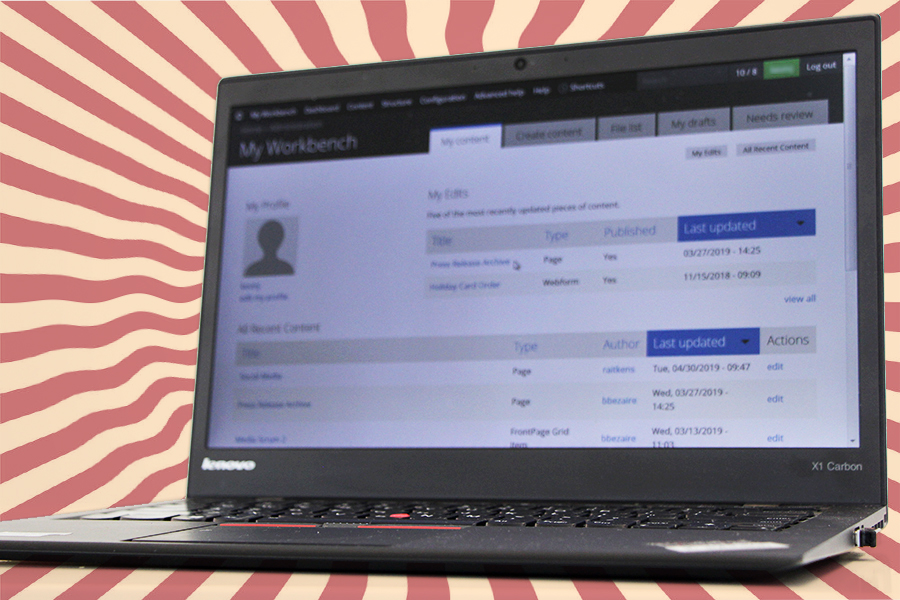
laptop computer displaying Drupal

A free class Thursday, Nov. 28, will teach the basics of the Drupal content management system to staff and faculty responsible for maintaining UWindsor websites.

Website Basic Training will show site editors how to create pages and events, upload graphics, and use menus and blocks, says instructor Rob Aitkens, web development team lead in Information Technology Services.

He will also cover University and legislative guidelines for posting content.

The class is required for all employees responsible for maintaining UWindsor websites and is valuable for those with little previous experience with the system, for those upgrading their sites from version 6 to 7, or as a refresher. It will run 9:30 a.m. to noon in the lower level classroom in the University Computer Centre. Registration is required through this online form.

Student Research Collaboratory in Leddy Library

Campus researchers are invited to take part in Research Data Management Day on Tuesday, Nov. 26, in the Student Research Collaboratory at Leddy Library.

With changes to the Canadian federal granting agencies on the horizon, Leddy Library has teamed up with the Office of Research and Innovation Services, the Office of the Research Ethics Board, and Information Technology Services to offer a half-day information and consultation session on research data management.

“Research data management is becoming a critical component to many scholarly communication initiatives, including requirements to meet funding,” said Heather Pratt, executive director of Research and Innovation Services.

Federal granting agencies such as CIHR, NSERC, and SSHRC have been advocating to make publicly-funded research more accessible by developing a policy on research data management. The policy aims to increase the benefits of research investments by creating a co-ordinated national approach to managing publicly-funded data in Canada.

“While the exact date of the policy implementation has yet to be announced, it is important for us a research institution to prepare our campus stakeholders and determine how our services can best support our research community,” said Selinda Berg, associate university librarian.

The UWindsor Research Data Management team is working to build a strategy and infrastructure for research data management practices on campus.

Data librarian Berenica Vejvoda said a commitment to sound data management planning will ensure compliance with the implementation of upcoming Tri-Agency funding policies.

“Good data stewardship demonstrates responsible research and promotes open sharing and re-use of valuable research outputs, which encourage new and innovative discoveries,” she said.

The event will include a series of invited talks on Canadian research data management policy, working with sensitive and restrictive data, data infrastructure and storage, and a panel to discuss the effects of the upcoming Tri-Agency research data management policy on researchers.

Space is limited, lunch provided. Register online: https://ctl2.uwindsor.ca/oris/workshops/12/#wkshp-113.

—Marcie Demmans

Man smiling at laptop

With the end of national cybersecurity month, staff in Information Technology Services look back on a successful awareness campaign focused on themes of general security, phishing, passwords, and safe browsing.

“We’ve received a lot of positive feedback from the campus community on the materials shared,” says Kevin Macnaughton, team leader security in IT Services. “It’s encouraging to see community members reach out to the department and recognize more early signs of potential security attacks.”

In October, the cybersecurity website received 500 unique viewers, and the department experienced increased reports of phishing and inquiries to have antivirus software installed on personal devices.

To measure the impact of the campaign and further inform future cybersecurity communication to the campus, IT Services staff asks the campus community to fill out this short survey.

All of the cybersecurity information will continue to be located on the website at uwindsor.ca/cybersecurity, which will be updated regularly with best practices and current threats.

man looking scared at computer

As much as 56 percent of email is spam, 40 percent of websites are fake, and 21 percent of phone apps are malicious, says Kevin Macnaughton, team leader security in Information Technology Services.

The internet can be a risky place — but users can take steps to minimize that risk.

“Antivirus is tried and true,” Macnaughton says.  It’s like putting on your seatbelt when you get in the car. It should be mandatory and automatic.”

But he suggests other activities that should be automatic, listing three fundamental practices for securing computers from hackers:

  1. Look for the lock in the address bar for every website that you use.
  2. Use a Virtual Private Network (VPN) when using the Internet in public spaces to secure your data
  3. Patch and Reboot your system regularly to ensure your computer is up to date and protected

Led by IT Services, Cybersecurity Awareness Month efforts highlight cybersecurity issues relevant to the UWindsor community. More information, along with how you can protect yourself, can be found at uwindsor.ca/cybersecurity. This website will be updated regularly with best practices and current threats.