
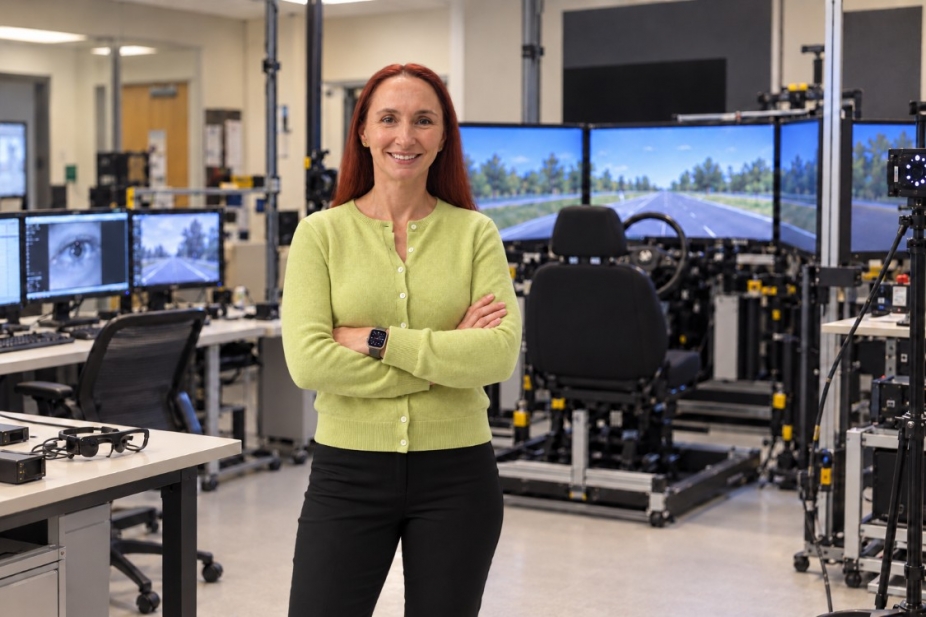
 Julie Webeck is one of two graduate students who won an ergonomics case study competition (PROVIDED BY J. WEBECK/University of Windsor)
By Kate Hargreaves
Ergonomics goes well beyond posture and repetitive movements, but the mental demands of work are often overlooked.
Two University of Windsor kinesiology graduate students are drawing attention to those demands after winning the Hazard Control Solutions category at the 2026 Ergonomics Case Study Competition.
Organized by the Centre of Research Expertise for the Prevention of Musculoskeletal Disorders, the competition invited workplaces, professionals and students to showcase ergonomic solutions that improve workplace safety.
Julie Webeck and Noor Al-Azary's winning case, "Making Cognitive Workload Visible," drew on years of research to demonstrate how cognitive demands can be measured and incorporated into workplace safety assessments.
"Ergonomic assessments traditionally focus on physical factors such as force, posture, repetition and duration," Webeck explains.
"These factors are essential, but they do not tell the whole story. Work also requires attention, decision-making, coordination and the ability to respond to changing conditions. These cognitive demands can affect how someone performs a task and interacts with equipment."
Working in kinesiology professor Dr. Francesco Biondi's lab, Webeck and Al-Azary combined eye-tracking measures, including pupil size and blinking, with other physiological data and questionnaires assessing mental and physical demands, time pressure and perceived workload.
"My research applied this approach to nursing students completing patient-handling tasks with and without an active back-support exoskeleton," Webeck says.
An exoskeleton is a wearable device designed to support physical movement and reduce strain.
Al-Azary applied cognitive workload assessments to construction exoskeleton research. Together, their findings demonstrated how the approach could be adapted to different workplaces, technologies and tasks.
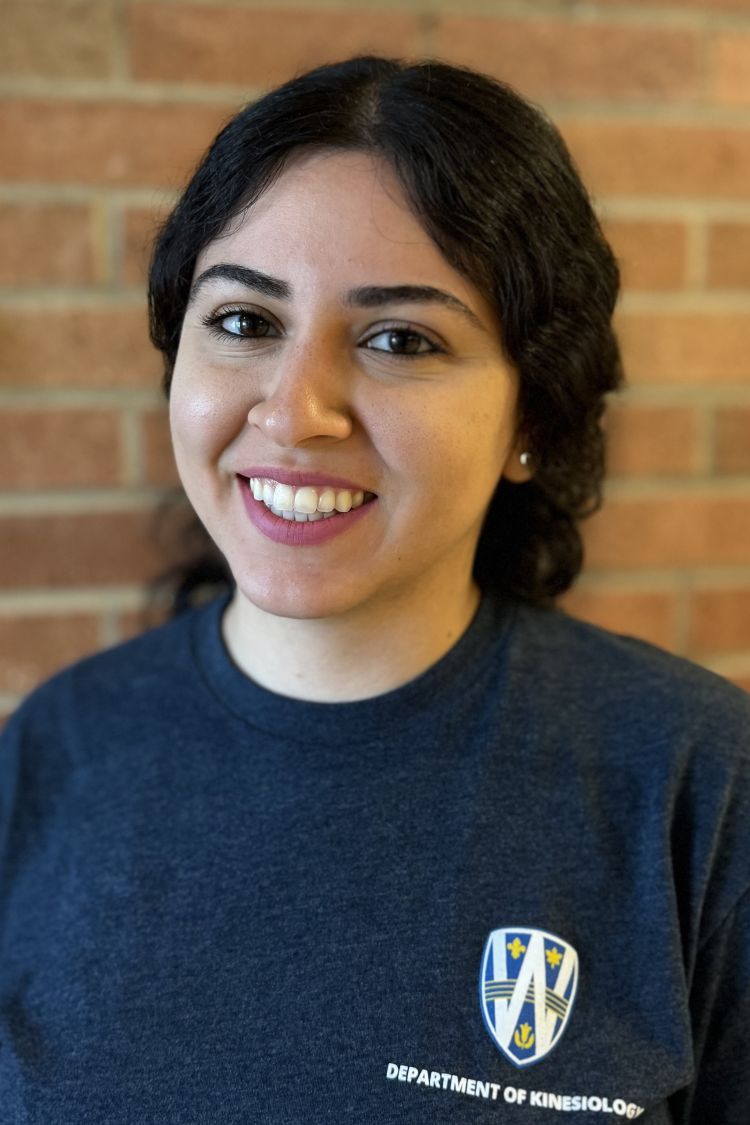
Al-Azary reviewed existing research on exoskeleton use in construction tasks, including flooring, masonry, carpentry and overhead work. She found significant gaps in how researchers assess cognitive workload, with more than half of the studies reviewed failing to measure it.
"While construction workers face physically taxing, labourious work, they also must engage in cognitively taxing processes like engaging their working memory, making decisions, communicating and cooperating with coworkers and anticipating next steps and safety hazards," she adds.
"I would like to contribute to the growing body of research that applies emerging technology for workplace assistance and accident prevention by incorporating cognitive measures as a metric of usability."
Webeck agrees that assessing both physical and cognitive demands is essential to understanding how workplace technologies affect workers.
"Cognitive workload can affect attention, movement, decision-making, task duration and how someone interacts with equipment," she says.
"A technology might reduce physical demands but introduce new challenges related to coordination, monitoring, comfort or usability. If we assess only the physical outcome, we may miss factors that affect whether an intervention is used safely and consistently.”
"We engage our working memory to remember lists and the order of tasks we need to execute," adds Al-Azary.
"We use our judgement to weigh the pros and cons of each decision we consider. We use language to communicate with each other for a group project effort. All of these processes, when taxed or limited, can contribute to mistakes, and mistakes can contribute to risk of injury. If we want to make assistive technology more effective and workplaces safer, we need to expand ergonomics to capture the cognitive experience."
For Webeck, the competition was also an opportunity to make research findings accessible beyond academia.
"Research is important, but its value is limited if the findings remain within academic papers and never reach the people who could benefit from them," she says.
"I enjoyed translating technical research into something that ergonomists, employers and other workplace practitioners could understand and potentially apply."
The competition win reinforced the potential for their research to improve workplace safety.
"This award has encouraged me to continue looking for ways to connect research with real-world practice," Webeck says.
"The most rewarding part of this work is seeing how an idea developed in a research setting can contribute to safer, more usable and more human-centred workplaces. That is the type of impact I hope to continue making throughout my career."
Looking ahead, Al-Azary hopes to apply cognitive workload measurements to real-world construction tasks involving assistive technologies such as exoskeletons.
Webeck says that she wants to continue working at the intersection of research, technology and practical ergonomics, including how wearable sensors and eye tracking can improve understanding of workplace demands.
"My goal is not simply to conduct research or develop new technology," she says.
"I want to translate evidence into practical tools, recommendations and workplace improvements. For me, making an impact means ensuring that good research does not end with publication, but reaches organizations and workers in a form they can actually use."
