
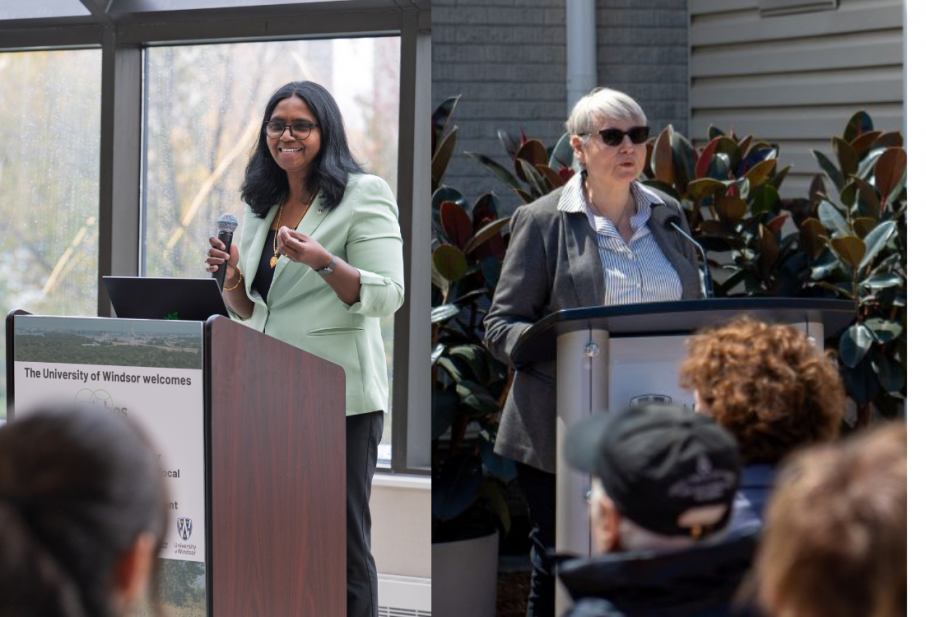
 Drs. Shanthi Johnson (left) and Veronika Mogyorody (right) advocate age-friendly cities, communities and universities (FILE/University of Windsor)
By Kate Hargreaves
With age comes a wealth of lived experience and a lifetime of growth and knowledge.
Barriers created by a lack of accessibility, adaptability and connections in our homes and communities can, however, sometimes make the aging process unnecessarily challenging.
Dr. Veronika Mogyorody — professor emerita and founder of the Visual Arts and the Built Environment program in the University of Windsor’s School of Creative Arts and current Centre for Teaching and Learning Senior Fellow — explains the drive to create age-friendly communities that reduce these barriers.
“Back around 2007, the World Health Organization (WHO) started to see in their statistics that the aging population was growing,” she says.
“They said we better start re-examining our cities and finding out how we can make them more accessible for this aging population that’s coming along.”
This realization led to the WHO’s global Age-Friendly Cities and Communities initiative. Canada has played an active part through commitments toward age inclusivity with emphases on accessibility of spaces, housing, transport and social inclusion across generations and creating conditions to add “life to years.”
This has expanded further to the global Age-Friendly University Network, of which the University of Windsor is a proud member, having joined in 2025.
The City of Windsor and Chatham-Kent are also both part of the WHO's Age-Friendly Global Network.
Creating age-friendly cities, communities and universities supports older adults who wish to age in place.
Dr. Shanthi Johnson, vice-president, research and innovation, and professor in the Faculty of Human Kinetics, says surveys consistently find that around 75 to 80 per cent of older adults prefer to remain in their own homes and communities as they age.
Despite this preference, barriers remain.
Johnson explains that aging in place is dependent on three core design factors: accessibility, adaptability and connection.
“Spaces must be safe and easy to navigate — for example with proper wayfinding — flexible enough to adjust to changing physical needs — for example appropriate font size and colour — and socially connected so people can stay engaged, not isolated,” she says.
Building in this flexibility across access needs from the start rather than as an afterthought is also a key aspect of Universal Design (UD).
“That’s the whole idea behind UD,” says Mogyorody. “This idea of designing from the very start where everybody is equal in the process.”
She explains that UD principles benefit everyone, not only older people or those with disabilities, as they allow for change and adaptability throughout the life cycle.
“When you’re pregnant, your centre of gravity changes, so you need to have railings. That’s not just for older people. When you’ve got a kid in a stroller, the ramp is not just for older people. It’s for everyone,” she says.
“This notion that it’s exclusively for one group of people at the tail end of life is absolutely ridiculous when we do this for everyone, and everyone benefits.”
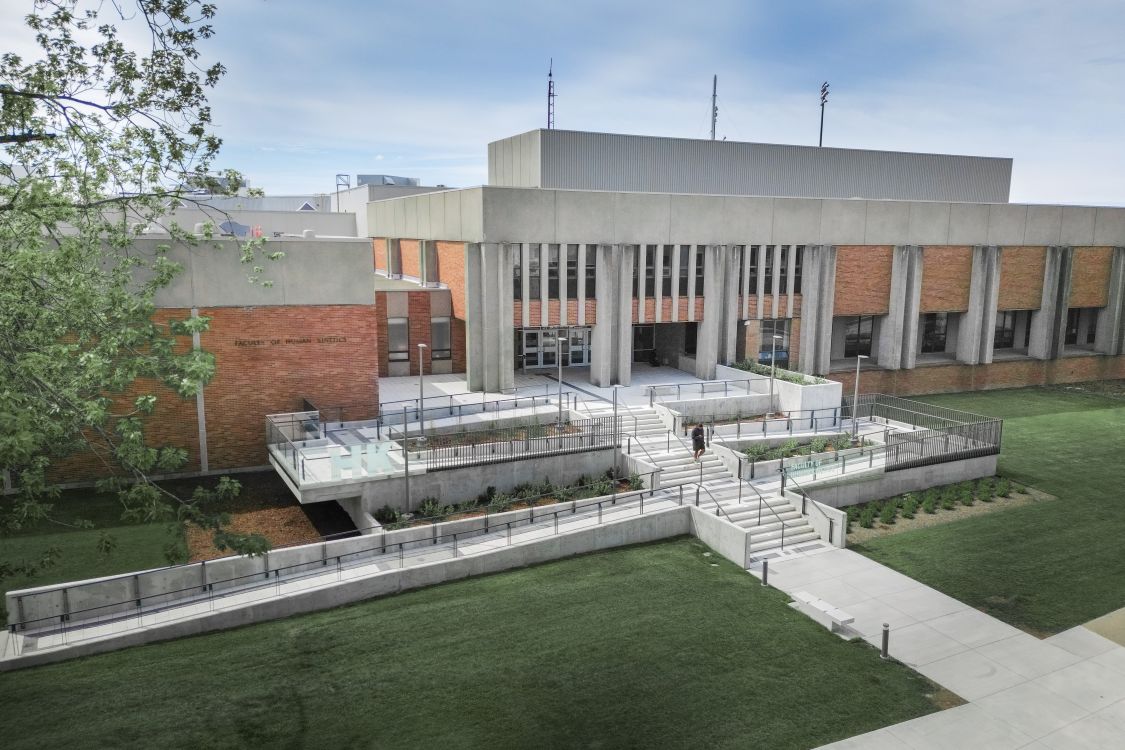
Mogyorody cites the recent updates to the Faculty of Human Kinetics entrance as an excellent example of accessible design, noting that flexibility and adaptability of spaces is key to an age-friendly campus. Another example is the Sunset House, co-designed with input from accessibility speciality Cherie Gagnon, which is now a gathering place for retired faculty and staff.
However, while making universities age-friendly may include physical accessibility, it does not end there.
"We have significant opportunities to consider adaptability and connection," says Johnson.
Mogyorody adds, “Creating a positive environment benefits everyone and facilitates engagement and opportunities for intergenerational connection."
“Shared classrooms help promote opportunities for meaningful conversations and intellectual stimulation.”
Intergenerational learning is one of the core principles of the Age-Friendly University Global Network.
Mogyorody notes the changing paradigms around who is part of the University and strengthening its connections to the broader community, including older adults.
“The University is like a home, where you may attend for a time, leave, and then come back,” she says.
“It’s not separated from the community. You don’t only come here for a brief period as a young person. Learning is a lifelong pursuit that fosters intellectual and social development, contributing to overall well-being”
Outside the academy, being age-friendly also means making our neighbourhoods and homes more accessible for aging community members and loved ones.
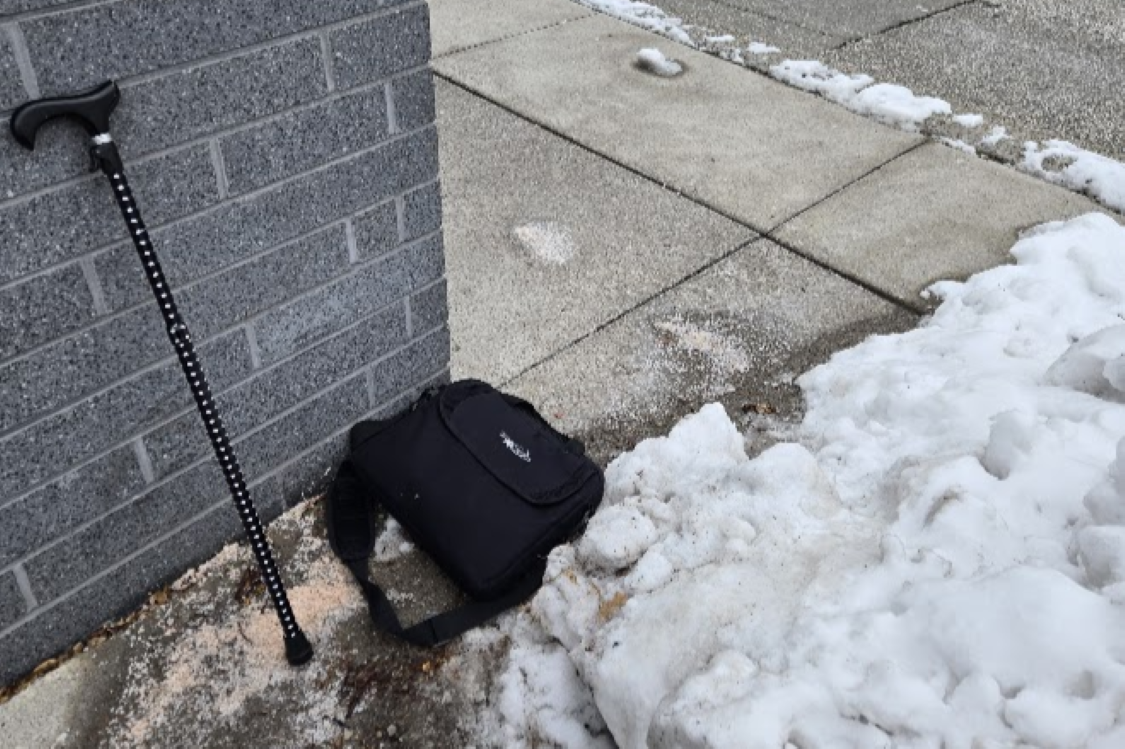
“Most physical spaces are ageist,” Mogyorody says, citing accessibility barriers from uncleared snow on sidewalks, ramps and accessible parking spaces as challenges for those using mobility devices and everyone.

However, Mogyorody sees some progress in home design as accessible and flexible options are increasingly allowing greater access, including adjustable cabinets/countertops, easy grip doorknobs, wider doors and hallways, moveable walls and motion/voice-activated devices.
“You have to think about it as a life cycle that needs adjustment through time, and all our spaces need to be like that,” she says.
For those with older relatives they would like to support them in aging in place, Johnson provides the following additional suggestions.
“Start with practical supports: make the home safer with grab bars, better lighting and removing tripping hazards. Help coordinate transportation and healthcare needs and check in regularly to reduce isolation.”
She also notes that staying physically active can help older adults maintain strength, balance and independence.
This article is part of the University News series Aging Well. For more on how movement can support healthy aging, check out additional articles in this series.
For more about the University of Windsor's as an age-friendly university, visit the initiative's website.
To learn more about the Age-Friendly University Global Network, visit their website.