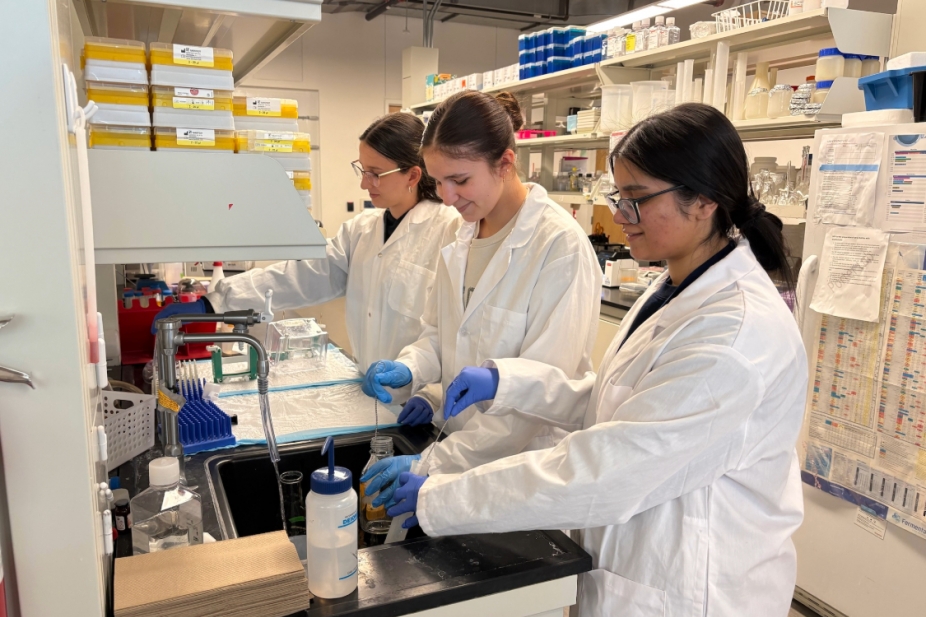
 Undergraduate researchers work in the lab of biomedical sciences professor Dr. Lisa Porter, which recently earned platinum designation through the Green Lab program.(Photo courtesy of Elizabeth Fidalgo da Silva/University of Windsor)
By Sara Elliott
Two campus labs have become the first in UWindsor’s history to earn Green Lab designations, recognized for their commitment to sustainability and energy efficiency in research and teaching.
The designations were announced in time for Earth Day.
— Published on Apr 22nd, 2026
 Corina Farai Makore, now a University of Windsor doctoral student researching correctional healthcare policy, is pictured at her 2015 MPH graduation from the University of North Texas Health Science Center. (SUBMITTED BY CORINA FARAI MAKORE/University of Windsor)
By Sara Meikle
When Corina Farai Makore began her PhD at the University of Windsor, she wasn’t just pursuing a long-held personal goal, she was equipping herself to change a system.
As healthcare manager at the South West Detention Centre in Windsor, Makore leads 50 nurses and oversees a 10-bed infirmary providing 24/7 care for incarcerated patients.
At the same time, she is a scholar using her doctoral research to guide policy reform and strengthen correctional nursing in Ontario.
— Published on Apr 14th, 2026
 Faculty of Human Kinetics professor Dr. Francesco Biondi studies distracted driving (DAVE GAUTHIER/University of Windsor)
By Kate Hargreaves
Twenty years ago, the cockpit of the average car was a lot less complicated.
Knobs and buttons turned on the heat and air conditioning, adjusted vents or changed the radio station.
Today, touch screens are the norm, and manufacturers compete to add the latest in technological advancements.
— Published on Apr 10th, 2026
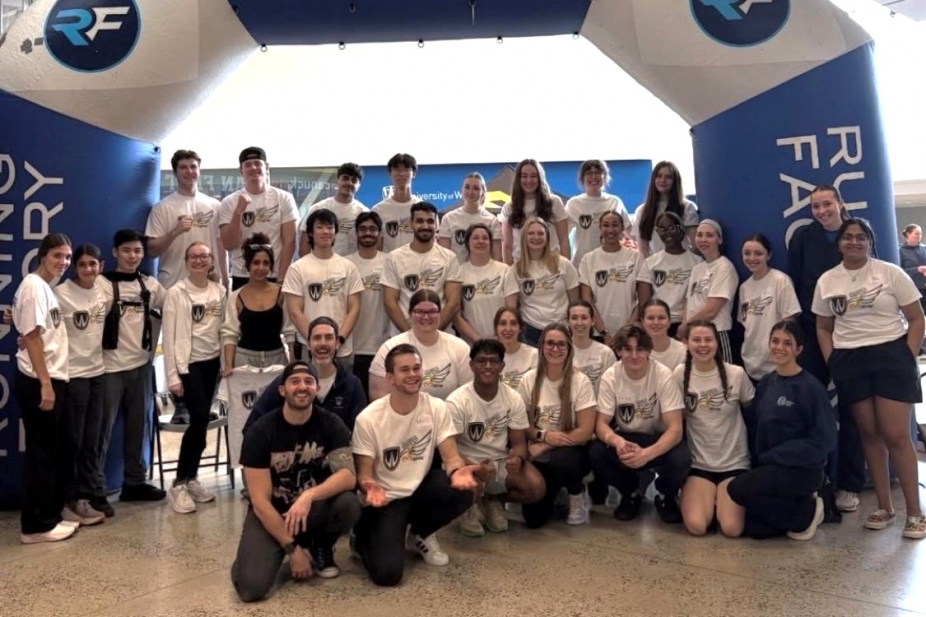 The Exercise is Medicine student club recently received news of their gold-level recognition (PROVIDED BY EXERCISE IS MEDICATION UWINDSOR/University of Windsor)
By Kate Hargreaves
Whether it’s hitting a daily step goal, taking a stretch break at the office or dropping into a spin class, regular physical activity has undeniable benefits.
Exercise is Medicine (EIM) is a global initiative that aims to make the most of these benefits by encouraging health-care providers to prescribe exercise as part of evidence-based patient care.
— Published on Apr 10th, 2026
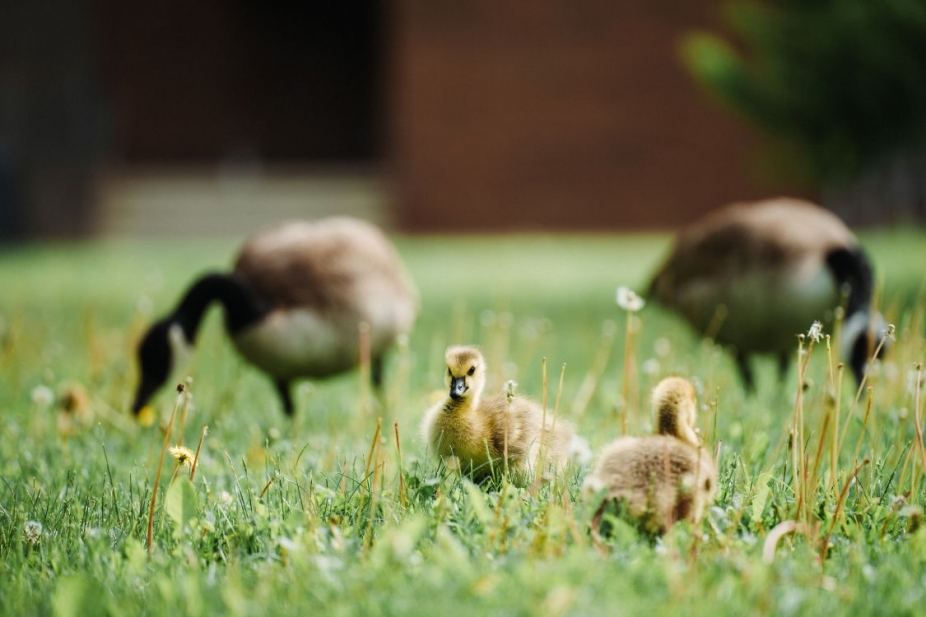 Springtime brings breeding season for Canada geese on campus (CHERRY THERESANATHAN/University of Windsor)
By Kate Hargreaves
While warmer spring weather seems to be slow to arrive this year, one of the surest signs of spring on campus is the often-noisy activity of Canada geese.
Whether honking from the rooftops of tall buildings or nesting in the grass — or occasionally hissing at a passer-by who comes too close — Canada geese are ubiquitous at the University of Windsor.
— Published on Apr 9th, 2026
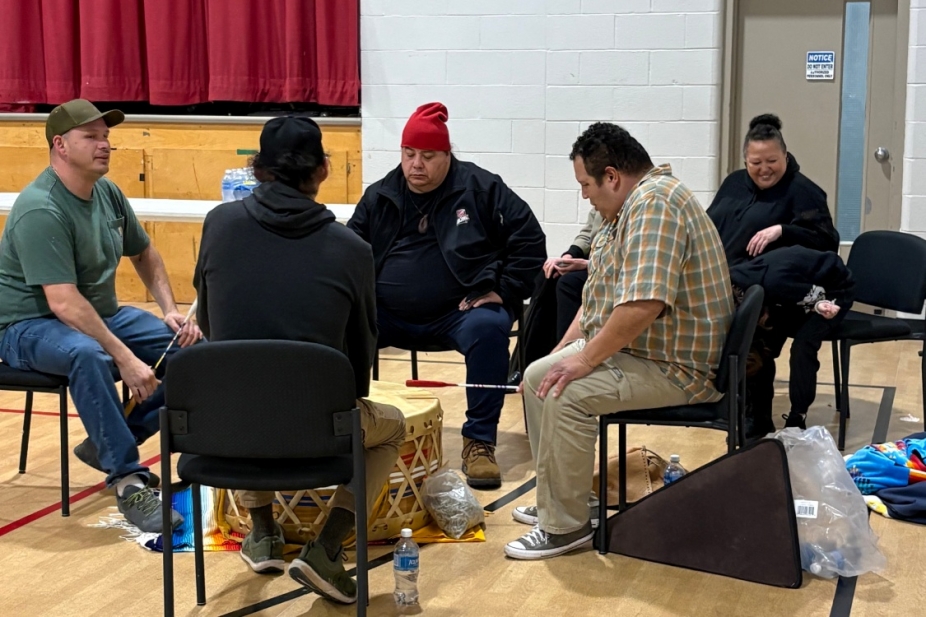 Members of the Aamjiwnaang First Nation community gather around a traditional drum, opening and closing the students' visit with ceremonial songs that honoured culture and connection. (SUBMITTED BY GEMMA SMYTH/University of Windsor)
By Sara Meikle
For first-year law students at the University of Windsor, learning about access to justice often begins in the classroom.
But on March 20, that learning extended beyond campus, onto the lands of Aamjiwnaang First Nation.
Supported by UWindsor’s Article U: Diversity, Indigeneity, and Anti-Racism Professional Development Fund and Windsor Law, students in the Access to Justice course travelled to the community near Sarnia for a day of land-based, experiential learning centred on environmental and treaty rights.
— Published on Apr 6th, 2026
 Dr. Danardo Jones of the University of Windsor's Faculty of Law, emphasizes that upholding the law and ensuring police accountability is a responsibility shared by everyone. (DALIA DEFILIPPI/University of Windsor)
By Sara Meikle
Recent allegations of corruption involving police officers in Ontario have brought renewed attention to questions of oversight, accountability and the broader principles that guide the justice system.
For Professor Danardo Jones, a criminal law scholar at the University of Windsor’s Faculty of Law, the moment offers an opportunity to examine how those principles are applied, upheld and understood both inside and outside policing institutions.
— Published on Mar 26th, 2026
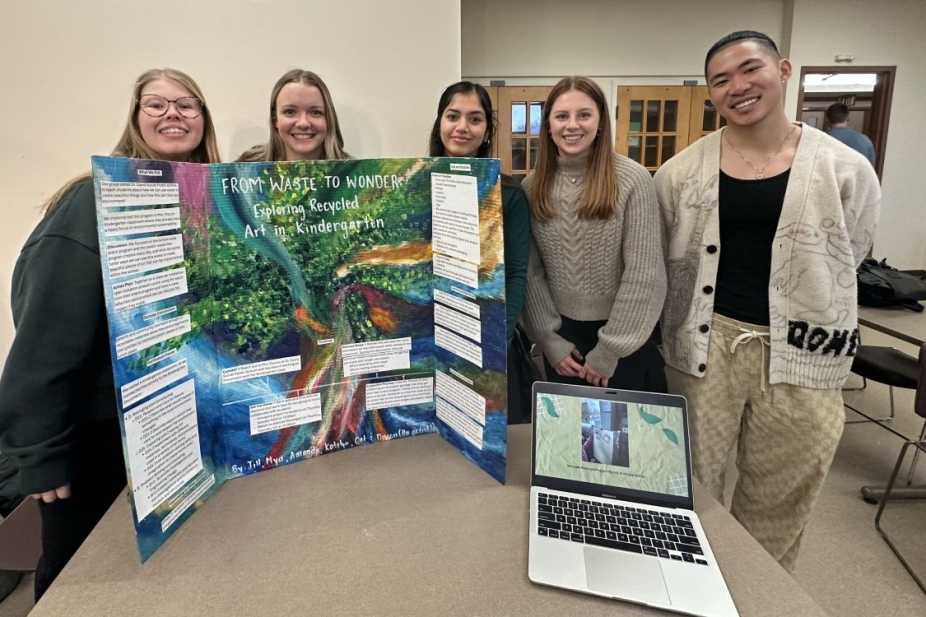 Year-two teacher candidates shared their service-learning projects with first-year education students at the Service-Learning Fair (SHIJING XU/University of Windsor)
By Kate Hargreaves
While experiential learning has always been central to teacher education — in the form of teaching placements in elementary and secondary schools — University of Windsor teacher candidates have the unique opportunity to participate in service-learning programs to broaden their horizons, expand their skills and give back to the community.
— Published on Mar 25th, 2026
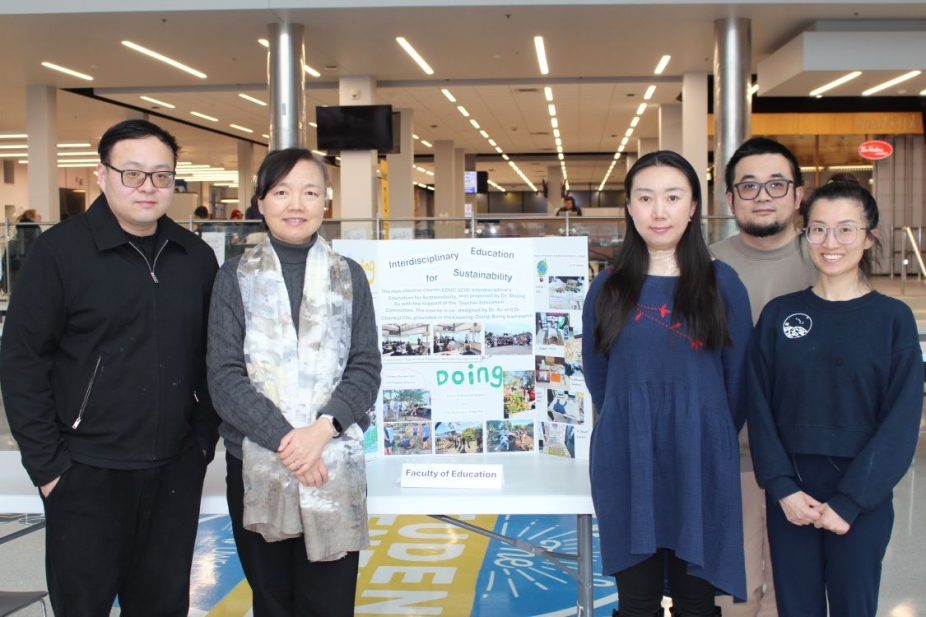 Dr. Chenkai Chi (far left) is the instructor for the service-learning course Interdisciplinary Education for Sustainability, designed by Dr. Shijing Xu (second from left) (ANGELA KHARBOUTLI/University of Windsor)
By Kate Hargreaves
Elementary and secondary teachers play a critical role in building student skills in responsible environmental citizenship.
That’s why, when the Faculty of Education recently revised its B.Ed. course offerings, it was only logical that one of the new electives focus on environmental sustainability.
— Published on Mar 17th, 2026
 A new report by UWindsor Human Kinetics researchers explores the risks of AI in maritime defence (CANADIAN MARITIME SECURITY NETWORK; CANVA STOCK/University of Windsor)
By Lori Bona
From navigation to monitoring ocean traffic, artificial intelligence (AI) is playing an increasing role in ships and maritime operations — including those used by the Canadian Armed Forces.
But relying too heavily on AI in maritime vessels introduces new risks for human operators and defence systems, according to a new report from researchers at the University of Windsor.
— Published on Mar 11th, 2026

 Undergraduate researchers work in the lab of biomedical sciences professor Dr. Lisa Porter, which recently earned platinum designation through the Green Lab program.(Photo courtesy of Elizabeth Fidalgo da Silva/University of Windsor)


