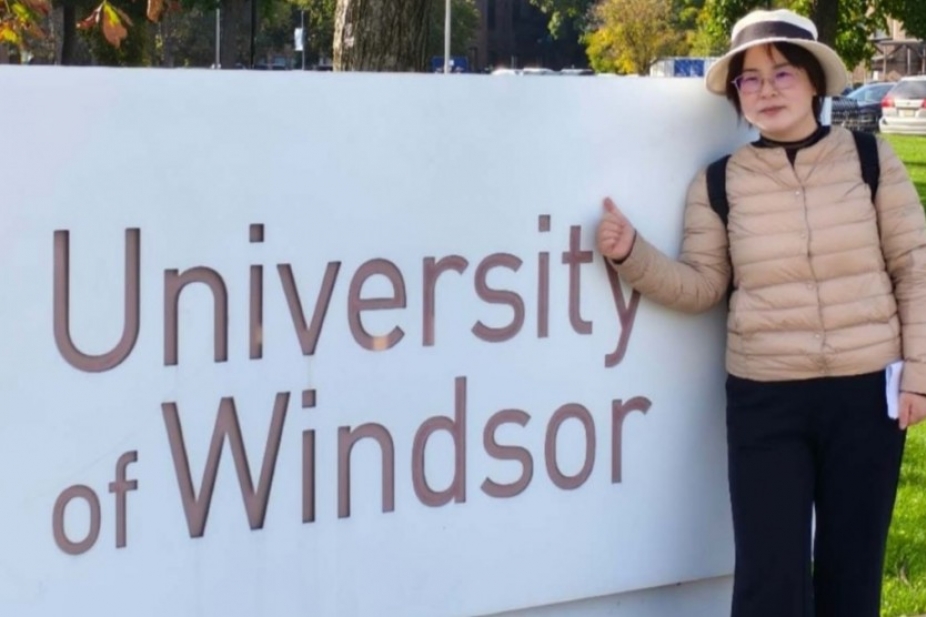
 Dr. Min Fan is a visiting scholar at the Faculty of Education (ZUOCHEN ZHANG/University of Windsor)
By Kate Hargreaves
For visiting scholar Dr. Min Fan, one of the biggest surprises about Canadian elementary education has been the relatively limited presence of artificial intelligence (AI) in her daughter's classroom compared to schools in her native China.
— Published on Oct 15th, 2026
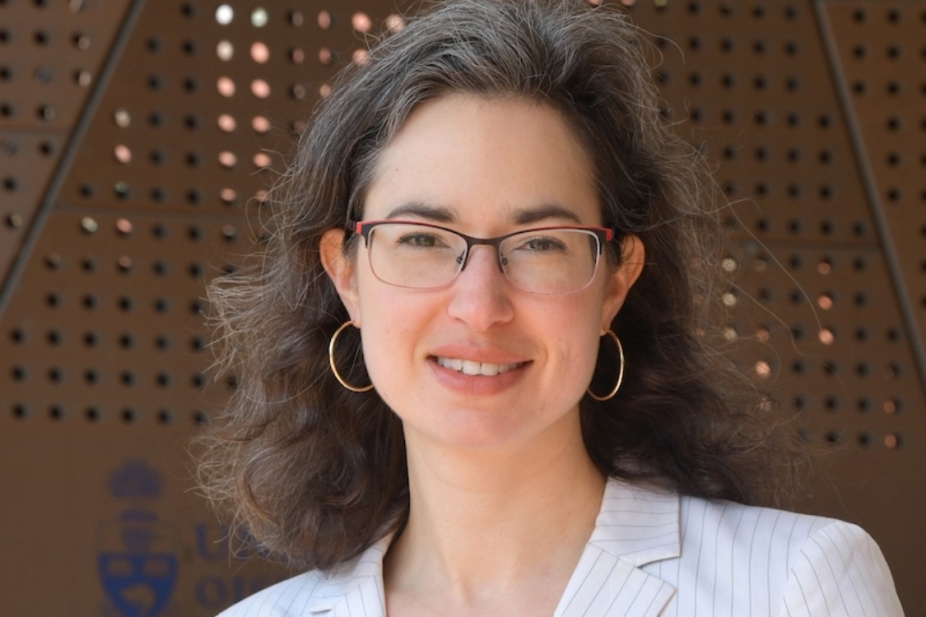 Dr. Lauren Bialystok will be the keynote speaker for the 2026 summer session of the Joint PhD in Education, hosted at UWindsor this July (PROVIDED BY L. BIALYSTOK/University of Windsor)
By Kate Hargreaves
Dr. Lauren Bialystok never wanted to research artificial intelligence (AI).
"I feel like AI chose me more than I chose it,” she says.
However, with the ubiquity of AI, including in her field of education, Bialystok found herself drawn to the topic.
“I’ve seen changes over the last few years that portend such enormous shifts in what education is for and how we go about our business,” she says.
— Published on Oct 16th, 2026
 PhD student and secondary English teacher Samita Sarkar is researching high school teachers' navigation of a changing AI landscape (PROVIDED BY S. SARKAR/University of Windsor)
By Kate Hargreaves
When Samita Sarkar was a new teacher, a lot was happening in the world. ChatGPT was going viral online — and so was a global pandemic.
As a secondary school English teacher, she found herself confronted with issues around artificial intelligence (AI) and student writing assessment with little to no policy guidance.
“We had to make high-stakes decisions around academic integrity, assessment and what counts as ‘student writing’ with no institutional guidance or administrative support,” she says.
— Published on Oct 16th, 2026
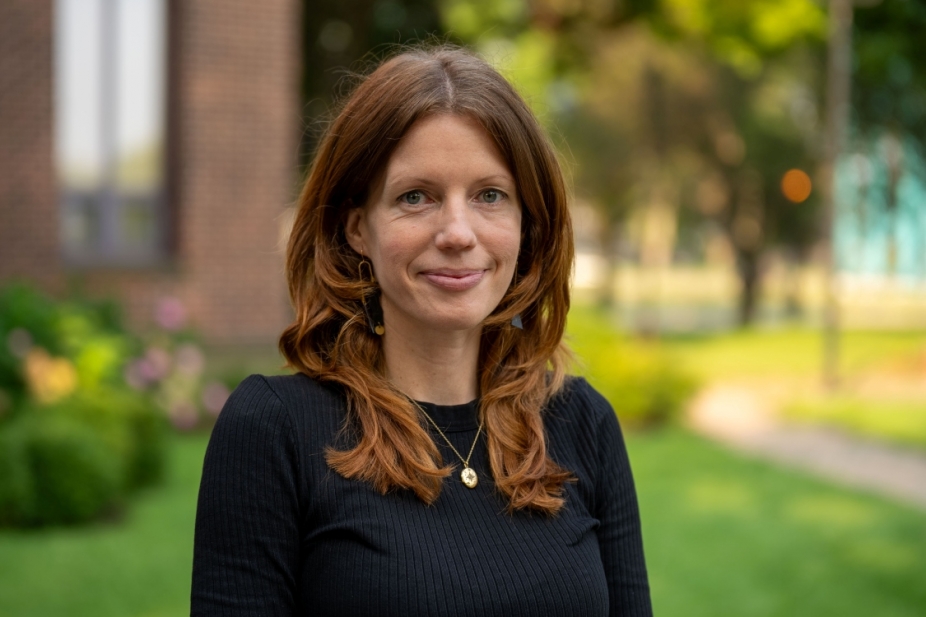 Kristen Thomasen, professor at Windsor Law, led the University of Windsor’s hosting of the international We Robot conference on robotics and AI law and policy in 2025, contributing to a new publication on AI governance. (SARAH SMITHERMAN/University of Windsor)
By Sara Meikle
From autonomous systems to algorithmic decision-making, artificial intelligence (AI) is raising questions that extend beyond the scope of law alone.
Interdisciplinary collaboration at the University of Windsor is helping address these questions by bringing multiple fields into the same conversation.
— Published on Apr 28th, 2026
 Faculty of Human Kinetics professor Dr. Francesco Biondi studies distracted driving (DAVE GAUTHIER/University of Windsor)
By Kate Hargreaves
Twenty years ago, the cockpit of the average car was a lot less complicated.
Knobs and buttons turned on the heat and air conditioning, adjusted vents or changed the radio station.
Today, touch screens are the norm, and manufacturers compete to add the latest in technological advancements.
— Published on Oct 16th, 2026
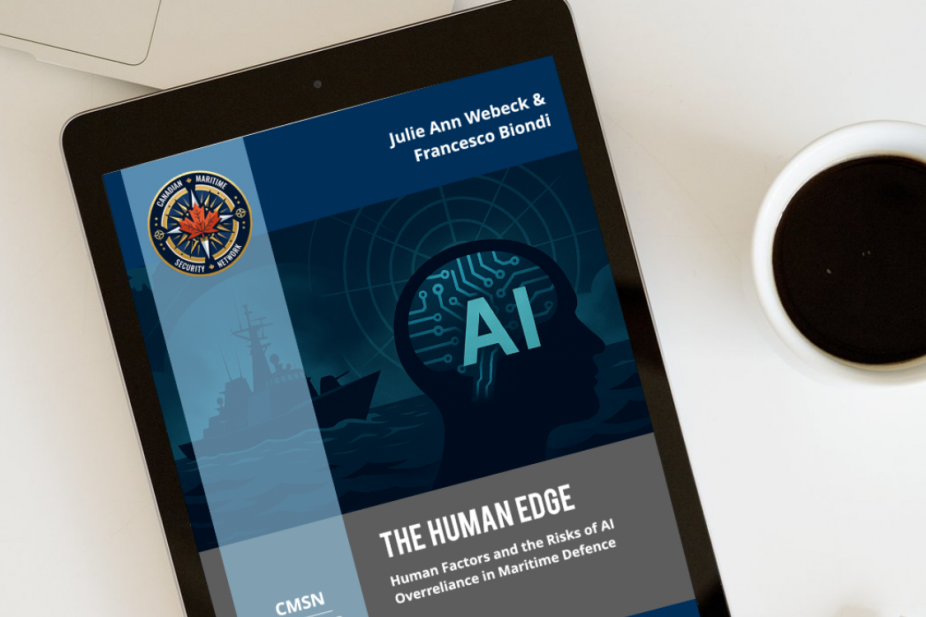 A new report by UWindsor Human Kinetics researchers explores the risks of AI in maritime defence (CANADIAN MARITIME SECURITY NETWORK; CANVA STOCK/University of Windsor)
By Lori Bona
From navigation to monitoring ocean traffic, artificial intelligence (AI) is playing an increasing role in ships and maritime operations — including those used by the Canadian Armed Forces.
But relying too heavily on AI in maritime vessels introduces new risks for human operators and defence systems, according to a new report from researchers at the University of Windsor.
— Published on Mar 11th, 2026
 Dr. Bonnie Stewart is a professor in the Faculty of Education (photo courtesy of Bonnie Stewart)
By Kate Hargreaves
From search results to article summaries, image generators and facial recognition, artificial intelligence (AI) seems to be everywhere.
Bonnie Stewart, a professor in the Faculty of Education at the University of Windsor, challenges the idea that this AI omnipresence is inevitable or even something higher education should embrace.
Having worked in digital pedagogies since the late 1990s, Dr. Stewart’s research focuses on combining educational and sociological lenses to examine how digital tools are used.
— Published on Oct 16th, 2026

 Dr. Min Fan is a visiting scholar at the Faculty of Education (ZUOCHEN ZHANG/University of Windsor)

