

Relationship Violence
Whether you are or have experienced relationship violence or you are looking for more information to help someone in your life, you deserve support.
If you are looking for support or would like a consultation about supporting someone else, reach out to us via email at svsupport@uwindsor.ca.
Find our referral sheet here, which contains a list of resources.
If it would be empowering for you, continue reading this webpage to learn more about what relationship violence is, warning signs that someone may be experiencing it, and what we can do to be helpful.

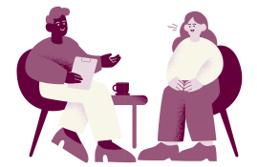 Relationship Violence (RV) is an umbrella term for a wide range of harmful behaviours within an interpersonal relationship, enacted by a current or previous intimate partner. There are many terms used for RV, including intimate parter violence, domestic violence, dating violence, spousal abuse, or family abuse, and these terms may be used in different ways.
Relationship Violence can look like physical violence, sexual violence, emotional abuse, financial abuse, stalking, and/or technology-facilitated violence, including controlling who someone is in contact with, forcing someone to share their location or passwords, or pressuring someone to send nude photos or videos.
RV can also look like coercive control (i.e., a pattern of controlling, threatening, or humiliating behaviour to get power over another person).
In extreme cases, RV can escalate to homicide and/or femicide.
Relationship violence can happen to anyone in any kind of relationship. RV can happen in a wide range of relationships - in casual, short-term, long-term, or long-distance relationships; a marriage, common-law, dating relationship, and between folks of any gender or sexual orientation.
RV is a form of gender-based violence (GBV), disproportionately impacting women and girls. Compared with men, women are at increased risk of severe and frequent physical and/or sexual RV and more serious outcomes, including psychological consequences, injuries, and femicide (Shields et al., 2024). We also know that gender-diverse people, trans folks, and members of the 2SLGBTQIA+ community are at an increased risk for experiencing RV.
Not all people face the same risks of RV or have the same RV experiences (Ogden & Tutty, 2025). Women face multiple and interacting inequalities due to other identity factors, like race, class, ability, age, and sexual identity (Baird et al., 2019). Some identity factors include being under 24 years old, people with disabilities, 2SLGBTQIA+ individuals, Indigenous peoples, and folks belonging to visible minority groups. This means that all survivors have different experiences, and their decisions on how to respond may look different based on what feels best for their own situation.

 Individuals experiencing RV may have challenges with academic or work performance, which can have rippling effects on someone’s personal and professional life in the long-term. There can be shame for survivors, contributing to isolation and silencing. These negative outcomes can also have impacts on the wider community, making RV a social issue.
These are not exhaustive lists, but here are some warning signs for students and colleagues.
- decline in academic performance, including missed assignments, failing classes, and absenteeism
- increased mental health challenges, including stress and burnout
- decline in social engagement, including withdrawal from campus activities and decreased participation in group work
- experiences of behavioural control and coercion, like excessive communication with partner, experiencing academic sabotage, or interruptions to childcare or transportation
- decrease physical safety, including experiencing stalking and physical health concerns on or off campus, or an increase in substance use
- financial and housing instability induced by partner
- decline in work performance, including decreased work quality, missed deadlines, challenges working with others, and difficulties receiving feedback
- decrease in work attendance, including an increase in sick calls
- increased mental health challenges, including stress and burnout
- decline in social engagement, including withdrawal from social activities with colleagues
- experiences of behavioural control and coercion, like excessive communication with partner, interruptions to childcare or transportation
- decrease physical safety, including experiencing stalking and physical health concerns on or off campus, or an increase in substance use
- financial and housing instability induced by partner

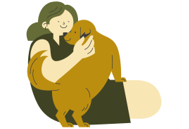 Positive reactions to a disclosure include emotional support, belief, and validation, non-blame, and listening. The response that a survivor receives when they first disclose is the single biggest predictor of recovery.
Some examples could sound like:
- “Thank you for telling me.”
- “This is not your fault.”
- “I believe you and you are not alone.”
- “I know some helpful resources. Would you like to hear about them?”
Despite the disadvantages placed on survivors, it’s important to remember that survivors are not weak, fragile, or incapable of resilience. We must believe that each person knows how to handle their situation best. Allowing survivors to make choices can help them regain a sense of autonomy. Offering resources, if they wish to hear about them, can be a helpful thing to do.
If you are a member of the UWindsor community, you can let them know about the Office of Sexual Violence Prevention, Resistance, and Support and share the Referral Sheet. Once the information is shared, it is then the survivor’s choice to decide if they would like to connect for support.
If you are a supervisor or work with someone at UWindsor, you may have additional obligations to ensure safety in the workplace. You can visit the Faculty & Staff Information page for more guidance about the Responsibility to Refer. If you are looking for a consultation, you can reach out to Dusty at dustyj@uwindsor.ca.
The Violence Against Women Coordinating Committee of Windsor Essex (VAWCCWE) has compiled a Community Resource List, including help lines, child services, counselling and support, financial support, housing, shelters, and more.

Baird, S. L., Alaggia, R., & Jenney, A. (2019). “Like opening old wounds”: Conceptualizing intersectional trauma among survivors of intimate partner violence. Journal of Interpersonal Violence, 36(17-18), 8118-8141.
Ogden, C. L., & Tutty, L. M. (2025). “Never give up. The Creator has good things in store for you”: Risk factors, protective factors, and evidence of resilience for Canadian Indigenous women abused by intimate partners. Violence Against Women, 31(6-7), 1606-1629.
Shields, M., Tonmyr, L., Pollok, N., Gonzalez, A., Hovdestad, W., Tanaka, M., & MacMillan, H. (2024). Determinants of nonphysical intimate partner violence: a cross-sectional study with nationally representative data from Canada. American Journal of Epidemiology, 194, 1695-1708.
Graphics from Canva Pro.
If you are looking for support or would like a consultation about supporting someone else, reach out to us via email at svsupport@uwindsor.ca.
Find our referral sheet here, which contains a list of resources.