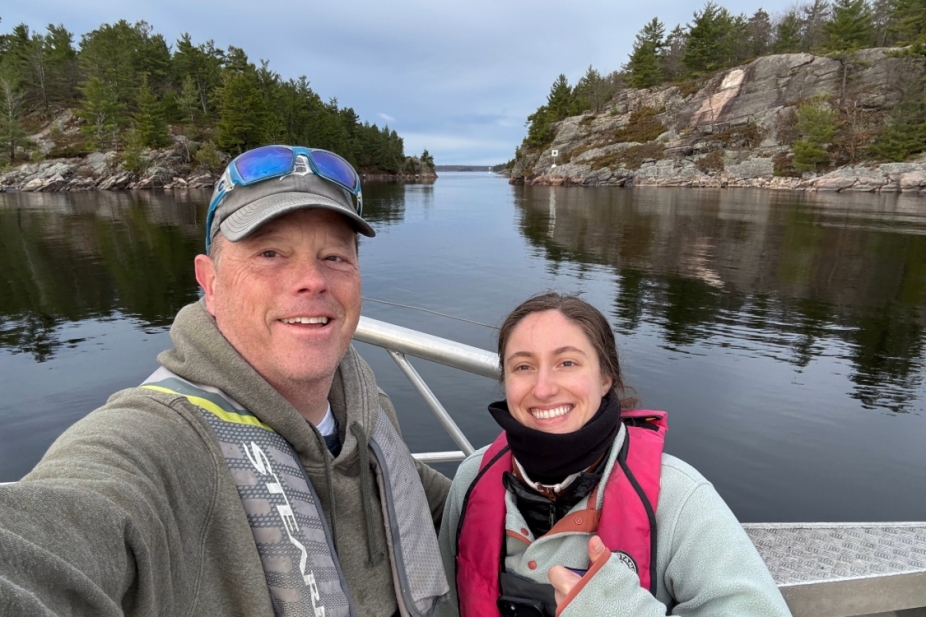
 Aaron Fisk with former graduate student and current RAEON glider technician, Lydia Paulic, in Parry Sound. (Courtesy of Aaron Fisk/University of Windsor)
By Sara Elliott
For more than two decades, University of Windsor researcher Dr. Aaron T. Fisk has helped change how scientists understand freshwater ecosystems – from how contaminants move through aquatic food webs to where fish travel, feed and spawn across the Great Lakes and the Arctic.
That body of work has now earned Fisk one of Canada’s highest academic honours.
— Published on Sep 9th, 2026
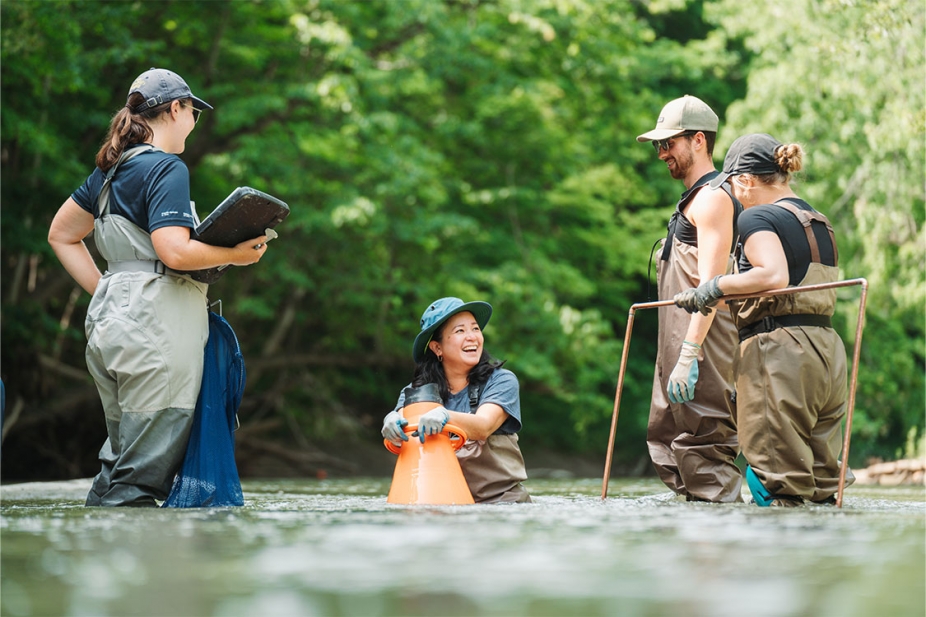 University of Windsor researcher Dr. Catherine Febria, centre, conducts field work with students in the Sydenham River as part of her freshwater restoration research. (MIKE WILKINS/University of Windsor)
From tracking fish across the Great Lakes to restoring the streams that connect land, water and communities, University of Windsor researchers Dr. Aaron T. Fisk and Dr. Catherine Febria are advancing understanding of how freshwater ecosystems are understood, managed and protected.
Their work has now earned national recognition from the Royal Society of Canada.
Fisk, professor and Tier 1 Canada Research Chair in Changing Great Lakes Ecosystems, has been elected a Fellow of the Royal Society of Canada in recognition of his contributions to aquatic research and leadership.
— Published on Sep 9th, 2026
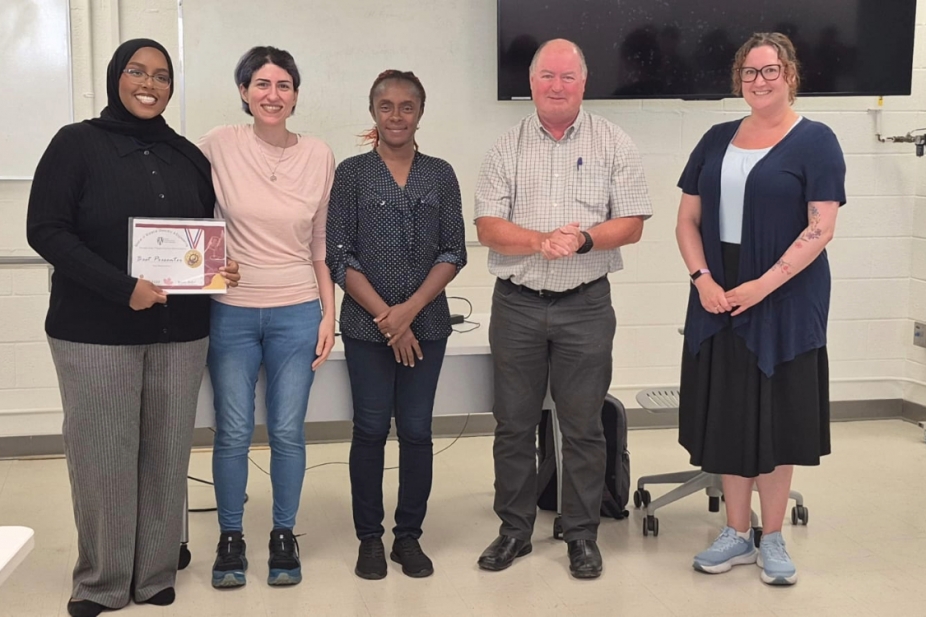 From left - Best presentation award winner; Tasnem Musa, and judges; Atousa Ahmadi, Mary Egbuta, John Hunter, and Stephanie Dupley at the third annual MCEcon Conference at the University of Windsor on Thursday, Aug. 13, 2026. (Courtesy Zareen Amtul/ University of Windsor)
University of Windsor students shared applied research in materials chemistry and engineering with scientists and industry professionals Aug. 13 at the third annual MCEcon Conference.
Hosted by the Master’s in Material Chemistry and Engineering program (MMCE), the conference gave students an opportunity to share their research, connect with industry professionals and build their professional networks.
— Published on Sep 10th, 2026
 Dr. Scott Harroun’s microscopy image, Nanoscale signaling, is a top 20 finalist in the Acfas La preuve par l'image photo contest. (SARA ELLIOTT/University of Windsor)
By Sara Elliott
The glittering gold and red image titled Nanoscale signaling is in striking contrast to the research behind it.
What appears to be a thing of beauty is, in fact, lung cancer cells studded with gold nanoparticles.
— Published on Aug 27th, 2026
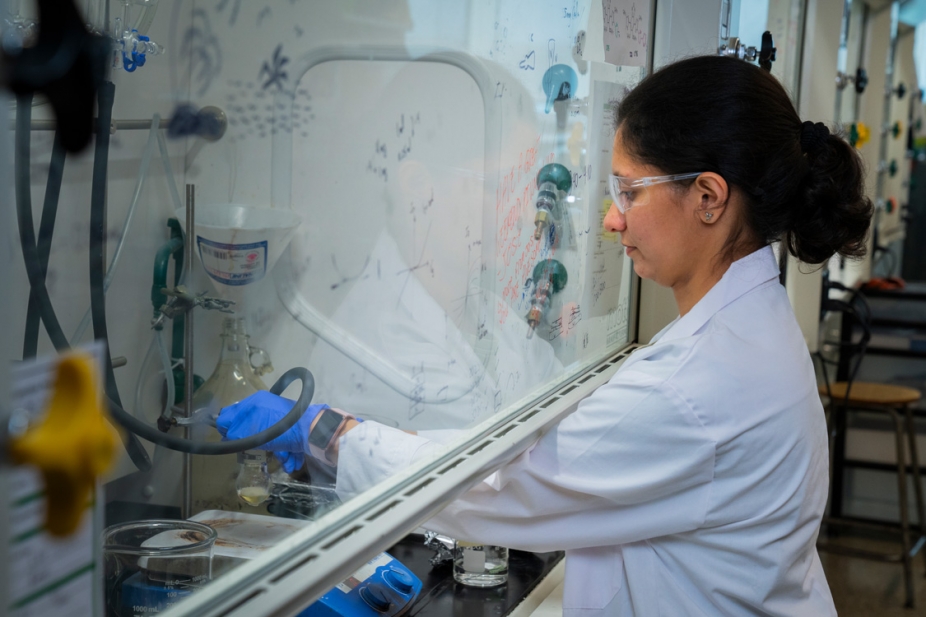 Seven awards span research in advanced digital technologies, clean technology and resource value chains, health and biotechnology, and food and water security. (FILE/University of Windsor)
The University of Windsor has secured seven Canada Impact+ Research Training Awards across the program’s two competition waves, supporting three postdoctoral researchers and four doctoral students in research areas aligned with Canada’s strategic priorities.
The one-time federal Impact+ initiative is designed to attract outstanding international or returning Canadian doctoral students and postdoctoral researchers to Canada in priority research areas, strengthening the country’s research and innovation ecosystem.
— Published on Aug 25th, 2026
 Better understanding the timing of forest fire season means better preparation for Ontario (CHRIS LEBOUTILLIER via Unsplash/University of Windsor)
By Kate Hargreaves
With smoke from fires hundreds of kilometres away blanketing the region and wreaking havoc on air quality, Ontario's fire season has become increasingly relevant in the lives of Windsorites.
At the same time, a UWindsor statistician has been crunching the numbers to help Ontario better prepare.
— Published on Aug 25th, 2026
 Isabelle Hinch beat 16 other graduate students to win the 2026 University of Windsor 3MT® competition. (DAVE GAUTHIER/University of Windsor)
By Sara Elliott
Isabelle Hinch’s ability to explain her research on how childbirth affects breast cancer risk in three minutes has earned her a spot in a national pitch competition.
Her talk, Breastfeeding helps reduce the risk of breast cancer…but, explores the complicated truths surrounding breast cancer risk after childbirth.
— Published on Aug 19th, 2026
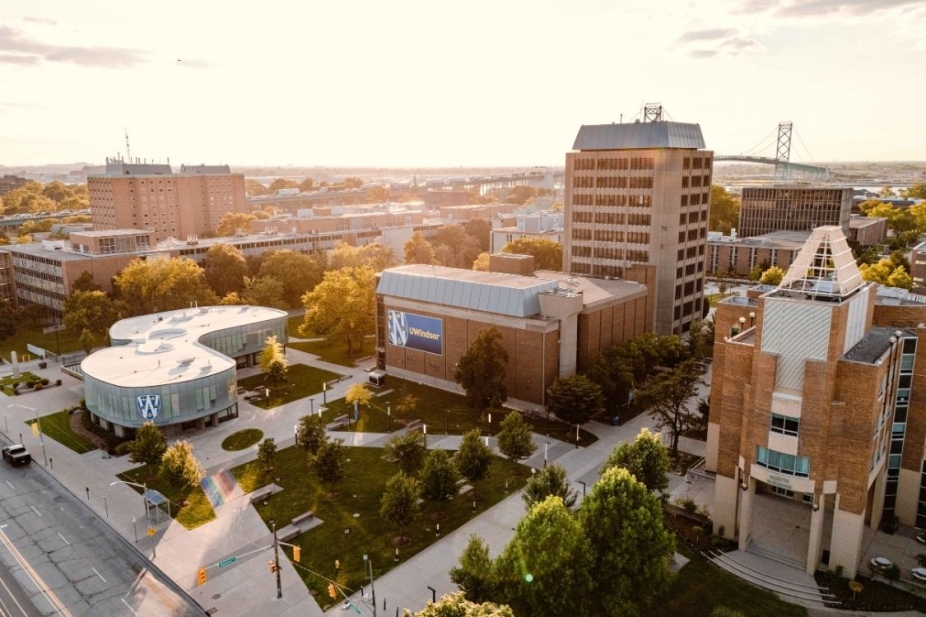 A new Anxiety Canada Speaker series will launch at the University of Windsor on Thursday, Sept. 24, 2026.
By Lindsay Charlton
Studies suggest nearly one in three people will experience an anxiety disorder in their lifetime, sometimes beginning early in life and affecting quality of life for years.
— Published on Sep 17th, 2026
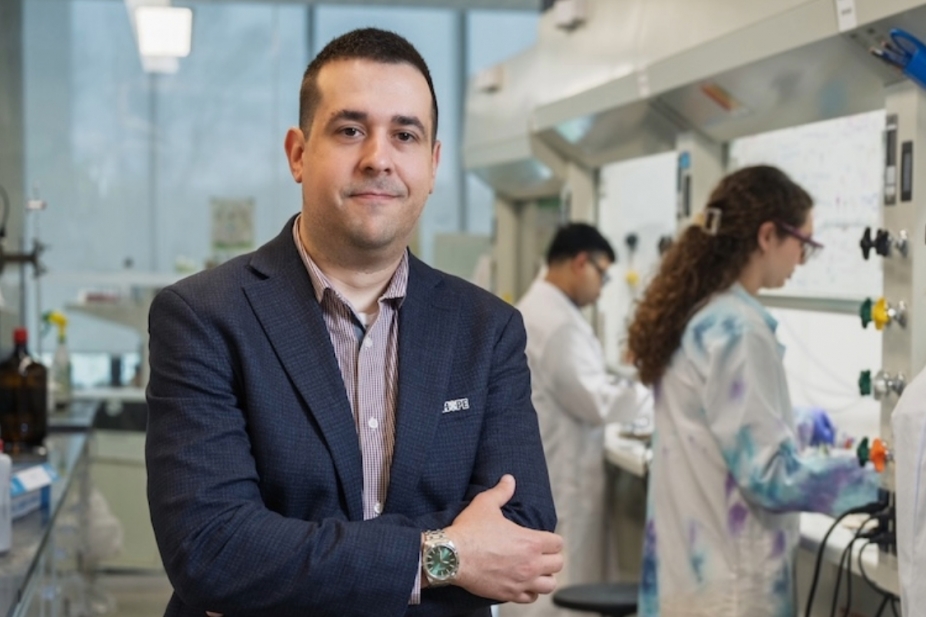 Dr. Simon Rondeau-Gagné will receive $400,000 from the Natural Sciences and Engineering Research Council of Canada (NSERC) as part of a larger $2 million National Science Foundation (NSF) grant through the Designing Materials to Revolutionize and Engineer our Future program. (PETER MARVAL/University of Windsor)
By Sara Elliott
Simon Rondeau-Gagné is developing a new generation of smart, flexible polymer materials that could transform how technology interacts with the human body.
In the not-so-distant future, those materials could contribute to medical breakthroughs ranging from wearable biosensors that detect disease earlier to implantable devices that help restore vision.
— Published on Aug 17th, 2026
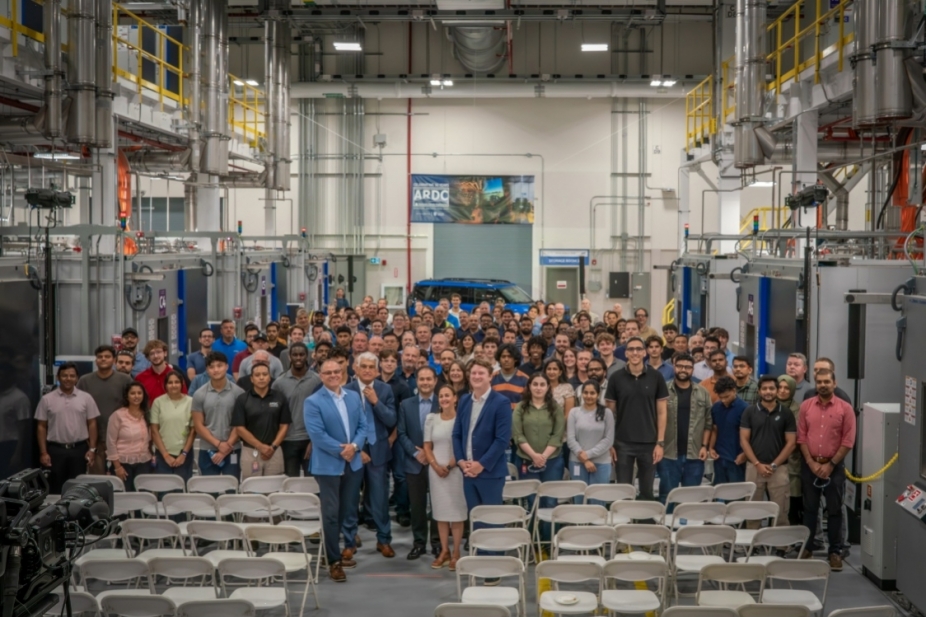 Celebrating 30 years of partnership, the Stellantis Canada-University of Windsor Automotive Research and Development Centre (ARDC) welcomed visitors on Tuesday, Aug. 4, 2026, inside the facilities. (KYLE ARCHIBALD/ University of Windsor)
Marking 30 years of collaboration, the Stellantis Canada-University of Windsor Automotive Research and Development Centre (ARDC) welcomed visitors Tuesday for a rare look inside the facilities and technology driving the future of vehicle development.
A first-of-its-kind Canadian partnership between industry, academia and government, the ARDC conducts research, testing and engineering work to advance the technology, quality and safety of tomorrow’s vehicles.
— Published on Aug 6th, 2026

 Aaron Fisk with former graduate student and current RAEON glider technician, Lydia Paulic, in Parry Sound. (Courtesy of Aaron Fisk/University of Windsor)
