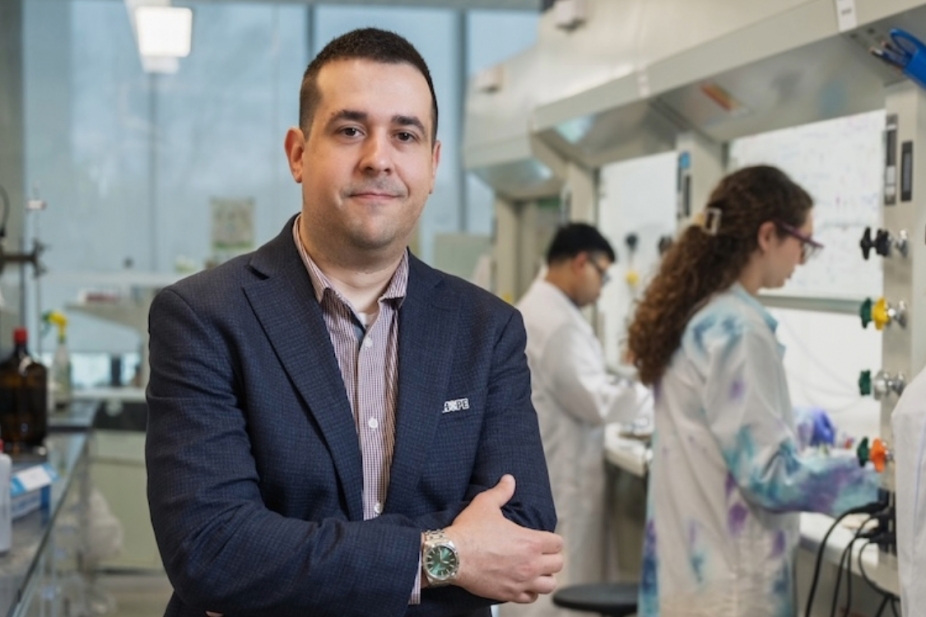
 Dr. Simon Rondeau-Gagné will receive $400,000 from the Natural Sciences and Engineering Research Council of Canada (NSERC) as part of a larger $2 million National Science Foundation (NSF) grant through the Designing Materials to Revolutionize and Engineer our Future program. (PETER MARVAL/University of Windsor)
By Sara Elliott
Simon Rondeau-Gagné is developing a new generation of smart, flexible polymer materials that could transform how technology interacts with the human body.
In the not-so-distant future, those materials could contribute to medical breakthroughs ranging from wearable biosensors that detect disease earlier to implantable devices that help restore vision.
— Published on Aug 17th, 2026
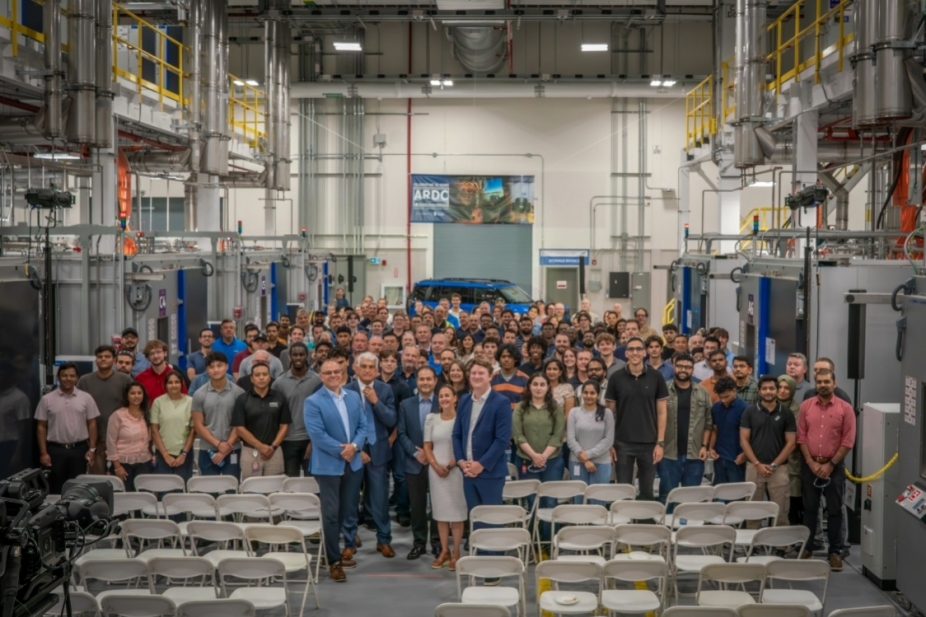 Celebrating 30 years of partnership, the Stellantis Canada-University of Windsor Automotive Research and Development Centre (ARDC) welcomed visitors on Tuesday, Aug. 4, 2026, inside the facilities. (KYLE ARCHIBALD/ University of Windsor)
Marking 30 years of collaboration, the Stellantis Canada-University of Windsor Automotive Research and Development Centre (ARDC) welcomed visitors Tuesday for a rare look inside the facilities and technology driving the future of vehicle development.
A first-of-its-kind Canadian partnership between industry, academia and government, the ARDC conducts research, testing and engineering work to advance the technology, quality and safety of tomorrow’s vehicles.
— Published on Aug 6th, 2026
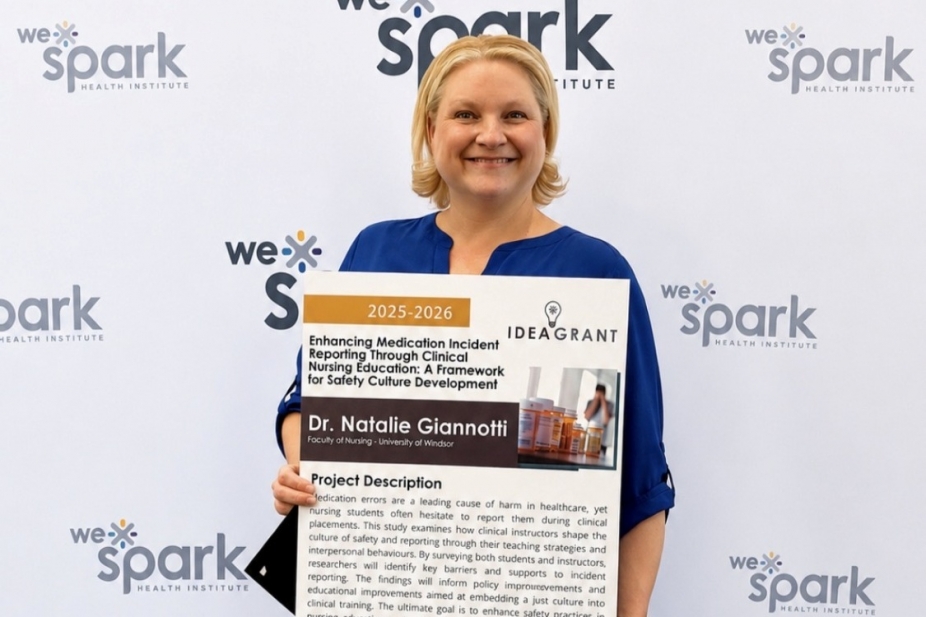 Faculty of Nursing professor Natalie Giannotti led a study examining perceptions of medication incident reporting, helping advance a culture of patient safety, learning, and transparency. (SUBMITTED BY NATALIE GIANNOTTI/University of Windsor)
By Sara Meikle
Administering medication may appear straightforward, but behind every dose is a complex series of steps where errors can still occur despite the best intentions of health-care professionals.
Nearly two decades after introducing a medication incident reporting system for nursing students, the University of Windsor is seeing evidence that its efforts to build a culture of safety are taking hold.
— Published on Jul 14th, 2026
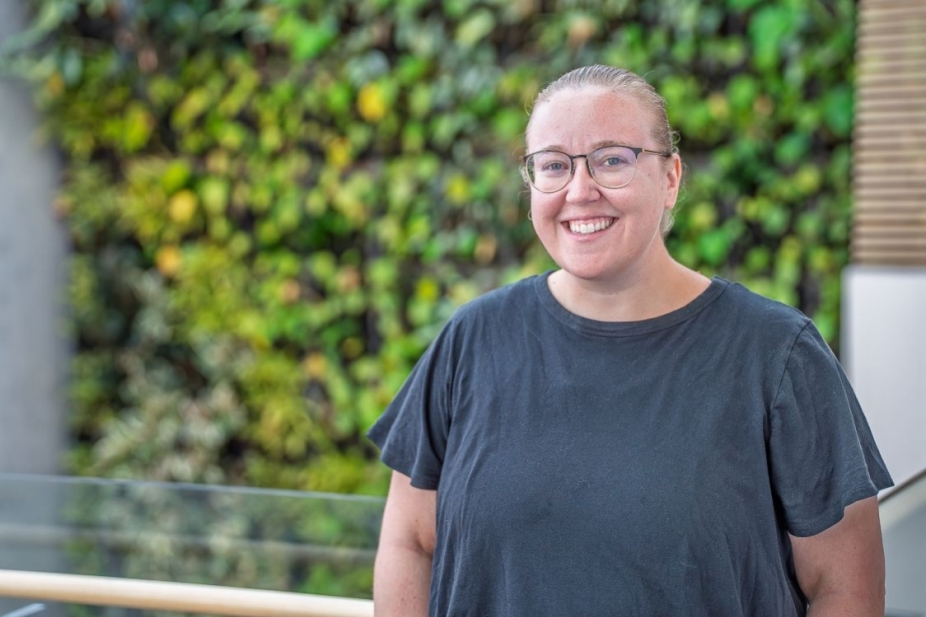 Dr. Maddie Brockbank is one of the first cohort of Innovation Fellows in a new program at the University of Windsor (KYLE ARCHIBALD/University of Windsor)
By Kate Hargreaves
When social work professor Maddie Brockbank first saw the call for applications to UWindsor’s Innovation Fellowship, she wasn’t sure her work would be a good fit.
“I remember thinking, this is not for me,” she recalls.
— Published on Oct 16th, 2026
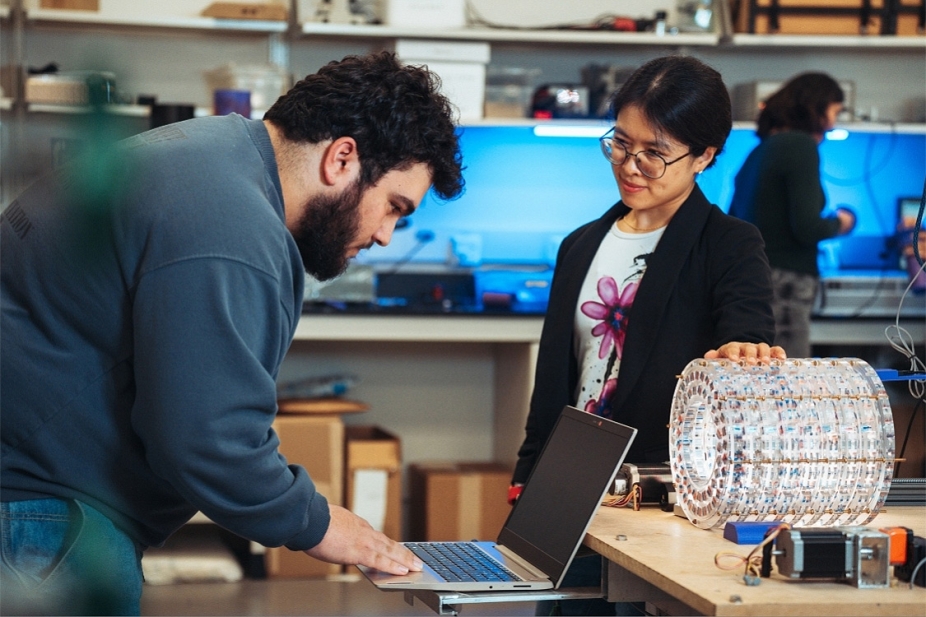 Dr. Dan Xiao (right) is designing a low-cost magnetic resonance imaging device. (University of Windsor)
By Sara Elliott
Ten University of Windsor researchers are turning their work into ventures as members of the inaugural Innovation Fellowship cohort.
The fellows aim to bring research-based business ideas to market, from a cybersecurity training program to a low-cost magnetic resonance imaging (MRI) device.
— Published on Jul 21st, 2026
 Shane Kilpatrick (front left) believes universities possess enormous potential to drive economic growth through innovation and commercialization. (PHOTO BY SYDNEY THOMPSON/University of Windsor)
By John-Paul Bonadonna
When Shane Kilpatrick looks across the room at the researchers participating in the University of Windsor's Innovation Fellowship, he sees something familiar: talented people with innovative ideas standing at the threshold of entrepreneurship.
— Published on Jul 9th, 2026
 Dr. Andrew Perrotta worked as the physiologist with the Canadian national women’s field hockey team during the Rio Olympic cycle (PROVIDED BY A. PERROTTA/University of Windsor)
By Kate Hargreaves
For female athletes — and women in general — bone health is key to long-term health.
At the same time, research on women’s physiology has often been overlooked in medicine and sports science.
— Published on Oct 16th, 2026
 Mahshid Soleimani, lab manager and doctoral student in applied social psychology (left), and Dr. Catherine Kwantes, professor of industrial organizational psychology in the Department of Psychology (right) in the University of Windsor's Centre for Culture and Organizational Research (CCOR). (ANGELA KHARBOUTLI/ University of Windsor).
By Lindsay Charlton
What happens when leaders’ ideal impact on their employees doesn't align with employees’ experiences?
University of Windsor researchers are examining how that gap in self-awareness influences workplace dynamics.
— Published on Jun 30th, 2026
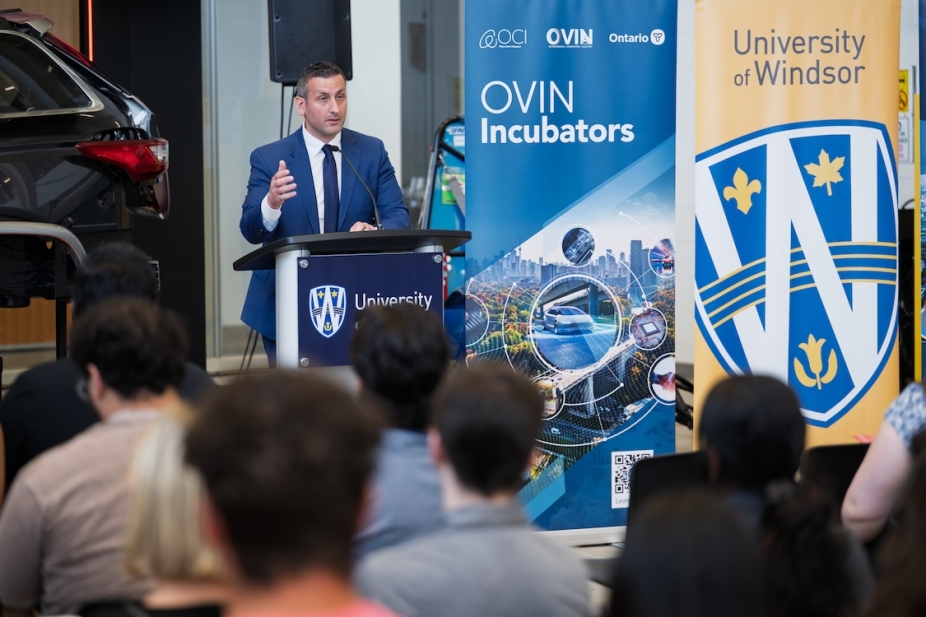 Head of OVIN Raed Kadri speaks to the crowd at the University of Windsor and OVIN Incubators partnership launch. (PETER MARVAL/University of Windsor)
— Published on Jun 24th, 2026
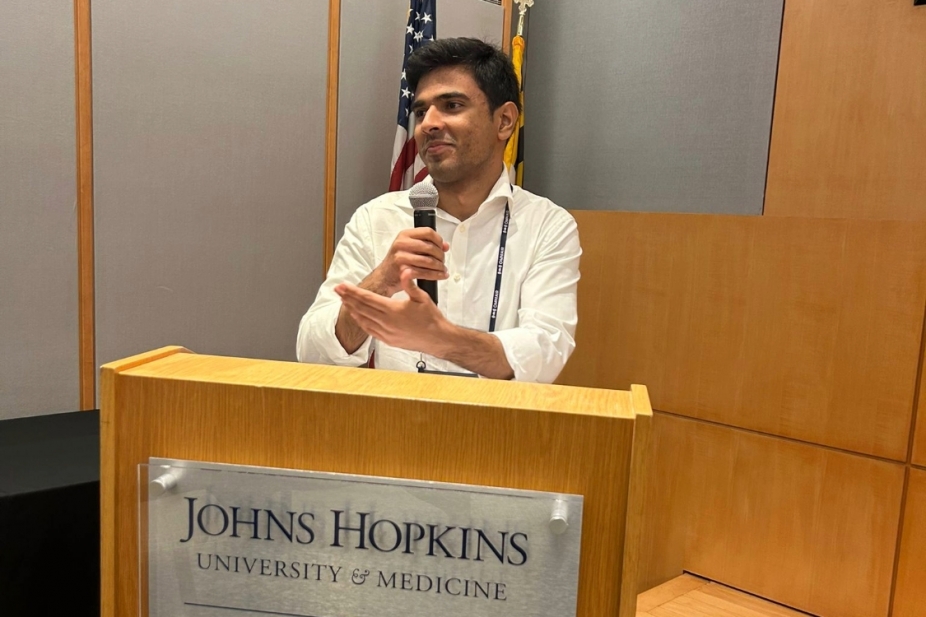 Hashim Tayyab Shah presents at the inaugural OmniAir Hackathon held at Johns Hopkins University in Baltimore. (Courtesy of Hashim Tayyab Shah/University of Windsor)
By Sara Elliott
A future where vehicles communicate directly with one another is not so distant — but is the technology safe enough to deploy?
That question was at the centre of the inaugural OmniAir Hackathon held at Johns Hopkins University in Baltimore, where three University of Windsor graduate students earned first place for their research.
— Published on Jun 25th, 2026

 Dr. Simon Rondeau-Gagné will receive $400,000 from the Natural Sciences and Engineering Research Council of Canada (NSERC) as part of a larger $2 million National Science Foundation (NSF) grant through the Designing Materials to Revolutionize and Engineer our Future program. (PETER MARVAL/University of Windsor)


