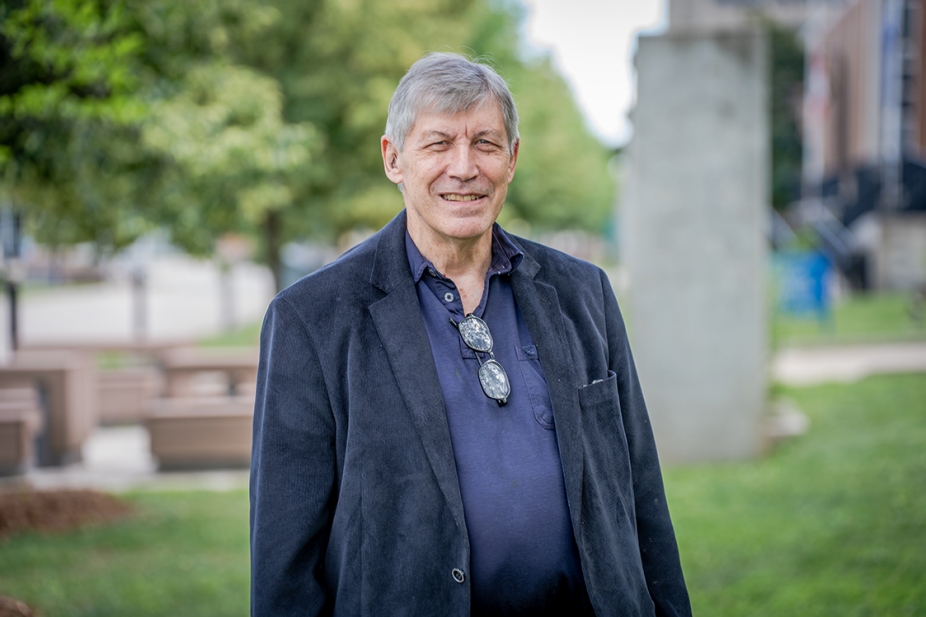
 Professor emeritus Karl Jirgens, founder of the international literary journal Rampike, continues to write, create visual art and participate in scholarly work beyond the classroom. (KYLE ARCHIBALD/University of Windsor)
By Victor Romao
Long before Karl Jirgens earned a PhD, founded an international literary journal or stepped into a university classroom, a high school teacher helped him see writing in a different light.
“Writing is just another medium with its own peculiarities,” he says, recalling a lesson from high school teacher Alan Bevan that would help shape a career spanning literature, publishing, visual art and education.
— Published on Oct 5th, 2026
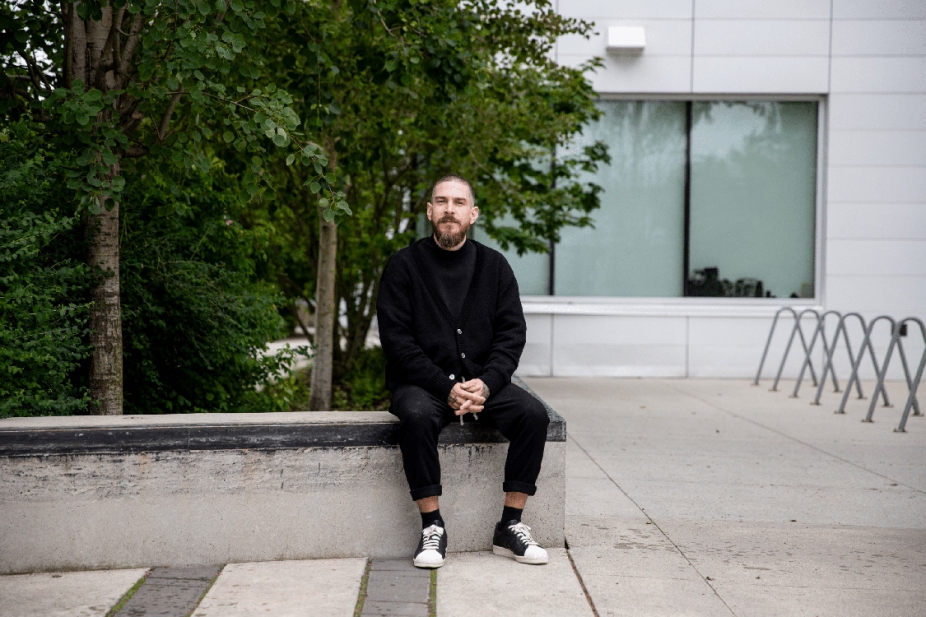 University of Windsor alumnus Justin Langlois builds connections across art, research and community through a collaborative and socially engaged practice. (PERRIN GRAUER/University of Windsor)
By Victor Romao
Long before stepping into a senior academic leadership role on Canada’s West Coast, Justin Langlois developed the foundations of a multidisciplinary practice at the University of Windsor.
Langlois (MFA ’09, BA Hons. ’07), now associate vice-president, research and dean of graduate studies at Emily Carr University for Art+Design, has built a career that blends art, research and community engagement, an approach rooted in his time as a student in Windsor.
— Published on Oct 2nd, 2026
 Elizabeth Szymanski is a doctoral candidate in education researching pre-service teachers' familiarity with social-emotional learning (PROVIDED BY E. SZYMANSKI/University of Windsor)
By Kate Hargreaves
Being a teacher is about more than getting kids up to speed on their reading, writing and math.
Teachers also support students as they solve problems, build relationships, set goals and manage emotions.
These skills are part of social-emotional learning (SEL), which takes place every day in elementary and secondary schools. But PhD researcher Elizabeth Szymanski (BA, ECE, BEd, MEd) says that teacher candidates don’t necessarily feel prepared to take it on.
— Published on Sep 18th, 2026
 MBA students, Odette faculty, corporate partners, alumni and community leaders gather during MBA Connect at the Odette School of Business on July 30. The event featured discussions on AI governance and networking opportunities for students and industry professionals. (CLEMENTA STAN/University of Windsor)
By Victor Romao
MBA students at the University of Windsor's Odette School of Business gained insights into artificial intelligence governance and built professional connections at MBA Connect in July.
The annual experiential learning event in July brought together MBA students, Odette faculty, corporate partners, alumniand community leaders to discuss emerging business issues and create networking opportunities.
— Published on Sep 14th, 2026
 University of Windsor alumnus Michael Ruffolo, head of creator and influencer partnerships at Shopify, credits his experience on the Odette Debate Team with shaping the partnership-focused approach that has guided his career. (SUZIE REECER/Tiger's Eye/University of Windsor)
By Victor Romao
Some of life's most valuable lessons happen outside the classroom.
For University of Windsor alumnus Michael Ruffolo, travelling across North America as a member of the Odette Debate Team offered more than an opportunity to compete.
It provided a foundation in collaboration, persuasion and critical thinking that would shape his career at the forefront of the creator economy.
— Published on Sep 4th, 2026
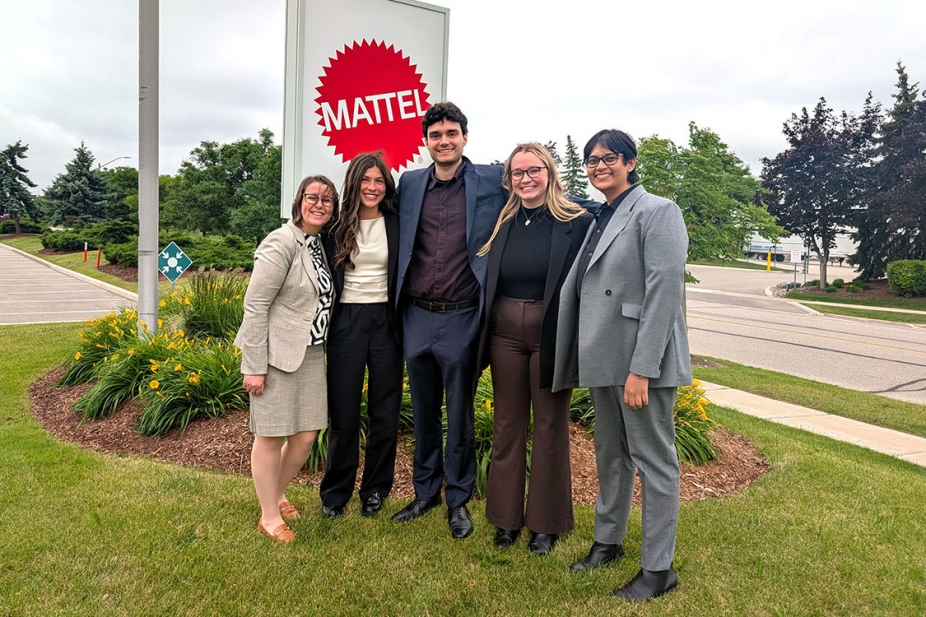 From left, Clementa Stan, career and employer relations advisor at the Odette School of Business, and MBA students Andrea Rivait, Hagen Nelson, Meghan Rae and Fatima Rizvi pose during a visit to Mattel Canada's headquarters in Mississauga. The students earned the visit after winning a Barbie case competition. (SUBMITTED BY CLEMENTA STAN/University of Windsor)
By Victor Romao
Winning a Barbie case competition earned four Odette School of Business MBA students a behind-the-scenes look at one of the world's most recognizable brands.
Andrea Rivait, Hagen Nelson, Meghan Rae and Fatima Rizvi, members of the MBA Class of 2026, recently visited Mattel Canada's headquarters in Mississauga after taking top honours in a competition that challenged students to develop strategic and marketing recommendations for Barbie.
— Published on Jul 29th, 2026
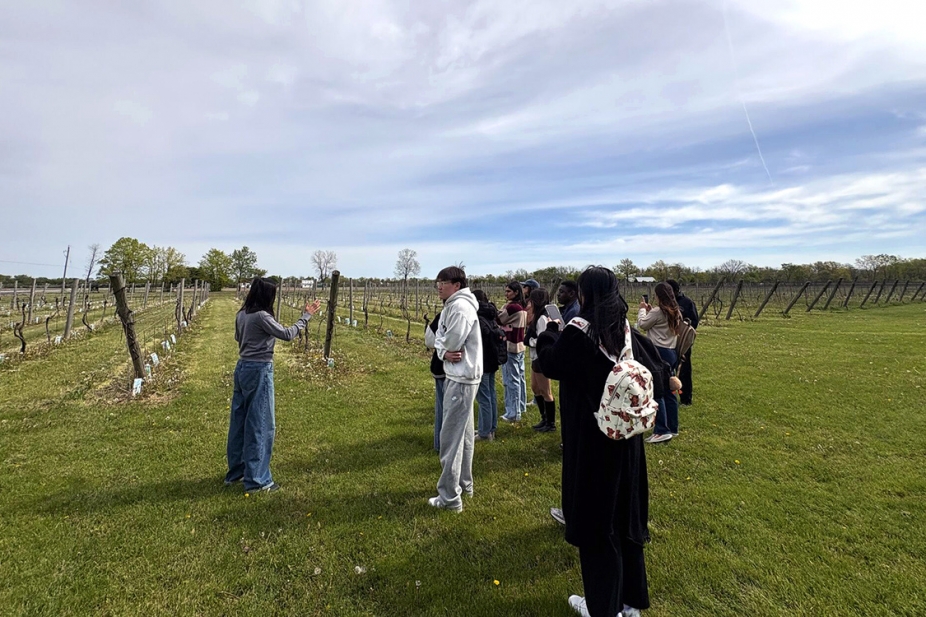 Master of Management program students listen as Vivace Estate Winery owner and winemaker Jean Qian (left) explains the winery’s operations, grape production and quality practices during a tour that connected classroom learning with real-world business operations. (LAURA DUCHARME/University of Windsor)
By Victor Romao
A visit to Vivace Estate Winery gave University of Windsor Master of Management students an opportunity to see how business concepts taught in the classroom are applied in a real-world setting.
Twelve graduate students from the University’s Master of Management program toured the Amherstburg-area winery, gaining firsthand insight into operations, quality management and customer experience in the hospitality and agricultural sectors.
— Published on Jul 27th, 2026
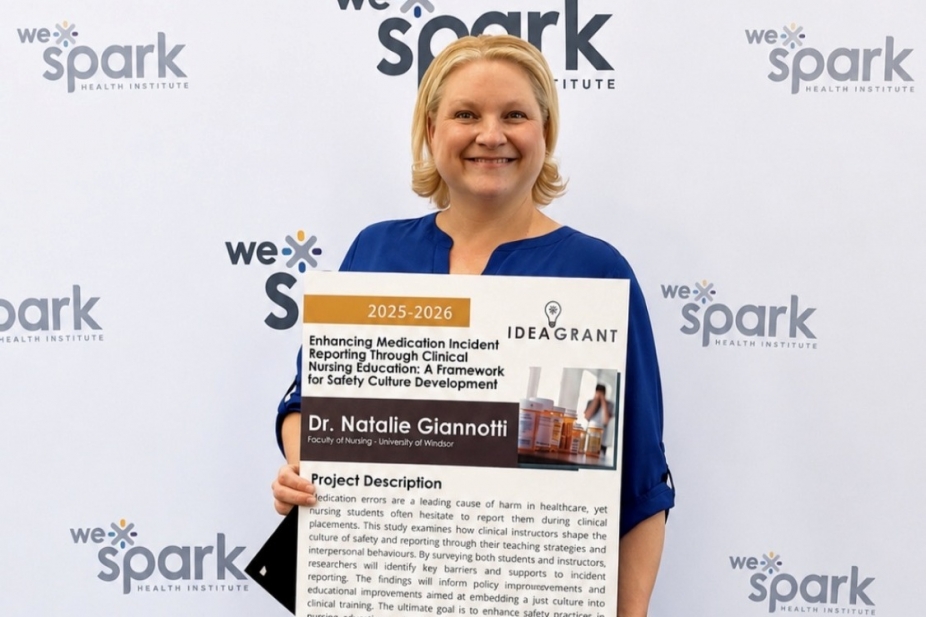 Faculty of Nursing professor Natalie Giannotti led a study examining perceptions of medication incident reporting, helping advance a culture of patient safety, learning, and transparency. (SUBMITTED BY NATALIE GIANNOTTI/University of Windsor)
By Sara Meikle
Administering medication may appear straightforward, but behind every dose is a complex series of steps where errors can still occur despite the best intentions of health-care professionals.
Nearly two decades after introducing a medication incident reporting system for nursing students, the University of Windsor is seeing evidence that its efforts to build a culture of safety are taking hold.
— Published on Jul 14th, 2026
 Sahar Talebi and James Scarfone are among a group of Windsor Law alumni being recognized for their outstanding contributions to the legal profession, leadership and commitment to advancing justice and serving their communities. (SUBMITTED BY SAHAR TALEBI AND JAMES SCARFONE/University of Windsor)
By Sara Meikle
Each year, Windsor Law honours graduates whose careers demonstrate the impact lawyers can have beyond the courtroom — advancing justice, strengthening communities and upholding the values at the heart of the legal profession.
— Published on Jul 14th, 2026
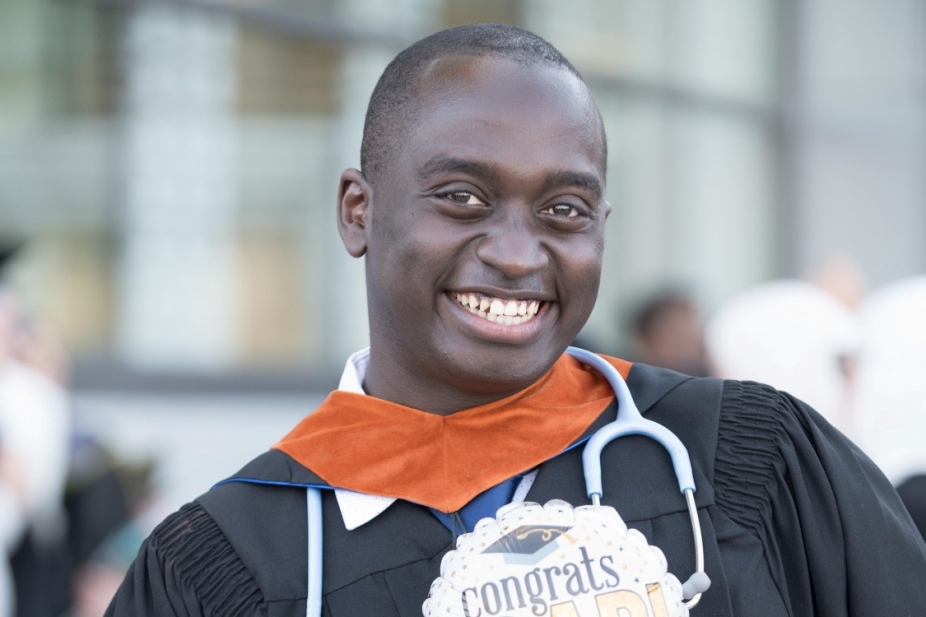 UWindsor nursing graduate Aaron Aine now works as a registered nurse in labour and delivery after overcoming the challenges of immigrating to Canada, starting university during the pandemic and earning his Canadian citizenship while completing his degree. (SUBMITTED BY AARON AINE/University of Windsor)
By Sara Meikle
Just a few years ago, Aaron Aine imagined a very different future.
Growing up in Uganda, he studied history, economics and literature with plans to become a lawyer. Nursing was never part of the plan.
Everything changed after immigrating to Canada in 2019. Aine completed his final year of high school in Scarborough before enrolling in the University of Windsor's nursing program at the height of the COVID-19 pandemic.
He was adapting to a new country, a new education system and a new way of learning all at once.
— Published on Sep 23rd, 2026

 Professor emeritus Karl Jirgens, founder of the international literary journal Rampike, continues to write, create visual art and participate in scholarly work beyond the classroom. (KYLE ARCHIBALD/University of Windsor)


